Keramat Khan: A Young Afghan Rebuilding His Future Through Language

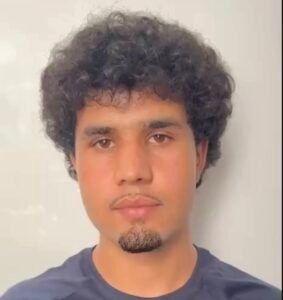
Afghan asylum seeker in Paris. Photo: @Ali Ahmad for ADN
“I want to learn the language and do vocational training. I want to build a future.”
At 18, Keramat Khan has already lived through more displacement than many experience in a lifetime. Originally from Kapisa province, he left Afghanistan five years ago, spent three years in Iran, one year in Turkey, and has now been in France for a year. His asylum case has already been rejected once, but he is waiting for the appeal with quiet determination.
Keramat attends a French class through social services, but he prefers Kuchnay Kabul. “Here I learn faster,” he says.
“Because they teach French in my mother tongue.” He speaks with admiration about Sarah Hermann, the founder of Kuchnay Kabul. “She teaches us with every detail. Other teachers do not teach like this. She translates everything—pronunciation, pictures, examples. She knows what to teach.”
Kuchnay Kabul (Little Kabul) is a small but deeply meaningful space on rue des Pyrénées in northeastern Paris. Founded by Hermann, a French scholar who speaks fluent Pashto, the association occupies three modest adjoining rooms filled with books on Afghan history, poetry, politics and art, embroidered textiles, and a traditional sitting area with mattresses and pillows. Here, French is taught through Pashto—an approach that makes the language accessible and emotionally safer for newcomers.
Khan’s experience reflects the broader challenges Afghan youth face in France. According to InfoMigrants, young Afghans often arrive with interrupted education, trauma, and years spent in transit countries without legal status. Many struggle to access stable schooling or vocational training. The asylum process can be especially daunting for minors and young adults, who must navigate complex bureaucracy while trying to build a future.
Despite these obstacles, InfoMigrants highlights Afghan success stories—students who have completed degrees, young workers who have entered vocational programs, and teenagers who have integrated into French schools. Their achievements show that with targeted support, Afghan youth can thrive.
For Keramat, Kuchnay Kabul provides exactly that support.
“I want to learn the language and do vocational training,” he says. “I want to build a future.”
When asked what Kuchnay Kabul means to him, he pauses.
“I love to hear the name,” he says softly. “It feels like part of our soul is represented in this association.”
In this small room, surrounded by books about Afghanistan, Keramat finds not only language lessons but also a sense of identity and belonging—something he has been searching for since leaving home as a child.