Wasef Bakhtari: Poetry as a Territory That Cannot Be Conquered
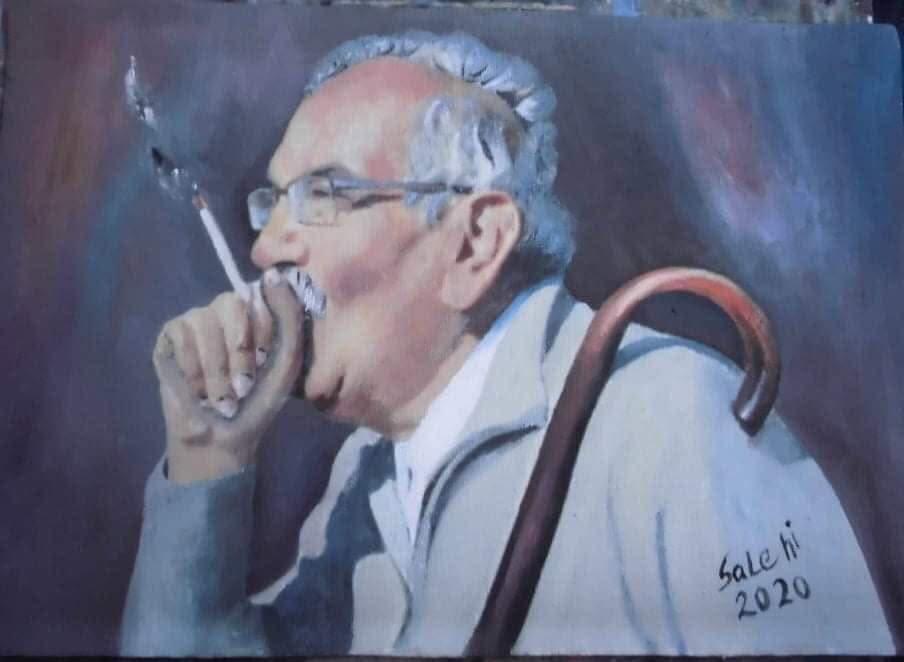
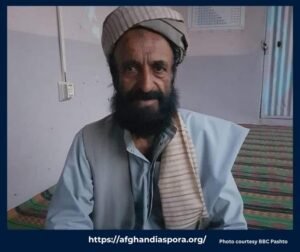
Afghan poet, Wasef Bakhari.
The conquered city, the language that remains
By Ivan Pozzoni
The history of Wasef Bakhtari makes it possible to formulate an apparently paradoxical proposition: a political power can conquer a city, control its institutions, discipline bodies, redesign public spaces, and even force a poet into exile; it encounters a structural difficulty, however, when it attempts to conquer language in its entirety. Bakhtari remained in Kabul until the Taliban seized the city on September 27, 1996; he was subsequently forced to leave Kabul, spent a period in Pakistan, and from 2001 lived in California until his death in 2023. His biography thus assumes a paradigmatic configuration: the poet is expelled from a political space while the text continues to produce a symbolic space. His poetry offers a first pragmatic key precisely through the displacement of enunciation. In «زندگی نیست…» (“Life is not…”), Bakhtari formulates a definitional sequence that progressively removes the word zindagi (“life”) from consolatory imagery: «زندهگی نیست نوشخند سحر» (“Life is not the smile of dawn”), eventually arriving at the political diagnosis «مرگ عشق و امید اندرین شهربند جور و جفا» (“the death of love and hope in this city enclosed by injustice”). The poem does not merely describe a condition: it performs a speech act of redefinition. The apparently neutral term zindagi is subjected to a series of negations that shift its referent from biological existence toward social possibility. Negation thus becomes a technique of reframing: it removes the lexicon of life from official rhetoric and returns it to the experience of subjects subjected to power. Pragmatics makes it possible to understand why such poetry should not be reduced to “political poetry.” Its operation depends on presupposition, implicature, deixis, speech act, and context. When the poet addresses «تو ای همرزم و همزنجیر و همسنگر» (“you, fellow fighter, fellow prisoner, and fellow comrade in the trenches”), he is not simply informing a recipient: he is linguistically constituting one. The addressee is named through a tripartite relationship—ham-razm, ham-zanjir, and ham-sangar—in which the lexicon of solidarity simultaneously incorporates conflict, imprisonment, and resistance. The utterance constructs its addressee as it is being uttered. Here Michel Foucault provides an immediate point of comparison. In L’ordre du discours, he writes: «on sait bien qu’on n’a pas le droit de tout dire, qu’on ne peut pas parler de tout dans n’importe quelle circonstance» (“we know that we do not have the right to say everything, that we cannot speak about everything under any circumstances”) (L’ordre du discours, Gallimard, 1971, 11). Bakhtari’s poetry makes visible the reverse side of this procédure d’exclusion: when authority restricts what can be said, poetic language transfers the conflict from content to the very form of enunciation. Metaphor becomes a device of semantic survival. The same dynamic emerges in «حقیقت را راه ندادند / زیرا لباس رسمی برتن نداشت» (“They did not let ‘truth’ in because it was not wearing official clothing”). Here personification produces an extraordinarily dense political implicature: truth is not refuted; it is excluded because it lacks the clothing demanded by the institution. Power appears as a machine of semantic gatekeeping: it does not merely determine which propositions are true; it determines which utterances are allowed to enter the public sphere. Censorship becomes a theatrical scene. Roland Barthes offers a second lens: «la naissance du lecteur doit se payer de la mort de l’Auteur» (“the birth of the reader must be paid for by the death of the Author”) (La mort de l’auteur, Manteia, 1968, 68). Applied to Bakhtari, the formula yields a precise political consequence. Exile separates the author’s body from the original site of production; reading, in turn, reunites the text with a community of addressees that no longer coincides with the territorial community. The poet may be outside Kabul while continuing to produce Kabul as a signified space. The text therefore becomes a form of symbolic territorialization. Political territory can be controlled through borders, checkpoints, and institutions; semantic territory depends upon the repeatability of the utterance. It is precisely this repeatability that makes the text potentially excessive in relation to its original situation. Bakhtari’s poetry also contains a perfect image of exile as loss without erasure: «چهها که بر سر این تکدرخت پیر گذشت / ولیک جنگل انبوه را ز یاد نبرد» (“So much has happened to this old solitary tree / yet it did not forget the dense forest”). The single tree is simultaneously individual, poet, exile, and culture. The forest constitutes the lost collective horizon. The second proposition, “did not forget,” introduces a memory presupposition: in order to forget, one must first have possessed a relationship with what is being remembered. Exile therefore does not produce the erasure of identity; it produces an intensified memory of distance. Walter Benjamin defined the aura of the artwork through «l’unique apparition d’un lointain, si proche soit-il» (“the unique appearance of a distance, however close it may be”) (L’œuvre d’art à l’époque de sa reproductibilité technique, Gallimard, 2000, 23). Bakhtari’s situation reverses this dynamic: exile increases geographical distance while potentially intensifying the symbolic proximity of the work. Distance no longer coincides with absence. Poetry becomes a device of re-presencing: it makes present what territorial power has rendered physically distant.
The semantic territory: body, brain, society
The thesis of “poetry as a territory that cannot be conquered” nevertheless requires a qualification. It does not mean that poetry is immune to political violence. It means that its operation does not coincide with the operation of administrative territory. A border can prevent an individual from entering a city; it cannot determine with comparable precision which semantic associations will arise in the mind of a reader. This distinction concerns pragmatics, neuroscience, sociology of art, and the political theory of art simultaneously. From a neuroscientific perspective, poetic reading engages processes of prediction, semantic integration, episodic memory, perceptual simulation, and emotional processing. Metaphor forces the cognitive system to connect different domains; ambiguity keeps multiple interpretive hypotheses active; rhythm organizes attention; repetition consolidates linguistic sequences. The point is not to attribute to poetry some imaginary “brain center of freedom.” Such a reduction would be neuroessentialist. The more significant fact is the distributed nature of comprehension: meaning emerges through the interaction of perception, memory, language, prediction, and context. Poetry can therefore produce cognitive affordances that no political order can completely control. Jean-Pierre Changeux conceptualized plasticity through the idea of a brain shaped by the interaction between organism and environment. This perspective allows poetry to be understood as an embodied cultural practice: linguistic forms do not remain “outside” the subject; they are learned, memorized, reactivated, and transmitted. In Bakhtari, poetic transmission therefore acquires an almost infrastructural dimension. A regime may control educational institutions, theaters, newspapers, and microphones; the memory of a verse can continue to circulate in a reader’s mind. The neural human being becomes, from this perspective, also homo poeticus: an organism capable of preserving and recombining symbolic forms (Jean-Pierre Changeux, L’homme neuronal, Fayard, 1983). Bakhtari repeatedly emphasizes the relationship between freedom and natural imagery. In one passage he writes: «ندانم چند فرسخ مانده زین مرداب تا دریا؟» (“I do not know how many leagues remain from this swamp to the sea?”). Daryā, “sea,” is not merely a geographical referent: it constitutes a source domainfor freedom. Mordāb, “swamp”, configures immobility, stagnation, and closure. The metaphorical passage produces an actual political topology: freedom means movement toward an open space. «مگر راهی بود از برکۀ ابریشمین خواب تا دریا؟» (“Is there perhaps a road from the silken pool of dreams to the sea?”) also introduces the problem of the distance between imagination and realization. Poetry constructs a map alternative to the geography of power. Jacques Rancière helps clarify the transition from aesthetics to the political theory of art. In Le partage du sensible, he writes: «Un partage du sensible fixe donc en même temps un commun partagé et des parts exclusives» (“A distribution of the sensible thus establishes at the same time a shared common and exclusive parts”) (Le partage du sensible, La Fabrique, 2000, 12). The politics of art therefore also concerns the distribution of visibility, voice, space, and time. The repression of a poet intervenes precisely in this partage: it determines who may speak, where, through which code, and before which audience. Bakhtari responds by constructing a different distribution of the sensible: the sea, the forest, fire, chains, home, and memory become poetic sites in which the subject recovers possibilities for agency.
«ای ماهیان نیلی آزاد و دریازاد…» (“O blue fish, free and sea-born…”) introduces another form of deixis: the poet separates “us” and “you”, the fish of the sea and those of the stream. «ما و شما هرچند از یک تباریم» (“You and we, although we are of the same lineage”). Biological commonality is immediately contradicted by spatial difference. The metaphor naturalizes a social problem in order to make it perceptually evident: freedom is not defined through an abstract concept; it is made visible through a mobile body within an open space. The cognitive effect of this strategy is significant. The reader does not receive a proposition such as “society is oppressive”; the reader receives a perceptual scene in which bodies, water, movement, and obstruction construct meaning inferentially. This is the principle of embodied cognition: understanding “freedom” through movement, “repression” through constraint, and “exile” through distance. Poetry transforms a political concept into an image that can be manipulated through mental simulation. Art therefore does not merely represent a conflict; it changes the way in which the conflict can be cognitively experienced. In «آبهای رودخانه / با فرارسیدن تابستان / آزادی خویش را باز مییابند» (“The waters of the river / with the arrival of summer / regain their freedom”), the aquatic metaphor is turned against political temporality: nature periodically regains its freedom, while «شکنجۀ زنجیریان تاریخ / بافرارسیدن هر فصل نو / فزونی میگیرد» (“the torture of those chained by history / with the arrival of every new season / increases”). The syntactic parallelism creates an antithesis between natural cyclicality and historical deterioration. Form itself becomes argument. Susan Sontag once wrote: «In place of a hermeneutics we need an erotics of art» (Against Interpretation, Farrar, Straus and Giroux, 1966, 14). The formula helps foreground the sensory dimension of Bakhtari’s work. His poetry does not operate exclusively through an interpretable thesis; it operates through images, rhythms, chromatic oppositions, bodies, and spaces. Reading becomes a perceptual experience before it becomes ideological decoding. The political efficacy of art also passes through the fact that meaning is embodied before it is conceptually articulated. This dimension leads directly to the sociology of art. The poet does not produce in a vacuum: he belongs to a network of institutions, readers, translators, publishers, schools, journals, associations, and linguistic communities. Bakhtari was a professor, researcher, translator, head of the poetry section of the Afghan Writers’ Association, and author of more than twenty books. His exile did not erase this network; it reconfigured it transnationally. His books published in Pakistan during exile demonstrate materially that the poet’s migration coincided with the migration of the publishing system. Erving Goffman helps us read this performative dimension. «When an individual plays a part, he implicitly requests his observers to take seriously the impression that is fostered before them» (The Presentation of Self in Everyday Life, Doubleday, 1959, 17). Political power constructs institutional front stages; poetry introduces another performative space. The exiled poet no longer possesses his original public stage and constructs a textual stage instead. The reader becomes the audience. The verse becomes a deferred performance. Censorship can prevent the first performance; it has far greater difficulty eliminating every subsequent reactivation of the text.
The poetry that remains when territory is lost
Bakhtari’s power becomes especially clear when his poetry reflects directly on the relationship between language, memory, and homeland. In «وصیت» (Wasiyyat, “Testament”), the formula appears: «من از سرزمینی نکوچیدهام / با خود سرزمینی را به دوش کشیدهام» (“I have not emigrated from a land / I have carried a land upon my shoulders”). The image condenses the entire poetics of exile. Territory no longer coincides with geographical surface. It can be carried through memory, language, and text. The emigrant becomes a portable territory. Homeland ceases to be merely a place and becomes a practice of symbolic reactivation. This proposition can be placed alongside Gilles Deleuze and Félix Guattari: «un livre n’a pas d’objet ni de sujet» (“a book has neither object nor subject”) (Mille plateaux, Les Éditions de Minuit, 1980, 9). The book is an agencement: an assemblage of lines, connections, bodies, and other texts. Bakhtari’s poetry functions precisely as a diasporic agencement. Afghanistan, memory, Persian language, myth, war, exile, reader, and translation enter the same textual machine. Poetry is no longer merely the product of an individual; it is a device of connection.
Walter Benjamin had articulated the politics of art through the transition from «esthétisation de la politique» to «politisation de l’art» in his analysis of modern art (L’œuvre d’art à l’époque de sa reproductibilité technique, Gallimard, 2000, 56). The insight is useful for Bakhtari because it prevents us from artificially separating aesthetics and politics. Poetry does not need to proclaim a slogan in order to have political effects. It is enough for it to redistribute what can be seen, remembered, named, and imagined. Power acts upon the conditions of visibility; poetry intervenes in the conditions of sayability. The formula «ای حروف الفبا!» (“O letters of the alphabet!”) makes this politics of language almost literal. Bakhtari declares: «من از شما دو هجا، چار حرف “میهن” را … میخواهم» (“From you I ask for two syllables, four letters: ‘homeland’”).
The poet asks neither for gold, power, nor monuments: he asks for four letters. The gesture is radical because it reduces homeland to its smallest graphic unit while simultaneously rescuing it from territorial loss. If territory is taken away, the sign remains; if the sign remains legible, the relationship with territory can be reactivated. The word maihan becomes a micro-architecture of memory. Maurice Merleau-Ponty wrote: «Le corps est notre moyen général d’avoir un monde» (“The body is our general means of having a world”) (Phénoménologie de la perception, Gallimard, 1945, 171). In Bakhtari, exile changes the body’s relationship with the world: the body no longer possesses the ordinary proximity of city, home, and landscape. Poetry reconstructs that proximity through sensory images. The verse becomes a kind of corps verbal: it does not merely restore territory; it allows the reader to inhabit certain forms of it linguistically.The phenomenon also has a political dimension. A regime seeking to monopolize the production of meaning must intervene in speech acts, educational institutions, publications, artistic representations, and collective memory. Censorship therefore becomes a technology for governing the sensible. Poetry introduces a counter-public sphere: a discursive space in which excluded subjects can be named again. Opposition does not necessarily take the form of a declaration; it can consist in a different organization of pronouns, verb tenses, and metaphorical spaces. The metaphor of the forest therefore returns as a concluding figure. The poet may be a «تك درخت پیر», an “old solitary tree”, separated from the «جنگل انبوه», the “dense forest”. The relationship between individual and collective is not erased by isolation. The forest continues to exist in the tree’s memory. Anthropologically, the group is therefore not reducible to physical co-presence: it can survive as an imagined community, a repertoire of symbols, language, narrative rituals, and shared memory. Marshall McLuhan offers a final key: «The medium is the message» (Understanding Media: The Extensions of Man, McGraw-Hill, 1964, 7). In Bakhtari’s case, the poetic medium possesses a politics of its own. A memorized, recited, translated, or transcribed verse is already a form of alternative circulation. Poetry does not merely transmit a message about freedom; it constructs an environment in which freedom can be thought, remembered, and shared. This also clarifies the distance between poetry and propaganda. Propaganda tends toward the reduction of ambiguity; Bakhtari’s poetry works through polysemy. Propaganda wants the recipient to recognize a meaning rapidly; poetic language can force the reader to dwell in uncertainty. Propaganda seeks an answer; poetry can produce a question. In pragmatic terms, the poetic utterance retains a degree of underdetermination: meaning exceeds paraphrase. This excess makes complete political administration of the text impossible. «آیا تو آگهی...» (“Are you aware…?”) is a recurring form in Bakhtari’s poetic apparatus: the question transfers part of the interpretive act to the reader. Interrogation creates a responsible addressee. Poetry does not simply deliver a conclusion; it establishes an interlocutor. Here pragmatics meets the anthropology of art. The work creates a social relation among absent bodies, present readers, and collective memory. T. S. Eliot provides an instructive comparison. In Tradition and the Individual Talent, he writes: «The existing monuments form an ideal order among themselves» (Selected Essays, Faber and Faber, 1951, 15). Bakhtari belongs to an analogous system of literary memory: he engages with Hafez, Rumi, Sa’di, Ferdowsi, Iqbal, Ahmad Shamlou, and the modern Persian literary tradition. Literary continuity constitutes a second homeland. The poetic order allows the exiled text to enter a history longer than the contingent political history of the moment. The relationship with history therefore assumes a particular form. The poem «شماطهٔ تاریخ تب دارد» (“the trumpet of history has a fever”) condenses the transformation of a historical event into a bodily symptom. History is no longer a neutral archive: it is a sick body, traversed by fever. Personification produces a conceptual metaphor in which historical time is embodied. The reader perceives the crisis before defining it conceptually. Metaphor thus becomes an instrument of political knowledge. The decisive point is therefore this: territorial conquest operates according to a spatial logic; poetry operates according to a relational logic. Power can close a city; the poem can transform that closure into metaphor. It can prevent a gathering; the verse can preserve the linguistic form of community. It can force the poet into exile; exile can become poetic material. It can control the present; the poet can recombine past and future through memory. Bakhtari does not demonstrate that poetry is invulnerable. He demonstrates something more concrete: repression does not coincide with the erasure of meaning. The poet can lose the city and continue to produce its memory; he can lose geographical proximity and preserve linguistic proximity; he can lose his original audience and encounter others through translation, print, and reading. His poetry therefore constructs a territory without administrative borders. “Poetry as a territory that cannot be conquered” does not mean an inviolable territory. It means a territory that changes its nature when attacked. The city can be occupied; the verse can become exile. The home can be lost; the word can become home. The poet can be forced out of his country; language can carry the country with it. In this sense, Bakhtari transforms exile into an epistemological figure: he shows that belonging to a place does not necessarily mean physically inhabiting it. His poetry survives because it does not coincide with the place from which it originates. It is a practice of memory, a machine of images, a network of implicatures, a cognitive archive, and a form of sociality. Power can order territory; it does not automatically possess every interpretation generated by a word. It can attempt to discipline discourse; the reader retains the possibility of reactivating it. In the end, one simple formula remains. Bakhtari loses Kabul, not language. He loses the physical proximity of the land, not its memory. He is separated from territory and transforms that separation into text. Poetry becomes the place in which exile ceases to be merely deprivation and becomes a form of presence. Conquering territory requires soldiers, borders, and institutions. Conquering language would require something far more difficult: controlling every memory, every metaphor, every reading, every mental association. This is precisely where the project of domination encounters its limit. Territory can be occupied. Meaning, by contrast, must continually be re-conquered by the reader.
About the author: Ivan Pozzoni was born in Monza in 1976. He introduced Law and Literature in Italy and the publication of essays on Italian philosophers and on the ethics and juridical theory of the ancient world; he collaborated with several Italian and international magazines. He wrote 152 volumes, wrote 1000 essays. His verses/essays are translated into 30 languages.
Note: The contents of the article are the sole responsibility of the author. Afghan Diaspora Network will not be responsible for any incorrect statements in the articles.