The Price of a Life: Child Brides in the Silence of Afghanistan
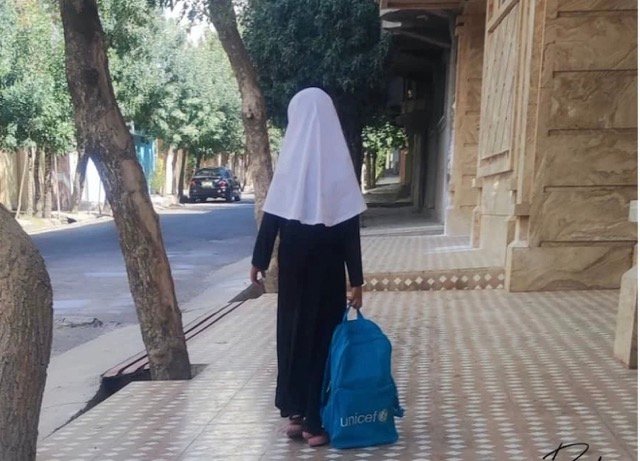
Photo: @Giorgia Pietropaoli for ADN
Forced marriages, broken bodies, and the daily tragedy of women under the Taliban yoke: the portrait of a country where poverty is paid for with childhood.
By Giorgia Pietropaoli
Sometimes desperation takes the shape of a price tag hastily set to buy a sack of flour or settle a family-crushing debt. That is what happened to Leila. Her mother married her off at just nine years old for a little over two thousand euros—a sum that, for those who have nothing, represents the sole boundary between life and death by starvation. «I had to sacrifice one to feed the others», she repeats, her voice hollowed out by grief, an echo that offers no peace.
The crisis suffocating Afghanistan is not merely an economic or humanitarian wound; it is a full-scale collapse of human rights, striking Afghan girls and women with unprecedented violence. According to recent United Nations data, nearly half the population lives in urgent need of assistance, while millions of children face acute malnutrition. Meanwhile, international funds are dwindling, and the global community seems to look away, leaving entire families at the mercy of destitution.
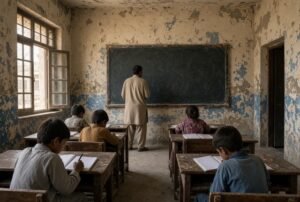
The Taliban’s rise to power has dramatically accelerated a devastating practice like child marriage. With the abolition of previous age limits and the systematic closure of secondary schools and universities for girls, the net has closed. Over two million female students above the sixth grade have been barred from education. For the vast majority of them, the interruption of schooling has coincided with the beginning of an ordeal: subjugation to much older men—often adults or even militiamen who cynically exploit poverty to accumulate low-cost child brides—and forced motherhood while their bodies are still those of children.
The consequences for physical and psychological health are devastating. Local midwives bear witness to this, forced to cope with desperate emergencies: thirteen-year-old girls arriving at hospitals with severe hemorrhaging following a miscarriage, or very young mothers losing their lives during childbirth because their husbands refuse consent for a C-section, fearing it might compromise future pregnancies.
Sima is eighteen, but she looks much older. A mother of three, she carries on her body the weight of an incomplete growth: «I always have a headache, my kidneys hurt constantly. I feel like an elderly person, shattered by pain.»
This physical wear and tear is accompanied by an invisible yet equally lethal devastation: these girls’ minds crack under the weight of deep neuroses, chronic anxiety disorders, and disabling panic attacks, turning their homes into prisons of terror. Hunted by an inescapable destiny and deprived of any way out, for many, desperation turns into an extreme attempt to escape the pain: suicide rates and acts of self-harm among young brides are rising dramatically, a cry of death muffled in general indifference.
Behind this wall of suffering lies a legal system that eradicates every escape route, starting with the regime’s systemic refusal to grant divorces. Government decrees regulating the separation of minors stipulate that a child given in marriage can theoretically request an annulment only after reaching puberty. Until then, her voice holds no legal value; her silence is interpreted as tacit consent, and she is barred from escaping unions arranged when she was an infant or toddler to settle family debts.
Even where a theoretical door opens, the insurmountable obstacle of the prohibitive economic ransom (khul) intervenes. The only remaining path to buy one’s freedom is an exorbitant financial ransom—hundreds of thousands of Afghani—impossible to procure for women reduced to starvation and completely excluded from the labor market.
One episode dramatically reflects this daily reality. Recently, an 18-year-old woman appeared before a Taliban regime official, the governor of Jawzjan province, Abdullah Sarhadi, to forcefully demand a divorce from her husband, whom she accused of beating and abusing her for months. The institutional response was a rejection of her request coupled with public humiliation: the judge asked her who would ever want to marry her after a divorce and ordered her to compromise so as not to lose her dignity, going so far as to claim that women possess a “deficient” intellect. Faced with the girl’s desperate determination—who retorted that her honor was already destroyed and she was ready to die rather than return home—the system nonetheless confirmed the barrier against free separation, imposing superficial solutions and leaving her effectively at the mercy of her abuser. Denying divorce means condemning millions of women to endure chronic psychological and physical abuse, stripping them even of the fundamental right to protect their own integrity and lives.
The maternal mortality rate in Afghanistan has reached staggering levels: according to the most recent United Nations Office for the Coordination of Humanitarian Affairs (OCHA) and United Nations reports, the country records approximately 638 deaths per 100,000 live births (one of the highest figures in the world and the worst in all of Asia). This invisible slaughter is fueled by the collapse of the healthcare system, the drastic shortage of female medical personnel in rural areas, and a regime that relegates women to the margins of society, denying them autonomy and a future. Yet, in this profound darkness, a spark of invisible courage persists: in clandestine homes protected by bolted doors, where brave teachers continue to educate girls, and in the hands of midwives who risk everything to save very young mothers, Afghan women continue to fight for their dignity.
When institutions fail and rights are trampled, ordinary people always pay the highest price. And in Afghanistan, with every passing day, that price is paid with the stolen childhood, mental health, and lives of these young girls.
What can we do—protected by distance and privilege—to ensure these voices are not swallowed by the silence?
Listening to their stories is not enough: our privilege demands that we turn indignation into a sounding board, so that those voices may continue to exist and make noise.
About the author: Giorgia Pietropaoli based in Rome, Italy, is a teacher of classical literature. She holds a degree in Classical Philology from Sapienza University of Rome, where she subsequently earned a Master’s degree in Political Science. Driven by a profound passion for linguistics, she also pursued studies in Persian Language and Literature at the same institution.
As a writer and investigative reporter for “Focus On Africa Magazine”, she is actively engaged in journalism, education, and activism. She specializes in Middle Eastern dynamics—with a particular focus on Iran and Afghanistan—and is deeply committed to the advocacy of human rights.
She is the author of the essay “Afghanistan. Dove tutto cambia per non cambiare mai” (“Afghanistan: Where Everything Changes So Nothing Ever Changes”), published by Infinito Edizioni. Furthermore, she translated from Persian and edited the Italian editions of “Parole dall’esilio” (“Words from Exile”) by Somaia Ramish and :Sinfonia di pace” (“Symphony of Peace”), published by AllAround.
Note: The contents of the article are the sole responsibility of the author. Afghan Diaspora Network will not be responsible for any incorrect statements in the articles.