Parween Pazhwak and the Fractured Geography of Afghan Identity
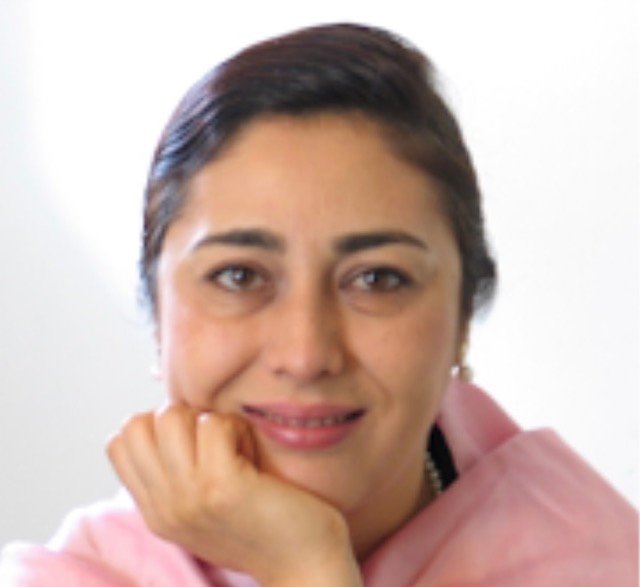
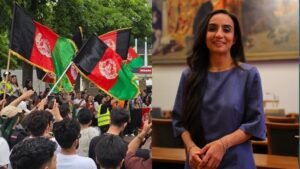
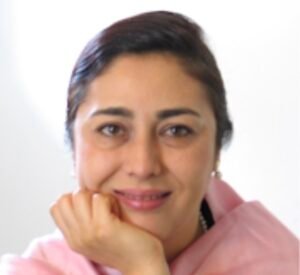
Parween Pazhwak, Afghan poet, writer, visual artist, and women's and children's rights advocate who writes primarily in Dari.
The Homeland as Utterance: Language, Memory, Belonging
By Ivan Pozzoni
Exile does not merely coincide with separation from a territory; it is a dislocation of the systems through which a subject recognizes the world, attributes meanings to experiences, and reconstructs belonging.
In the poetry of Parween Pazhwak, an Afghan diaspora writer, the Persian language (Dari) assumes the function of a transportable territory, a symbolic geography where individual memory and collective history continue to intersect.
The homeland is not a geographical space; it becomes an assemblage of signs, images, memories, and linguistic practices. Writing operates as a device for identity recomposition: through the word, the diasporic subject attempts to render a fragmented reality habitable once again.
The poem Omid (امید), included in the collection Daryā dar Shabnam [Hozhaber Publications, 2000], condenses this dynamic in the image of the star: «هنوز ستارهای است» (“There is still a star”). The brevity of the utterance produces a particular pragmatic economy: the adverb hanuz (“still”) presupposes a duration, a preceding time marked by loss, and simultaneously introduces the possibility of persistence. The star is not merely an element of the landscape; it becomes a signal of orientation, an index of survival.
The subsequent expression «که بر اعماقِ شبم نورافشانی میکند» (“That illuminates the depths of my night”) transforms the night into a subjective condition. The possessive shab-am, “my night,” personalizes the darkness and converts it into experience. The verse does not describe a universal darkness; it stages a consciousness that recognizes its vulnerability while preserving a possibility of orientation. The conclusion of the poem intensifies this function: «تا این ستاره است / خود را اسیر ظلمت نخواهم یافت!» (“As long as this star exists, I will not find myself a captive of the darkness!”).
The negative future nakhāham yāft, “I will not find myself”, assumes the value of an act of resistance: the poetic voice does not limit itself to registering a condition; it formulates a disposition toward the future. In terms of linguistic pragmatics, the utterance produces an illocutionary effect of self-determination; its force lies in the declaration of an inner freedom that no geographical distance can erase.
Diasporic identity constitutes itself through similar linguistic acts, in which the subject reaffirms their capacity for self-nomination. Aria Fani’s analysis in “Narratives of Literary Commitment in the Poetry of Afghan Resistance: The Cases of Khalilollah Khalili and Parwin Pazhwak” (Iran Nameh, 29, no. 1, 2014, pp. 112-130) allows us to specify the relationship between experience and poetic construction.
Fani observes that «در آثار پروین پژواک عنصر رئالیسم فاصله میان من درون شعر و شاعر را میکاهد» (“In the works of Parween Pazhwak, the element of realism reduces the distance between the ‘I’ inside the poem and the poet”) [p. 115]. The proximity between the lyrical voice and the authorial subject does not authorize a purely autobiographical reading; rather, it indicates a strategy of credibility, in which the representation of experience acquires a testimonial dimension.
Fani adds that «پژواک نه چون قربانی بینوا و بیزبان، بلکه در کسوت فردی آگاه و مختار ظاهر میشود» (“Pazhwak does not appear in the guise of a destitute and voiceless victim, but rather as an individual who is conscious and endowed with autonomy”) [p. 116]. This clarification is central: the writing woman is not reduced to the passive position of an object of violence, because her voice exercises a form of agency namely, the capacity for initiative and action.
The problem of identity must not be separated from the social dimension of language. The sociology of diaspora shows how belonging is negotiated between the memory of the place of origin, the host environment, and linguistic communities. Zuzanna Olszewska, in “A Desolate Voice: Poetry and Identity among Young Afghan Refugees in Iran” (Iranian Studies, 40, no. 2, 2007, pp. 203-224), describes poetry as a medium for political commentary and the expression of subjective experience, thought, and emotion in relation to love and the pain of exile. Writing becomes a practice of reciprocal recognition: the reader is able to recognize a shared memory within the individual voice.
A comparison with Kwame Anthony Appiah’s The Lies That Bind: Rethinking Identity [Liveright Publishing Corporation, 2018] clarifies that identity is neither an immutable essence nor an arbitrary construction of the individual: “An identity cannot simply be imposed upon me, willy-nilly, but neither is an identity simply up to me, a contrivance that I can shape however I please”. In Pazhwak, language preserves this tension between collective heritage and self-determination.
The Destroyed Landscape: War, Body, and the Semiotics of Loss
In Marg-e Khorshid (مرگ خورشید), published by Hozhaber Publications in Canada in 2002, the representation of war assumes an inventory-like structure: the landscape is described through the material traces of destruction. The verses «اینجا تاریکی است / اینجا برگهای آرزو بر باد رفتهاند» (“Here there is darkness; here the leaves of desire have been scattered by the wind”) organize space through the repetition of injā (“here”). The deictic does not indicate a neutral location; it localizes devastation and forces the reader to confront a determinate scene. The repetition constructs a geography of absence, in which each natural element becomes the figure of an interrupted human possibility. The “leaves of desire” are not a decorative ornament; they translate the dispersion of individual and collective aspirations into an image. The poem continues with a brutal representation of violence: «اینجا پرندهها را سر بریدهاند و خوردهاند» (“Here they have beheaded the birds and eaten them”).
Birds, associated with freedom and movement, are deprived of the very possibility of flight. The act of decapitation interrupts the relationship between body and environment; the subsequent consumption of the body transforms life into matter available to violence.
The lexical choice avoids moral abstraction: the reader encounters a concrete action, represented through verbs that render brutality visible. The text does not require a lengthy ideological explanation; the arrangement of images produces an ethical evaluation through their succession. Destruction reaches the symbolic heritage with the verse «اینجا کتابها را برای گرمی اطاق / سوزاندهاند» (“Here they have burned the books to warm the room”). The book, the medium of memory and cultural transmission, is reduced to fuel. The image contains a material contradiction: what ought to preserve knowledge is consumed to satisfy an immediate need. War does not merely destroy buildings and bodies; it alters the conditions of cultural continuity. The burning of books makes visible a society in which daily survival devours the instruments of memory.
In this image, one must read a form of cultural erasure the destruction of the material conditions through which a community transmits its history. The theme returns, in a radical form, in Moṣāḥebe bā Kudak-e Afghān (“Interview with an Afghan Child”): «کودک افغان میدانی جنگ یعنی چه؟ / جنگ یعنی زندگی!» (“Afghan child, do you know what war means? War means life!”). The interrogative structure seems to prepare an explanation, whereas the response overturns semantic expectation: war is identified with life itself.
This paradoxical phrase signals a deformation of childhood experience. For a child raised in a bellicose environment, war becomes the ordinary code through which to interpret the world. The response does not celebrate violence; it denounces its normalization. The child possesses no external benchmark outside of war, because war has occupied the entire field of possible experiences. The psychological dimension of this representation must be read through the concept of autobiographical memory: autobiographical memory organizes personal events and contributes to the continuity of the self. War, when it occupies childhood, interferes with this organization and conditions the construction of future expectations.
The neuroscience of memory and emotion has demonstrated the extent to which high affective-intensity events impact memory consolidation processes and the evaluation of subsequent situations. Poetry is not a clinical chart and does not permit diagnoses; rather, it renders perceptible the transformation of infantile perception within an environment dominated by threat.
The phrase “war means life” is a poetic diagnosis of traumatic normalization, rather than a literal definition of existence. The comparison with Ocean Vuong, a Vietnamese-American poet, allows us to deepen the relationship between body, genealogy, and memory. In “Someday I’ll Love Ocean Vuong”, included in Night Sky with Exit Wounds [Copper Canyon Press, 2016], we read: “The most beautiful part of your body is wherever your mother’s shadow falls”.
The body becomes the archive of an affective genealogy: identity is formed through the painful presence of those who precede. In Nguyễn Phan Quế Mai’s The Secret of Hoa Sen [BOA Editions, 2014], the return to the homeland is evoked through the image: “I cross the Lam River to return to my homeland / where my mother embraces my grandmother’s tomb in the rain”. The homeland manifests itself as a relationship among generations, landscape, and familial memory.
In Merlinda Bobis’s Accidents of Composition [Spinifex Press, 2017], the verse “there could be accidents / of kindness here” introduces a possibility of ethical reconstruction within a world marked by fracture. These three authors are not reducible to the Afghan experience; the comparison concerns the strategies by which diasporic poetry represents the bond between body, origin, and loss. The anthropology of the body – the paradigm of embodiment- allows us to understand how historical experience is incorporated into everyday perceptions and practices.
Memory does not remain a mental content separate from the body: it manifests itself in gestures, images, habits, and relationships. From this perspective, the decapitated birds, the burned books, and the child who identifies war with life are elements of a single semiotic system. Violence inscribes itself within nature, culture, and the formation of the subject. Poetry constructs a political critique without necessarily resorting to the explicit language of the manifesto.
Diaspora as a Practice of Resistance: Voice, Citizenship, Future
The exiled language is not a language stripped of its communicative capacity. It is a language forced to operate among multiple spaces, multiple publics, and multiple systems of recognition. Pazhwak’s writing situates itself in this zone of transit: the Persian language guards an Afghan memory while simultaneously reaching readers who live elsewhere.
Diaspora does not constitute a geographical condition; it is a pragmatic situation in which every utterance must negotiate its context. The external reader may not share the poet’s historical references, while translation renders certain images accessible and inevitably modifies others. The text traverses languages and, in traversing them, tests its capacity to maintain a memory.
Aria Fani, in the essay “Poet as Citizen in a Contested Nation: Rewriting the Poetry of Soviet-Occupied Afghanistan”,included in Artistic Citizenship [Oxford University Press, 2016, pp. 392-414], places the poetry of resistance within a space traversed by humanistic, national, Persian, and Islamic idioms, capable of expressing protest, exile, and fidelity to the homeland.
This perspective allows us to read Pazhwak as a voice participating in the construction of a cultural citizenship. Poetic citizenship does not coincide with the possession of a document or inclusion in a state legal order; it concerns the possibility of taking the floor, preserving a memory, and participating in the symbolic definition of the community. Writing becomes a form of public presence when the subject is far from the territory of origin.
A comparison with Sayed Zia Qasemi, in the volume Yādegār-e Safar: Negāhi be She’r-e Mohājerat-e Afghānestān dar Irān [Farkhar, Year 1, no. 3, 2006, p. 35], broadens the framework of emigration poetry. Qasemi describes a phase in which «در مقطعی که تمام مردم جنگ را فقط از یک زاویه و با یک ذهن و ضمیر میدیدند…» (“At a juncture when all people viewed the war from a single angle and with a single mind and collective conscience…”). This formula signals the risk of a collective perception monopolized by war. Poetry must interrupt this uniformity, restoring differences of experience and individual perspectives. The plurality of voices becomes a form of opposition to the reduction of the entire Afghan identity to a single bellicose narrative.
The problem of cultural freedom emerges in comparison with Seyla Benhabib’s Exile, Statelessness, and Migration: Playing Chess with History from Hannah Arendt to Isaiah Berlin [Princeton University Press, 2018]. Benhabib observes: “In the early decades of the twenty-first century, exile, statelessness, and migration have emerged as universal experiences of humanity”.
Afghan exile assumes a global dimension while retaining historical and political specificities. Benhabib’s reflection prevents diaspora from being treated as an individual condition: it concerns the relationship among rights, belonging, recognition, and the possibility of participation in public life. On the level of the political theory of art, poetic production must be considered a practice of contesting the mechanisms that regulate the visibility of persons and cultures. Censorship, the destruction of books, and the interdiction of female education do not merely act upon contents; they intervene in the conditions that make the production and circulation of discourse possible.
Pazhwak’s writing acquires significance in relation to this dimension: it preserves images, words, and memories that political violence tends to expel from the public sphere. Its function does not consist in replacing political action; rather, it consists in preserving a possibility of representation and dissent.
Finally, the psychology of art allows us to consider poetry as a form of the organization of experience. Metaphor, rhythm, repetition, and the construction of images make it possible to give form to emotions that are difficult to communicate through ordinary language. The star in Omid and the burned books in Marg-e Khorshid belong to two polarities of the same construction: on one hand, the persistence of an orientation; on the other, the destruction of the cultural conditions that render memory possible. Their relationship produces a narrative tension that runs through the entire reading: loss does not cancel every possibility of the future, because the word retains a capacity to testify and to recompose.
The exiled language is a language that continues to carry with it the place from which it originates. In Parween Pazhwak, poetry transforms distance into memory, memory into image, and image into a form of presence. The star continues to shine in the night; the burned books recall what violence would wish to erase; the Afghan child reveals how deeply war can deform life. Writing holds these experiences together and restores a voice to them. Diasporic identity is born from this fragile continuity: living elsewhere without losing the capacity to name one’s origin.
About the author: Ivan Pozzoni was born in Monza in 1976. He introduced Law and Literature in Italy and the publication of essays on Italian philosophers and on the ethics and juridical theory of the ancient world; he collaborated with several Italian and international magazines. He wrote 152 volumes, wrote 1000 essays. His verses/essays are translated into 30 languages.
Note: The contents of the article are the sole responsibility of the author. Afghan Diaspora Network will not be responsible for any incorrect statements in the articles.