The Archive of the Dispersed: Layla Sarahat Rushani and the Poetry Against the Politics of Oblivion
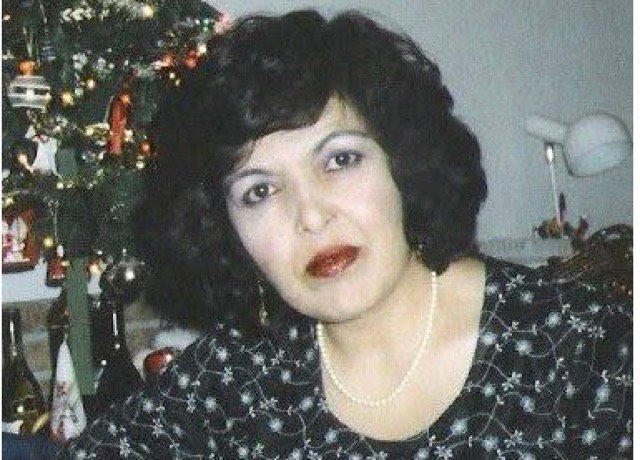
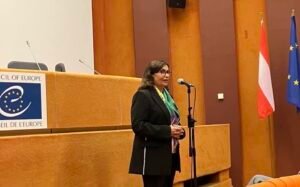
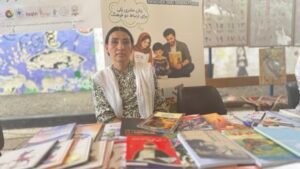
Layla Sarahat Rushani, an Afghan poet writing in Dari.
The Word as an Artifact: Exile and the Right to Memory
By Ivan Pozzoni
The poetry of Layla Sarahat Rushani is situated at the intersection where individual memory meets historical violence and the precariousness of cultural transmission. As an Afghan poet writing in Dari Persian, forced into exile during the first Taliban regime, Rushani represents a significant case for examining literature’s capacity to preserve experiences marginalized by political power. The concept of the counter-archive allows us to read this body of work as a practice of symbolic survival: poetry gathers traces, reactivates memories, and keeps a language accessible even when the speaking community is subjected to censorship and dispersion. Michel Foucault, in The Archaeology of Knowledge (Pantheon Books, 1972, 129), writes: “The archive is first the law of what can be said”. This definition shifts attention from the physical preservation of documents to the rules determining what must be spoken, published, and passed down. Repression operates at this threshold: it demarcates recognizable voices, restricts public participation, and weakens the conditions necessary for cultural continuity. In Parandegek? (“Little Birds?), Rushani asks: «درین بهار بی بهار چگونه عشق را ترانه میکنی؟» (“In this spring without spring, how will you sing of love?”). The image of a spring deprived of its vital quality produces a semantic contradiction: the season of rebirth continues to exist, yet the conditions for rebirth appear negated. This question does not request information; it summons an interlocutor and forces them to confront the impossibility of separating song from the conditions of life. Linguistic pragmatics allows us to describe this shift through the concept of implicature: from the contrast between spring and the absence of spring, the reader derives a meaning that is not fully explicit. Poetry transforms the question into an act of address—a gesture that constructs a recipient and makes a condition of deprivation shareable. Edward Said, in “Reflections on Exile”, collected in Reflections on Exile and Other Literary and Cultural Essays (Granta Books, 2000), observes: “Exile is strangely compelling to think about but terrible to experience”. The distance between the ability to conceptualize exile and its concrete experience highlights the risk of reducing the suffering of others to a reassuring aesthetic object. Rushani’s poetry demands a reading that holds together the power of its imagery and the historical conditions of its production. Her writing must not be reduced to biographical testimony: poetic form selects, condenses, and transforms experience, producing a linguistic object that exceeds simple record-keeping. Literature becomes a counter-archive precisely because it does not replicate administrative documents: it organizes lived experience through rhythms, images, repetitions, and addresses that render perceptible what an informative description would relegate to the background. The collective dimension of this memory emerges in the composition dedicated to Kabul: «ايا کابل شبانت را سرايم شکوه آسمانت را سرايم» (“Kabul, shall I sing of your nights? Shall I sing of the splendor of your sky?”). The city is addressed as an interlocutor, and the landscape becomes the object of an affective relationship. The poetic question does not merely describe Kabul: it constitutes the city as the recipient of a discourse uttered by a distant voice. Pragmatically, personification transforms the place into a “you” – a second person to address- while the interrogation leaves open the tension between belonging and separation. The city survives in language when the subject can no longer inhabit it. Poetry thus becomes a form of symbolic geography capable of safeguarding a relationship with the origin without pretending that exile can be erased. Walter Benjamin, in Illuminations (Schocken Books, 1968, 256), writes: “There is no document of civilization which is not at the same time a document of barbarism”. This proposition undermines the notion of a cultural heritage autonomous from the historical conditions of its production. Literature can be permeated by unequal access, institutional exclusions, and political violence that determine who may publish and who is forgotten. In Rushani’s case, the history of exile is not an external backdrop to her work: it constitutes one of the very conditions that make it urgent to investigate the circulation of her texts, the availability of editions, and their transmission across different languages and communities.
Cultural Memory, the Body, and the Mechanisms of Poetic Form
Cultural memory is not simply the sum of individual recollections. It relies on texts, libraries, journals, translations, reading practices, and institutions capable of ensuring continuity across generations. Marianne Hirsch, in The Generation of Postmemory: Writing and Visual Culture After the Holocaust (Columbia University Press, 2012, 5), describes postmemory as the relationship of the subsequent generation to “the personal, collective, and cultural trauma of those who came before”. While this concept originated in the study of intergenerational trauma transmission and should not be mechanically applied to the Afghan context, it provides a tool for understanding how readers can connect with unlived experiences through texts that preserve traces, images, and affects. Rushani’s poetry reaches audiences across distance and time, transforming individual memory into a shared cultural resource. In Gom-karda-ye āshiyāne (“The Lost Nest”), the line «من خشک خشک خشکم تو رودبار جاری من یک سکوت سردم تو یک قفس قناری» establishes a relationship between the subject’s aridity, the flowing river, the cold silence, and the caged canary. The proposed translation (“I am dry, dry, dry; you are a flowing river; I am a cold silence; you are a canary in a cage”) reflects a structure grounded in sensory oppositions. Aridity suggests immobility and deprivation; the river introduces movement; silence contrasts with the bird’s potential song. The repetition of khoshk (“dry”) intensifies the first pole of the opposition, while the subsequent images build a scene in which the possibilities of living and self-expression are unevenly distributed. A political interpretation need not be automatic: the text maintains an affective ambivalence encompassing romantic separation, exile, or a generalized experience of loss. Its strength lies in its capacity to sustain multiple levels of reading. Sara Ahmed, in The Cultural Politics of Emotion (Edinburgh University Press, 2004, 4), asserts that emotions “shape the very surfaces of bodies”. Affect is not an interior content: it circulates among subjects, images, and discourses, helping to establish distances, belongings, and forms of recognition. In Rushani’s poetry, the body is evoked through environmental imagery: aridity, water, air, wounds, cages. Suffering acquires a sensory consistency, becoming perceptible without being reduced to an abstract explanation. The neuroscience of memory offers further insight into this function of imagery, as autobiographical memory involves reconstructive processes and associations between sensory information, knowledge, and emotions. A poetic image can act as a memory cue, facilitating the connection between a concrete sensation and a complex experience. This observation addresses general cognitive mechanisms: it does not imply that all readers react identically, nor does it justify claiming universal therapeutic effects for poetry. Repetition, metaphor, and interrogation must be analyzed through rigorous literary criticism. It is necessary to distinguish propositional content, image structure, enunciative voice, and pragmatic effect. In «درین بهار بی بهار چگونه عشق را ترانه میکنی؟», the question formulates a problem that the reader must complete inferentially; in the line comparing aridity and the river, by contrast, meaning develops through lexical and sensory oppositions. Form does not merely wrap a prefabricated message: it actively participates in producing it. Repetition renders the persistence of deprivation palpable; the contrast between immobility and movement structures the experience of distance; the personification of Kabul creates a symbolic interlocutor. Textual analysis connects micro-linguistic structures to historical conditions without reducing poetry to a political manifesto. Lauren Berlant, in Cruel Optimism (Duke University Press, 2011, 1), defines a relation of cruel optimism as one where “something you desire is actually an obstacle to your flourishing”. This formula helps illuminate the ambivalent relationship between the desire for belonging and the impossibility of retrieving the world left behind. The homeland remains an affective touchstone, even as return remains blocked or appears as a project incapable of reconstructing the past. Poetic writing does not resolve this tension: it makes it articulate and preserves its irresolution. The counter-archive is not a repository of placated memories; it is a space where desire, loss, and the possibility of a new relationship with the past co-exist. The sociology of art further broadens this perspective. The survival of a literary work depends on material and symbolic networks: publishers, journals, translators, libraries, scholars, diasporic communities, and readers. A poetry collection is not an inert vessel, just as a translation is not a neutral transfer. Both actively participate in constructing the author’s visibility and selecting which works are passed down. A political sociology of art must ask who possesses the resources to publish, who controls cultural spaces, and what conditions allow a voice to circulate beyond national borders. Rushani’s trajectory invites us to examine exile as a transformation of literary infrastructure: geographical distance alters networks of reception, while language maintains an ongoing continuity with the community of origin.
The Politics of Oblivion and the Responsibility of Reading
The poetic counter-archive assumes political significance when it intervenes in the conditions that determine the visibility and endurance of experiences. Cultural repression operates through censorship, control of education, the exclusion of women from public life, intimidation of authors, and the weakening of independent institutions. Rushani’s life—continuing her cultural work in exile—invites reflection on the consequences of these pressures. A methodological distinction between biography, historical context, and textual analysis must be preserved: an author’s documented exile does not alone prove that every image in her work is an explicit political declaration. Meaning emerges from the dynamic relationship among poetic form, context of production, and history of circulation. The Afghan poet and critic Wasef Bakhtari, in an interview collected by Partaw Naderi and reproduced by Farhangistan, states: «من تنها خود را یکی از رهروانراه شعر، یکی از خیل و ایل و تبار شاعران افغانستان میدانم» (“I consider myself merely one of the wayfarers on the path of poetry, one of the host and lineage of Afghanistan’s poets”). This declaration emphasizes belonging to a literary community that precedes and exceeds any individual author. Tradition is not a static relic: it consists of texts, voices, and practices that each generation receives and transforms. For an exiled poet, this continuity depends on whether her works are preserved, read, and situated in relation to other authors.
Reza Mohammadi, commenting on Bakhtari, describes him as «استاد واصف باختری، که از شهر بلخ (یا باختر) میآید، بدون شائبه شناسنامه ادبیات و فرهنگ افغانستان امروز است» (“Master Wasef Bakhtari, who comes from the city of Balkh, is beyond doubt the identity card of contemporary Afghan literature and culture”). This assessment shows how literary criticism helps construct representative figures of national memory. Applied to Rushani, it urges us to avoid both her marginalization and her reduction to an abstract symbol of persecution: her work deserves to be read both as a specific aesthetic creation and as part of a broader cultural history. Judith Butler, in Excitable Speech: A Politics of the Performative (Routledge, 1997), connects language to vulnerability and the possibility of social recognition. Language does not circulate in a neutral space: it risks exposing the speaker to sanctions, exclusions, and delegitimization. Poetic writing intervenes in this dynamic by bringing a voice into the public sphere and directing it toward potential readers. In Rushani’s poetry, the question about spring, the song addressed to Kabul, and the imagery of aridity build a relationship with an interlocutor who may be far away. Language preserves the possibility of addressing someone even when the political context severely limits physical presence. Poetry thus becomes a practice of symbolic reappearance rather than a guarantee of immunity from repression. The politics of oblivion (silencing) manifests through non-preservation. A text can physically exist and yet remain invisible if it is not cataloged, translated, or critically discussed. Maintaining a counter-archive requires concrete scholarly tasks: locating editions, verifying original orthography, identifying variants, naming translators, and reconstructing publication contexts. This precision is essential to the ethics of reading. If the goal is to counter the erasure of a voice, attributing unverified lines or arbitrary translations to an author creates a new form of distortion. Respect for persecuted literature begins with fidelity to texts and clarity regarding the limits of available sources. Finally, the relationship between poetry and memory hinges on an important distinction: preservation is not freezing. Every reading renews the engagement with the past and transforms how a text is understood. Poetry does not replace historiography, nor can it single-handedly restore what violence has destroyed. It can, however, preserve images, rhythms, and affective tones that allow marginalized experiences to continue being heard. In Rushani’s case, the spring without spring, the lost nest, the cold silence, and the addressed city form images through which loss becomes communicable and memory takes on a shared form.
In conclusion, reading Layla Sarahat Rushani as an author of a counter-archive means recognizing that poetry is capable of keeping open a space for memory when political institutions restrict the space for speech. Exile alters one’s relationship with language and homeland, while writing preserves their traces and transmits them to distant readers. The power of the text resides simultaneously in its imagery, its linguistic choices, and the conditions that make its circulation possible. For this reason, critical scholarship must combine interpretation with documentary verification: it is not enough to celebrate a persecuted poet; we must ensure her words are preserved, rigorously translated, and read in all their complexity. When power seeks to dictate which voices endure, close and accurate reading becomes a concrete form of resistance to oblivion.
About the author: Ivan Pozzoni was born in Monza in 1976. He introduced Law and Literature in Italy and the publication of essays on Italian philosophers and on the ethics and juridical theory of the ancient world; he collaborated with several Italian and international magazines. He wrote 152 volumes, wrote 1000 essays. His verses/essays are translated into 30 languages.
Note: The contents of the article are the sole responsibility of the author. Afghan Diaspora Network will not be responsible for any incorrect statements in the articles.