Pakistan’s Proxy War Returns to Nuristan
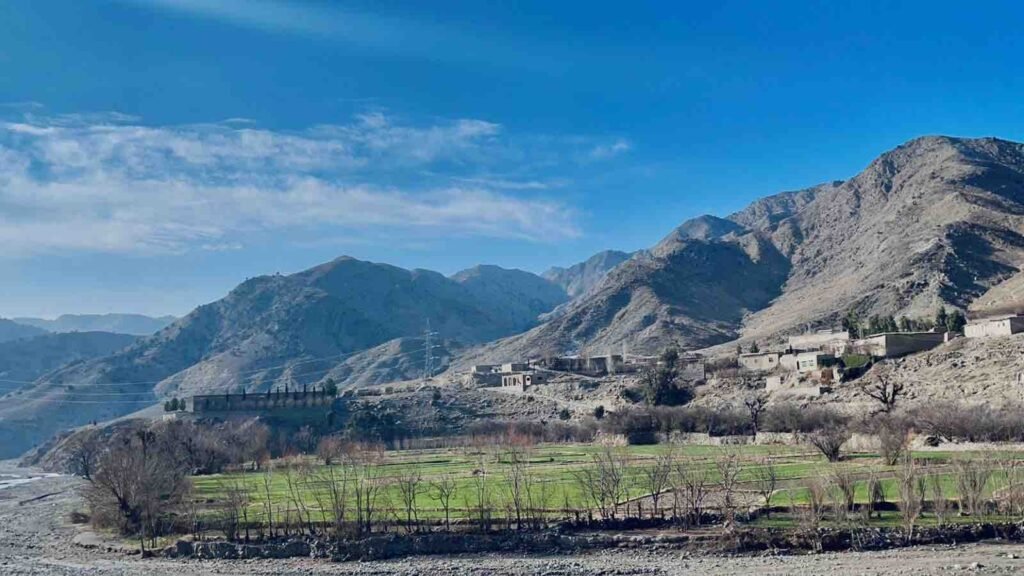
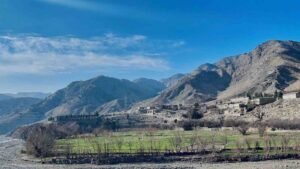
Khost province, along the Durand Line. Photo: @AADIL for ADN
Whether recruitment is conducted by opposition groups, criminal networks, or regional proxies, the underlying mechanism remains the same: economic hardship becomes a gateway to conflict.
By A. Shafaq
As more details emerge from the September fighting in Nuristan, the episode is increasingly being viewed as more than a failed military incursion. Beyond the competing battlefield claims, the testimonies of captured fighters point to a broader pattern that Afghanistan has experienced for decades: the recruitment, training, and deployment of Afghan nationals for conflicts shaped by regional rivalries.
The Taliban administration has accused Pakistan of facilitating the movement of anti-Taliban fighters through its territory and providing logistical support to opposition groups. Islamabad has rejected those allegations. Yet the accounts published after the clashes suggest a level of organization that extends well beyond spontaneous insurgent activity.
Several captured fighters described similar journeys. According to their testimonies, recruits were transported from Iran through Chabahar and Gwadar, brought to camps around Islamabad, and later transferred to Chitral before crossing into Afghanistan. Their accounts describe an organized network of recruitment, transportation, accommodation, training, and deployment.
The striking similarity of these accounts does not by itself prove state involvement. The testimonies were recorded while the men were in Taliban custody and cannot be independently verified. Nevertheless, they offer a rare glimpse into how vulnerable Afghan migrants may become entangled in armed conflicts.
One recurring theme is economic desperation. Most of those interviewed were migrant workers or unemployed Afghans who had spent time in Iran. Several said they were attracted by promises of salaries and employment opportunities. Javed, one of the captured men, later reflected that “the promises they make, whether about money or anything else, are completely false.” His statement suggests that material incentives, rather than political conviction, may have been an important recruitment tool.
If so, the Nuristan episode reveals a disturbing reality. Afghanistan’s prolonged economic crisis has created a pool of vulnerable young men who can be mobilized by armed actors willing to exploit their insecurity. Whether recruitment is conducted by opposition groups, criminal networks, or regional proxies, the underlying mechanism remains the same: economic hardship becomes a gateway to conflict.
The allegations concerning Pakistan are particularly significant because they fit into a longer history of accusations regarding proxy warfare. For decades, successive Afghan governments accused Pakistan of supporting armed groups to advance strategic interests inside Afghanistan. The irony today is that similar allegations are now being made by the Taliban authorities, who themselves were once the subject of comparable claims.
What makes the Nuristan case noteworthy is the level of detail contained in the testimonies. One detainee claimed that trainers in Pakistan instructed recruits in the use of Kalashnikov rifles, machine guns, rockets, and drones. Another alleged that large military vehicles transported fighters toward the border before they crossed into Afghan territory. Such claims remain unverified, but they contribute to a growing narrative that the conflict between Kabul and Islamabad is increasingly being fought through indirect means.
The human cost of that rivalry is evident in the words of the recruits themselves. Describing the battle in Nuristan, Javed recalled that “many of our fellow members were killed and wounded.” Whatever the ultimate political objectives of those who organized the operation, it was young Afghans who paid the price.
Perhaps the most revealing moment comes at the end of his testimony. Rather than discussing military goals or political grievances, he issued a warning to others: “Do not ruin the lives of youths. Do not send them to fight and kill.”
That appeal captures the broader significance of the Nuristan clashes. At their core, they are not only a story about border tensions, resistance groups, or competing security narratives. They are also a reminder that Afghanistan remains vulnerable to external influence and proxy competition. As long as regional actors continue to view Afghan territory as an arena for strategic contests, young Afghans will remain the most expendable participants in a conflict that many did not choose and from which few ultimately benefit.
A. Shafaq (pseudonym) is a researcher and lecturer at one of the private universities in Kabul.
Note: The contents of the article are the sole responsibility of the author. Afghan Diaspora Network will not be responsible for any incorrect statements in the articles.