Zakaria Osuli and the Construction of Afghan Historical Memory
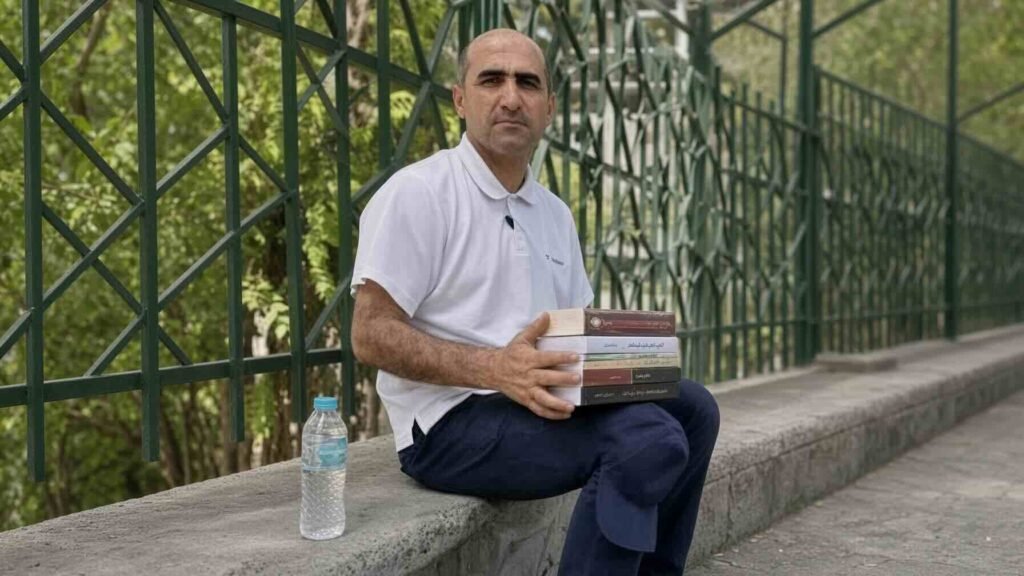
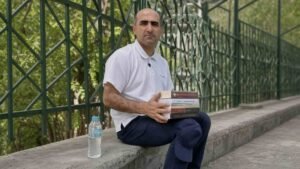
Zakaria Osuli, Afghan political commentator, researcher and lecture.
Writing as Testimony and Reconstruction of the Past
By Ivan Pozzoni
Contemporary Afghan history is marked by political fractures, armed conflicts, institutional transformations, and successive rewritings of the past. In this context, historical writing assumes a civic function: it gathers testimonies, preserves documents, compares divergent versions, and restores visibility to events that risk disappearing from public consciousness. Zakaria Osuli’s work is situated within this area of tension between historical research, testimony, and political interpretation. In the prologue of انتقال قدرت از پروفیسور برهانالدین ربانی به حامد کرزی (The Transfer of Power from Professor Burhanuddin Rabbani to Hamid Karzai), the author opens his account with “به یاد دارم” (“I remember”). The choice is significant: personal memory becomes the starting point of an investigation that seeks to transcend individual recollection through the collection and organization of sources. Osuli recalls his meeting with students and researchers in Panjshir on 13 Jadi 1377 of the Afghan solar calendar, and reports that the young people asked him for a “علمی، مستقل و مستدل” (“scientific, independent, and documented”) study. The request turned into a research commitment, completed in 1400. The memory of the meeting becomes the memory of the process through which a book takes shape. The transition from recollection to documentation is central. Osuli states that he gathered scientific materials and organized them into a research work; at the conclusion of the preface, he invites readers to “نقد کنید و نظر بدهید” (“criticize and formulate your observations”). The invitation introduces a dialogic dimension: the book remains open to verification, comparison, and correction. On a pragmatic level, the expression “به یاد دارم” performs a testimonial function; the verb to remember situates the narrator in a direct relationship with the event. The formula “نقد کنید” assumes a directive value: it urges the reader to participate in the construction of historical knowledge. The text does not present itself as a concluded memoir; it is a proposal for public discussion. The reconstruction of the political transition from Burhanuddin Rabbani to Hamid Karzai concerns a decisive passage in Afghan institutional history. The title itself delineates a historical problem: the transfer of power, its conditions, its protagonists, and its consequences. The structure of the volume, which includes documents, speeches, testimonies, and reconstructions by participants in the Bonn Conference, allows us to observe history as a confrontation among sources. The presence of different versions is essential because each political actor interprets events from their own position, according to specific interests, responsibilities, and memories. Nile Green, in the introduction to Afghan History Through Afghan Eyes (Oxford University Press, 2016, 1-52), reconstructs the plurality of Afghan historiographical traditions, developed in Dari, Pashto, Uzbek, Urdu, and Arabic. This linguistic plurality reminds us that national memory is a field of interpretations, in which cultural and political differences influence the selection of events and their narration.
Collective Memory, Trauma, and Intergenerational Transmission
Individual memory acquires historical meaning when it enters into a relationship with other testimonies and with the practices of a community. Parin Dossa, in Afghanistan Remembers: Gendered Narrations of Violence and Culinary Practices (University of Toronto Press, 2013, 134), writes that “The past (gozashta) is rendered present (haal), generating a dialogical narrative”: the past is brought into the present, generating a dialogical narrative. The Dari terms gozashta and haal express a temporal relationship in which the past continues to intervene in the present. Memory, from this perspective, is not an immobile repository: it is reactivated through family stories, daily practices, rituals, places, and objects. Dossa’s research also shows that the recollection of violence is intertwined with experiences of gender, domestic life, and culinary practices. The everyday becomes a form of social archive: gestures, recipes, habits, and stories must preserve traces of migrations, separations, and conflicts. The history of a country is also deposited in the experiences of people who rarely appear in official documents. This approach broadens the perspective of historical research on Osuli: alongside institutional protagonists and political agreements, it is necessary to consider the consequences of events on communities and generations. The problem of oblivion emerges with particular clarity in the testimony attributed to Mohammad Zahir Shah, reported by Shafiq Shamel in the essay “Forgotten Futures: History, Memoir, Afghanistan” (Middle East Institute, 2010): “Even though unpleasant events have happened, yet, I have forgotten about them, you, too, try to forget”. The phrase expresses a strategy of repressing the past and allows us to question the relationship between political reconciliation and the responsibility of memory. Forgetting risks appearing as an individual or institutional solution, but the erasure of shared experiences weakens the possibility of understanding the causes of conflicts and recognizing responsibilities. Annika Schmeding, in the chapter “Editing Sufism: Contemporary Negotiations of Memory and Religious Practice in Afghanistan”, published in Memory and Commemoration across Central Asia (Brill, 2023, 133-160), reports a statement by Sami Hasib Nabizada: “It is one thing just to say those things, and another to live by them”. The passage concerns the gap between statements and conduct in religious practice and the transmission of tradition. Its relevance to historical memory lies in the relationship between narrative and behavior: a community transmits its past through the practices it decides to maintain, transform, or abandon. Marianne Hirsch defines postmemory as the relationship that the succeeding generation maintains with the personal, collective, and cultural traumas of previous generations. In the volume The Generation of Postmemory: Writing and Visual Culture After the Holocaust (Columbia University Press, 2012), the scholar shows how images, stories, and testimonies can transmit experiences never lived directly. In the essay “Connective Arts of Postmemory” (2019, 171–176), she formulates the question: “Can we remember other people’s memories?” The problem is important in a society marked by wars and migrations: generations born after the events receive the past through family narratives, books, photographs, monuments, and public testimonies. The neuroscience of memory helps to clarify this dynamic. Human memory is reconstructive: each recollection reactivates previous traces and integrates them with subsequently acquired information. Autobiographical memory is exposed to selections, omissions, and reinterpretations. The written document, recording, and archive function as external control supports, making it possible to compare recollection with verifiable elements. Historical writing performs a stabilizing function: it preserves a consultable trace and makes the critical revision of testimonies possible.
Archives, Political Power, and the Responsibility of Writing
Public memory also depends on the institutions that decide which documents to preserve, which figures to commemorate, and which narratives to disseminate. Aleida Assmann, in the essay “Canon and Archive” included in Cultural Memory Studies: An International and Interdisciplinary Handbook (edited by Astrid Erll and Ansgar Nünning, De Gruyter, 2008, 97-107), describes the archive as a kind of “lost-and-found office” of society. The image indicates that what has been excluded from active memory must be recovered through documentary preservation. The archive remains selective: the collection of sources reflects power relations, social differences, and inequalities of access. Astrid Erll, in Memory in Culture (Palgrave Macmillan, 2011), studies literature as “a medium of cultural memory”. Literary and historiographical writing organizes the past through narrative forms, perspectives, and linguistic choices. The text becomes a medium of transmission capable of reaching readers distant in time and space.
In the Afghan case, the plurality of languages and cultural traditions makes the preservation of original sources and the quality of translations important. A document in Dari or Pashto carries with it categories, nuances, and references that risk being attenuated in the transition to another language. Afsaneh Najmabadi, in Women with Mustaches and Men without Beards: Gender and Sexual Anxieties of Iranian Modernity (University of California Press, 2005, 1), observes: “if we use gender analytically, sources about men are also sources about women”. The phrase invites us to read sources through social relations and gender structures. Although dealing with Iranian modernity, her method offers a comparative tool useful for the study of Afghanistan: documents produced by men and institutions can reveal the conditions of women, family hierarchies, and forms of exclusion. Political history must also be interrogated for what it leaves at the margins. Michael Rothberg, in Multidirectional Memory: Remembering the Holocaust in the Age of Decolonization (Stanford University Press, 2009), proposes the concept of “multidirectional memory”. Collective memories must enter into relationship, recall one another, and transform each other reciprocally. The comparison between different historical experiences makes it possible to understand the forms of violence and discrimination without erasing the specificities of each context. This perspective is useful for placing Afghan memory in a comparative dimension, keeping its history at the center. Ann Rigney, in the chapter “Decommissioning Monuments, Mobilizing Materialities”, included in The Routledge Handbook of Memory Activism (Routledge, 2023), observes that, for a memory to find space in society, “a new narrative has to find expression”. Memory depends on the possibility of making marginalized experiences visible and reconsidering the symbols that occupy collective space. Monuments, museums, books, and archives participate in the definition of identity: they establish which events deserve to be remembered and which figures become representative of the community. The political dimension of writing also emerges from Osuli’s public trajectory. PEN America and Scholars at Risk identify him as an Afghan writer, researcher, and lecturer, and document his arrest in January 2023 and his release in April of the same year. These data do not prove in themselves the specific reasons for the detention, but they place intellectual work in a context where freedom of research and expression is subjected to pressure. The ability to write, publish, and discuss historical documents constitutes an essential condition for the circulation of knowledge. Osuli’s writing must be read, in conclusion, as an attempt to make a controversial phase of Afghan history consultable through sources, testimonies, and reconstructions. The value of his work depends on the possibility of verifying sources, distinguishing testimonies from interpretations, and subjecting conclusions to public discussion. Historical memory becomes a shared responsibility: it requires accessible documents, preserved archives, accurate translations, and freedom of critique. Writing the past means offering future generations the tools to understand what happened, recognize the consequences of political decisions, and discuss the future with greater awareness.
About the author: Ivan Pozzoni was born in Monza in 1976. He introduced Law and Literature in Italy and the publication of essays on Italian philosophers and on the ethics and juridical theory of the ancient world; he collaborated with several Italian and international magazines. He wrote 152 volumes, wrote 1000 essays. His verses/essays are translated into 30 languages.
Note: The contents of the article are the sole responsibility of the author. Afghan Diaspora Network will not be responsible for any incorrect statements in the articles.