Sayed Alam Hashimi: Poetry Under Interrogation: Memory, Dissent, and the Suppression of the Word in Taliban-Ruled Afghanistan
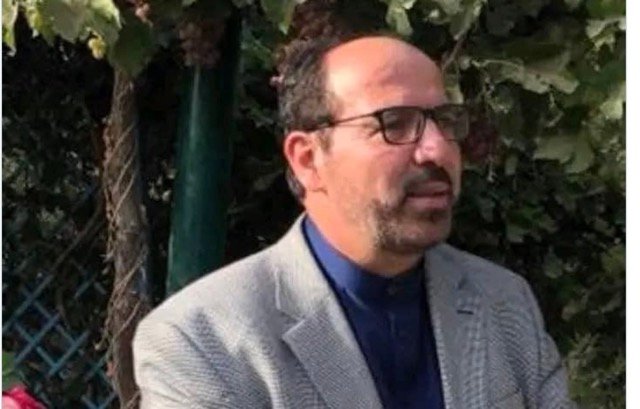
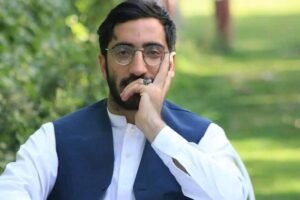
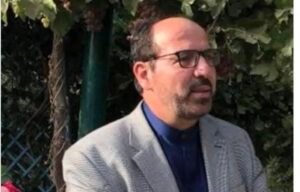
Afghan poet and cultural activist, Sayed Alam Hashimi.
The Poet as a Political Problem: Documented Biography and the Construction of Dissent
By Ivan Pozzoni
What renders a poet dangerous to a regime that seeks to discipline not merely behaviors, but collective memory itself? When applied to the case of Sayed Alam Hashimi, this question requires a preliminary distinction between verifiable biography, political interpretation, and symbolic construction. Available sources describe Hashimi as a poet and cultural activist originally from Panjshir, a region in Afghanistan that has become a primary symbol of anti-Soviet resistance and opposition to the Taliban. On February 16, 2025, several Afghan news outlets reported his arrest in Kabul by Taliban intelligence. Etilaat Roz described him as «سید عالم هاشمی، فعال فرهنگی و شاعر اهل پنجشیر» («Sayed Alam Hashimi, cultural activist and poet originally from Panjshir») (Etilaat Roz, February 16, 2025). This statement is not an aesthetic judgment: it is a professional and geographical qualification that places the author within the field of Afghan cultural production. Its documentary sobriety makes it a reliable point of departure amidst the celebratory narratives that often surround persecuted intellectuals. The coverage by Amu TV on the following day presents him with an analogous formula, «شاعر وفعال فرهنگی» («poet and cultural activist»). The outlet reports that family members placed the arrest around eleven in the morning on February 16, in the area of Arya Township in Kabul, and that they lacked information regarding where Hashimi had been taken. The report adds that the author was born in Panjshir and that a recent work of his was the collection Masoodnama. The description of its content is formulated as «تاریخچه مبارزه و ایستادگی مردم افغانستان در برابر ظلم و تجاوز» («the history of the struggle and resistance of the Afghan people against oppression and aggression») (Amu TV, February 17, 2025). The title Masoodnama references Ahmad Shah Massoud, the military commander and protagonist of the Afghan resistance who was assassinated in 2001. The memory of Massoud serves a function that exceeds biographical commemoration: it concentrates images of territorial autonomy, armed resistance, and historical continuity. Poetry that adopts this memory as its subject enters a politically contested field of meaning. The name becomes a public signifier; its repetition activates a community of remembrance, gathers dispersed experiences, and opposes an alternative genealogy of legitimacy to the official narrative. It is unnecessary to attribute a programmatic statement to every verse for a text to assume a political function. It is sufficient that the evoked memory contradicts the version of the past that power wishes to make dominant. The case of Hashimi situated at the intersection of three levels: the concrete individual, the poetic production referenced by sources, and the political symbolism attributed to the latter. Confusing them would produce a prefabricated literary martyr, useful for rhetoric, yet disrespectful to the author. Separating them allows us to understand how an individual voice can be perceived as the bearer of collective memory. The critical question does not consist in demonstrating Hashimi’s aesthetic greatness in advance—for which accessible texts and a comparison with the Persian-language poetic tradition would be required—but rather in understanding why his cultural activity was recounted in relation to an imaginary of resistance and why his arrest aroused concern.
The Pragmatics of the Word: Censorship, Memory, and Authority
Poetic language does not merely convey information: it alters the relationships between speaker, listener, and what a community considers worthy of remembrance. Linguistic pragmatics allows us to describe this dimension without reducing poetry to a political message decipherable all at once. In How to Do Things with Words (Oxford: Clarendon Press, 1962), J. L. Austin studies language through the acts performed in speaking. Applied cautiously to political poetry, this approach enables us to ask what a text does when it names a place, evokes a commander, preserves the memory of a defeat, or defines an event as resistance. A composition can commemorate, denounce, convene a public, or reactivate a shared memory. The effect does not depend solely on the private intentions of the author: it depends on cultural conventions, the context of utterance, and reception. In Hashimi’s case, the reference to Massoud and Panjshir reported by sources provides an example of this dynamic. Etilaat Roz writes: «او پیش از این اشعاری در وصف احمد شاه مسعود و پنجشیر سروده است» («previously he had composed poems in praise of Ahmad Shah Massoud and Panjshir») (Etilaat Roz, February 16, 2025). Grammatical and journalistic caution matters: «according to sources» does not equate to «the regime declared». The distinction between indirect testimony and established motive must remain visible. The pragmatics of dissent emerges from this zone of uncertainty. A text acquires oppositional value for the public, is interpreted as a threat by a political apparatus, or circulates as commemoration within its community of origin. These possibilities do not coincide. Censorship tends to erase the distance between utterance and interpretation, treating the potential effects a discourse might produce as proof of the author’s intent. Critical reading must keep content, speech act, reception, and institutional response separate. The fact that a composition is perceived as politically sensitive does not authorize one to invent its words; it authorizes an investigation into the mechanisms that transform a text into an object of surveillance.Pierre Bourdieu, in Language and Symbolic Power (Cambridge: Polity Press, 1991), allows for a deeper examination of linguistic authority. Words do not circulate in a neutral space: their efficacy depends on the position of the speaker and the institutions that authorize or delegitimize specific voices. While a poet possesses no administrative or military power, they are capable of helping establish which names are worthy of memory, which figures may be celebrated, and which events deserve narration. Their symbolic capital becomes relevant when an authority attempts to monopolize the definition of the past. It is not necessary to assume that every poet exercises mass influence; it suffices to recognize that the struggle over memory takes place through minority cultural practices, reader networks, commemorations, and poetic collections. The collection Masoodnama, as described by Amu TV, unites Massoud’s name with a narrative of resistance against «ظلم وتجاوز» («oppression and aggression»). These words belong to the journalistic description of the work, and their semantic weight is evident: «ظلم» designates injustice or oppression, while «تجاوز» indicates aggression, violation, or outrage depending on context. Together, the terms construct a moral framework of the conflict in which historical memory is interpreted as resistance to an illegitimate force. Their journalistic usage does not prove that Hashimi chose them personally; it allows us to observe the frame through which his work was presented to readers. A neuroscientific perspective must integrate this reading without becoming a reductionist explanation. Rhythm, repetition, concrete imagery, and emotional associations contribute to the encoding and retrieval of memories; narrative organizes scattered events into meaningful sequences. These general processes do not prove a specific effect of Hashimi’s verses, for which experimental data and sufficient textual analysis are lacking. They do, however, suggest why poetry can participate in the construction of public memory: it does not merely transmit propositions; it offers forms through which an experience can be remembered, shared, and recognized. The cognitive dimension of poetry and its political function remain distinct, even as they interact.
The Arrest, the Archive, and the Limit of Testimony
The account by Amu TV on February 17, 2025, attributes to Hashimi’s family the information that, following his arrest, they had received no news regarding his fate. The Persian text of the report states: «خانواده این شاعر و فعال فرهنگی گفتهاند که تا کنون از سرنوشت او اطلاعی ندارند» («the family of this poet and cultural activist stated that, up to that moment, they had no information regarding his fate») (Amu TV, February 17, 2025). The sentence describes the condition reported by the family; it must not be transformed into an update on his status. Etilaat Roz reported his transfer to the facility identified as Directorate 40 of Taliban intelligence, noting that the reasons for the arrest were unclear. The Afghanistan Justice Archive recorded the incident, picking up the reconstruction of the arrest and the possible link to poetry on Massoud and Panjshir. The convergence of sources makes it reasonable to state that the arrest was reported by multiple news outlets and that family members declared they did not know the poet’s fate immediately following his detention. It does not authorize presenting the political motive as established fact. Etilaat Roz wrote: «هنوز انگیزهی بازداشت این فعال فرهنگی از سوی طالبان روشن نیست» («the motive for the arrest of this cultural activist by the Taliban is not yet clear») (Etilaat Roz, February 16, 2025). This sentence prevents the essay from filling with narrative certainty what sources left open. The potential connection to poems dedicated to Massoud is a hypothesis reported by local sources; an official motive does not appear communicated in the reports. In a publication by the Marshal Fahim Foundation, Marshāl-e Afghanistan va hamdigarpaziri (161), there appears a prose contribution titled «مارشال افغانستان الگوی وحدت ملی بود», translatable as «The Marshal of Afghanistan Was a Model of National Unity», signed «سید عالم هاشم– – نویسنده و شاعر» («Sayed Alam Hashimi – writer and poet»). The text concerns the figure of Marshal Mohammad Qasim Fahim and his political and commemorative significance. A second document, Solh dar negāh-e Marshāl-e Afghanistan (235), presents the title «شهر خالیست ز عشاق» and the name «سید عالم هاشمی». The verses follow: «شهر خالیست ز عشاق بود کاز طرفی / دست از غیب برون آید و کاری بکند» («The city was empty of lovers, such that from somewhere / a hand might emerge from the unseen and do something»). The documentation continues with a commemoration of Marshal Fahim, dated in the Afghan calendar to the eighteenth day of Hoot, 1398, corresponding to March 2020. This documentary limit is also a critical limit. Lacking an authenticated corpus of Hashimi’s verses, we cannot rigorously describe his meter, repertoire of imagery, use of the classical Persian tradition, poetic language, or aesthetic transformation of Massoud’s figure. Any analysis that attributed specific metaphors, rhythmic choices, or first-person statements to him without access to the texts would be a fabrication. It is possible, however, to examine the public reception of his work: how news outlets define him as a poet and cultural activist, the prominence given to Masoodnama, the reported connection between his compositions and the memory of Panjshir, as well as the uncertainty that surrounded his arrest. Literary criticism begins by recognizing the point where evidence ends. Political theory of art helps clarify why freedom of expression does not coincide merely with the ability to utter a sentence. One must be able to preserve, publish, read, cite, and discuss it without its author being arbitrarily deprived of liberty. The case of Sayed Alam Hashimi poses a question that transcends his individual narrative. A society in which memory is contested must perceive poetry as an alternative archive, capable of preserving names and interpretations that do not coincide with the narrative of power. The conclusion does not require transforming the author into a hero without flaws, nor inventing verses to make his story poignant. It requires defending the very possibility that his work be read, verified, and judged in its original language. When power intervenes upon the word, the first duty of criticism is not to imitate its gesture: it must not seize the text by substituting it with a preformed image of the poet. It must maintain the distance between what is known, what is reported, and what remains to be verified. In Hashimi’s case, this distance is not a weakness of discourse. It is the ethical condition of its credibility. Before declaring what he wrote, one must read what he wrote; before establishing why he was arrested, one must distinguish testimonies from conclusions. The freedom of poetry begins with the possibility that words not be falsified, even in the name of the cause that seeks to defend them.
About the author: Ivan Pozzoni was born in Monza in 1976. He introduced Law and Literature in Italy and the publication of essays on Italian philosophers and on the ethics and juridical theory of the ancient world; he collaborated with several Italian and international magazines. He wrote 152 volumes, wrote 1000 essays. His verses/essays are translated into 30 languages.
Note: The contents of the article are the sole responsibility of the author. Afghan Diaspora Network will not be responsible for any incorrect statements in the articles.