Ashabuddin Omarkhail: A Mechanic’s Journey from Kunduz to Paris
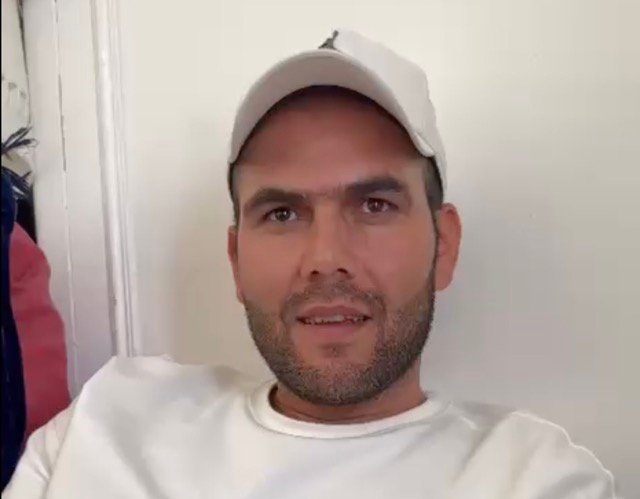
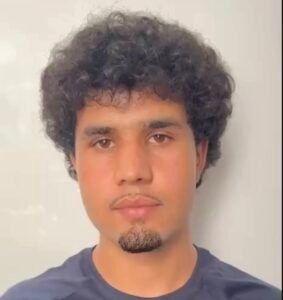
Afghan asylum seeker in Paris, France. Photo: @Ali Ahmad for ADN
“Kuchnay Kabul reminds us of big Kabul, our capital. It reminds us of our love for our home country.”
When Ashhabuddin Omarkhail speaks about cars, his eyes brighten. “I have fixed every type of car,” he says proudly. “Only Ferrari, Lamborghini, and Bugatti I have not touched.” At 30‑something, he carries 23 years of experience as a car mechanic—work he began at just seven years old in Kunduz, Afghanistan.
His journey to France was long and grueling. He left Afghanistan in 2014, spent seven years in Turkey, then crossed Bulgaria and Serbia before finally reaching France in December 2021.
“I found Kuchnay Kabul through TikTok,” he says. “I called the association many times. I sent messages on WhatsApp. When they replied, I was so happy.”
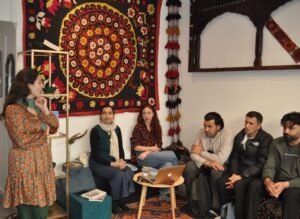
Kuchnay Kabul (Little Kabul) is a small but deeply meaningful space on rue des Pyrénées in northeastern Paris. Founded by Sarah Hermann, a French scholar who speaks fluent Pashto, the association occupies three modest adjoining rooms filled with books on Afghan history, poetry, politics and art, embroidered textiles, and a traditional sitting area with mattresses and pillows. Here, French is taught through Pashto—an approach that makes the language accessible and emotionally safer for newcomers.
Unlike many refugees, Ashabuddin never attended school in Afghanistan. His education was the workshop, the tools, the engines he learned to dismantle and rebuild. Now, in Paris, he is learning French. “With language, we can do many things,” he says.
His experience mirrors the broader challenges Afghans face in France. According to InfoMigrants, Afghans often struggle with long asylum procedures, unstable housing, and limited access to formal employment. Many arrive after years spent in transit countries where they had no legal status, making integration even more difficult. For skilled workers like Ashabuddin, the lack of recognized qualifications can be a major barrier.
He is preparing for his asylum interview in September, meeting regularly with his lawyer. “I wait to see if I get asylum,” he says quietly, aware of how much depends on that decision.
Yet, as InfoMigrants notes, Afghan resilience is unmistakable. There are Afghan mechanics, engineers, artists, and entrepreneurs who have rebuilt their careers in France. Their stories show that with language support and community networks, integration becomes possible.
For Ashabuddin, Kuchnay Kabul is more than a classroom. It is a place where he feels recognized.
“When a French lady speaks Pashto, it is very attractive,” he says with a shy smile. “She writes in Pashto. Kuchnay Kabul reminds us of big Kabul, our capital. It reminds us of our love for our home country.”
In this small room filled with Afghan books and memories, Ashabuddin finds dignity—and a path toward rebuilding his profession in France.