Karzai Under the Taliban: Confined Life, Unbroken Stand for Girls’ Education
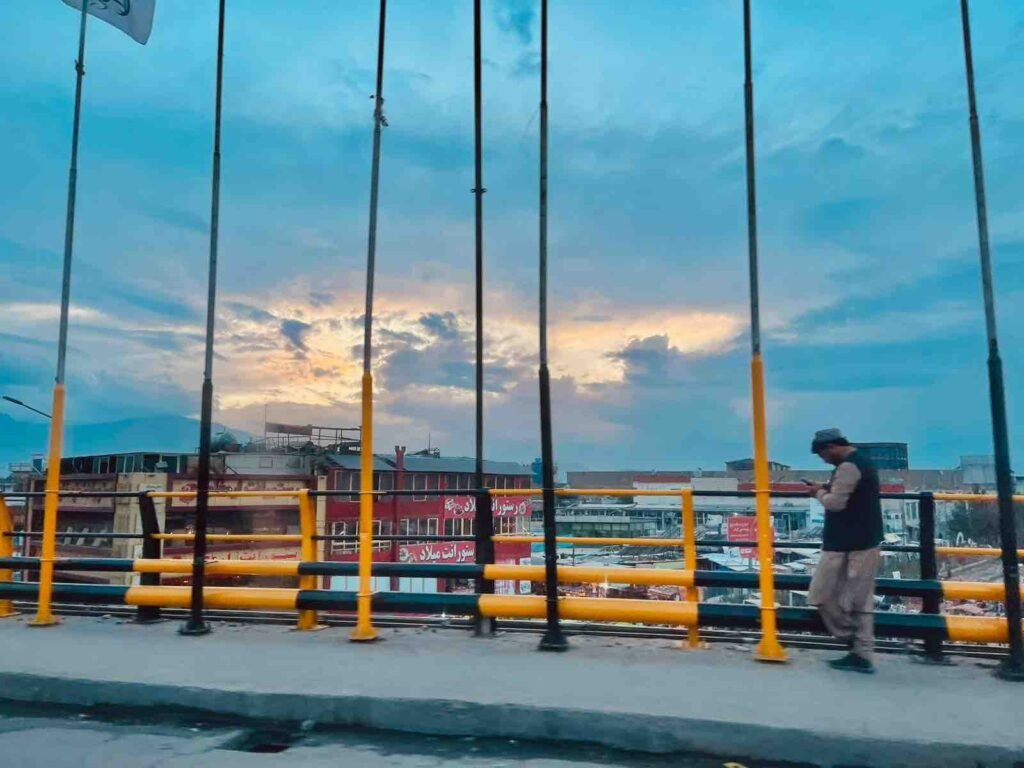
Kabul, Afghanistan. Photo: @Afghan for ADN
“The only time that children got the opportunity to educate themselves… was the 20 years of the Republic.”
By Kazim Jafari
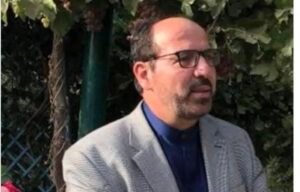
Hamid Karzai, Afghanistan’s former president, now lives in Kabul under conditions he openly describes as a form of house arrest. Five years after the Taliban’s return to power, his daily life has narrowed to a few rooms, a controlled routine, and tightly monitored movement. Yet in a long interview with Mishal Husain for Bloomberg, Karzai insisted that his personal confinement is insignificant compared to the crisis facing Afghan girls and women.
Karzai’s description of his daily life is stark. “I do not leave my home without letting the Taliban authorities know,” he said. Every movement requires approval.
“If they agree, they provide the security and the escort to take me there.” Even visitors must be vetted: “Some colleagues and visitors are allowed, others are not allowed… each visit, yes.”
He rarely leaves his home. “Maybe once in three or four months,” he said, usually to visit family or attend a clinic. The rest of his time is spent inside, reading news, exercising, and speaking with Afghans and international contacts by phone or video.
“My time is filled very much,” he insisted. “The restrictions don’t bother me at all.”
Karzai’s refusal to dwell on his own limitations reflects a broader pattern in his political life. He has lived through decades of conflict, assassination attempts, and political upheaval. What troubles him now is not his lack of freedom, but the loss of opportunity for Afghan girls.
“The Only Way for Afghanistan to Stand Tall”
Education is the issue Karzai returns to repeatedly, with urgency and emotion. He describes Afghanistan’s last forty years as a period of upheaval in which only one era—the 20 years of the Republic—offered children a real chance to learn. “The only time that children got the opportunity to educate themselves… was the 20 years of the Republic,” he said. “This produced a huge number of educated men and women.”
For Karzai, education is not simply a social service; it is the foundation of national survival. “The only way for Afghanistan to stand tall… is through an educated population,” he said. “We cannot imagine progress any other way.”
He continues to raise the issue with Taliban leaders whenever possible. “Those who come and meet me, those who talk to me, they are of the same opinion as I am,” he said. But agreement has not translated into policy. Girls remain barred from secondary school, and women are excluded from most public work. Still, Karzai insists that Afghan society overwhelmingly supports education.
“This is a debate overwhelmingly in favor of education in Afghan society,” he said. “Someday sooner or later we’ll get back.”
Karzai’s own daughters are directly affected by the ban. Husain asked whether he is considering sending them abroad to study. His answer revealed the tension between personal responsibility and national principle.
“As a father, it is my responsibility to provide them the best education,” he said. “But as a citizen of Afghanistan, it is also my responsibility to have my own country ready for educating girls in our own environment.” Sending his daughters abroad, he argued, would signal surrender.
“It will mean we have given up on this right, and I would never give up on this right.”
Despite the restrictions, the humanitarian crisis, and the stalled political process, Karzai insists he remains hopeful.
“Afghanistan will be a country where we will be prospering very, very well,” he said. “We will be educated. We will be a great country… I have no doubt.”
His greatest achievement, he said, was expanding education and rebuilding a sense of national belonging. His greatest regret was failing to achieve peace. “I wanted it,” he said quietly. “I didn’t reach it.”
Yet even confined to his home, Karzai continues to push for the future he once tried to build: a peaceful Afghanistan where girls walk to school freely, and where education—“the only way for Afghanistan to stand tall”—is a right, not a privilege.
Kazim Jafari is a political science student at the University of Heidelberg in Germany.
Note: The contents of the article are the sole responsibility of the author. The Afghan Diaspora Network will not be responsible for any incorrect statements in the articles.