Karzai on Pakistan: “They can’t live with any Afghan government.”
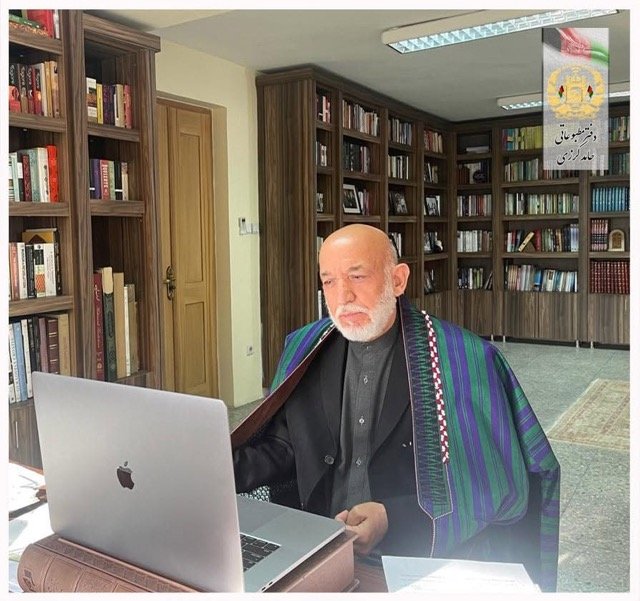
Hamid Karzai, the former President of Afghanistan.
Karzai urges Pakistan to abandon extremism as a tool of influence.
By Kazim Jafari
In his interview with Mishal Husain for Bloomberg, former Afghan president Hamid Karzai offered one of his most candid assessments yet of Pakistan’s role in Afghanistan’s turmoil. His remarks were striking not only for their bluntness but also for the contradictions he highlighted—Pakistan as both a spoiler and, unexpectedly, a constructive diplomatic actor.
Karzai’s core argument was simple: Pakistan’s policy toward Afghanistan has been fundamentally flawed for decades.
“Pakistan can’t live with any Afghan government,” he said. “They couldn’t live with the Republic; they can’t find common ground with the Taliban.”
For Karzai, this contradiction reveals a deeper structural problem. “There is something wrong in Pakistan’s own policy towards Afghanistan,” he insisted.
This critique carries weight. Karzai has long accused Pakistan of supporting militancy inside Afghanistan, a claim echoed by Afghan officials for years. Yet today, Pakistan itself faces rising violence, including attacks by the Pakistani Taliban and insurgents in Balochistan.
Husain pointed out the irony: Pakistan once backed the Afghan Taliban, and now the two are fighting each other. Karzai agreed.
“That proves,” he said, “that Pakistan’s own ways and means are hurting them now.”
Still, Karzai did not limit himself to criticism. He also acknowledged moments when Pakistan played a constructive role—particularly in mediating between the United States and Iran during recent tensions.
“Pakistan has done well,” he said. “Pakistan actually very promptly and smartly… we appreciate it.” He emphasized that this was not meddling but “something constructive,” adding, “I hope they continue to do the same and they shouldn’t give up.”
Karzai’s analysis suggests that Pakistan’s influence is both unavoidable and unstable. It can facilitate diplomacy one day and fuel conflict the next. For Afghanistan, this duality is dangerous.
Karzai repeatedly urged Pakistan to abandon extremism as a tool of influence.
“I have repeatedly called on Pakistan to seek a civilized relationship with Afghanistan,” he said. “Civilized meaning away from the use of extremism and radicalism… that won’t help them, that would hurt them.”
When asked how the current tensions—militancy, border clashes, and political mistrust—might be resolved, Karzai pointed to external mediation. “Britain is one of the countries with deep relationship historically with Pakistan and Afghanistan,” he said. He hopes London will “bring a more sensible relationship in this region.”
China, too, has a role: “China is welcome… it has tremendous influence in Pakistan and is also a friend of Afghanistan.”
Karzai’s comments reflect a broader theme in his political worldview: Afghanistan’s stability depends on regional cooperation, not domination. His critique of Pakistan is sharp, but his proposed path forward is diplomatic, multilateral, and grounded in dialogue.
Ultimately, Karzai’s message is that Pakistan’s choices will shape Afghanistan’s future—but Pakistan must first rethink its own strategy. As he put it plainly: “They need to change their ways and means with regard to Afghanistan.”
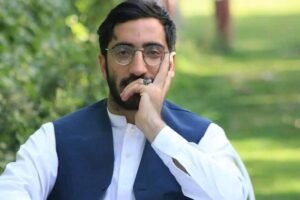
Kazim Jafari is a political science student at the University of Heidelberg in Germany.
Note: The contents of the article are the sole responsibility of the author. Afghan Diaspora Network will not be responsible for any incorrect statements in the articles.