Mass Deportations of Afghan Refugees from Pakistan Continues
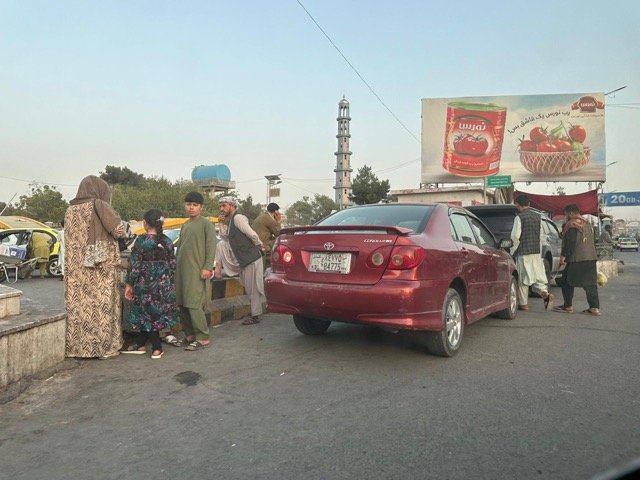
Afghanistan's capital: Kabul. Photo: @Gulistan for ADN
The deportations of Afghans from Pakistan are not only a humanitarian catastrophe but also a destabilizing economic and political act.
By Fatima Chaudhary
On August 7, Pakistan’s Peshawar High Court rejected asylum and temporary residence requests by two former Afghan soldiers, ruling that they had failed to establish a violation of their fundamental rights. The petitioners had sought temporary protection, visa extensions, and immunity from arrest and deportation, arguing that their lives would be in grave danger if returned to Afghanistan. Yet the court concluded that such fears were insufficient grounds to invoke constitutional jurisdiction under Article 199 of Pakistan’s Constitution. This ruling underscores the rigidity of Pakistan’s legal framework in the face of an unfolding humanitarian crisis.
Pakistan’s Foreign National Security Cell has spearheaded a sweeping campaign of arrests and deportations. According to official figures, 140,468 Afghan nationals have already been deported from Punjab alone.
Nationwide, the tally stands at approximately 2.68 million deportations, many involving families who had lived in Pakistan for decades. This is a humanitarian crisis that has gone largely ignored by the global community.
Afghan nationals are apprehended, shifted to holding centers, and processed before being deported to Afghanistan. Thirty-nine holding centers are currently operational across Punjab, where 188 Afghan nationals are detained while registration and repatriation arrangements are completed. A spokesperson emphasized that “illegally residing Afghan nationals are handed over to the Afghan authorities at the Torkham border,” and urged citizens to cooperate by reporting Afghan nationals, assuring that informants’ identities would remain confidential.
The human toll of this campaign is devastating. Families who once sought refuge are now beaten at checkpoints, robbed of their savings, stripped of documentation, and cast across a border that Afghanistan itself has historically contested. Entire Afghan neighborhoods are bulldozed, homes demolished, and communities uprooted with military-style precision. People are dragged from their homes, forced into trucks, and dumped at the Durand Line crossings with nothing but the clothes on their backs. Mothers give birth at crossing points, elders collapse from exhaustion, and children are separated from their families in the chaos.
International organizations have sounded alarms. Some 140 Afghan petitioners have approached the United Nations High Commissioner for Refugees (UNHCR) seeking international protection and resettlement in third countries. These petitioners include former employees of the US-backed Afghan government, judges, prosecutors, lawyers, professors, journalists, civil society workers, and women employed in the private sector. Many are registered asylum seekers, while others have already been recognized as refugees or recommended for resettlement. Deporting them before the completion of refugee determination processes not only frustrates pending asylum claims but also exposes them to serious threats upon return to Afghanistan.
On July 29, Doctors Without Borders (MSF) issued a stark warning, urging Pakistan to halt forced deportations. MSF reported that the repatriation policy has severely disrupted Afghan refugees’ access to healthcare, as many delay or avoid treatment for fear of arrest and document checks. In Quetta, MSF mobile clinics recorded alarming rates of acute malnutrition among Afghan refugee children in early 2026: 7.6 percent suffered from severe acute malnutrition, while 25.7 percent had moderate acute malnutrition. Nearly 90 percent of malnutrition patients treated were Afghan refugees, most of them women and children. Since Pakistan launched its Illegal Foreigners Repatriation Plan in 2023, more than 2.5 million Afghans have returned to Afghanistan, many through forced deportation.
The silence surrounding this crisis is striking. Globally, the plight of Afghan refugees has been overshadowed by other conflicts. Within Pakistan, the contradiction is even more glaring. Just days ago, Karachi and Lahore witnessed massive rallies in solidarity with Palestine, with citizens waving flags and chanting against occupation and displacement. Yet the same nation now bulldozes Afghan homes, strips families of dignity, and enforces mass expulsions. How can Pakistan condemn apartheid abroad while practicing ethnic persecution at home?
This is not a security policy; it is state violence rooted in decades of neglect, racism, and scapegoating. Afghan refugees have long been treated as expendable, tolerated when politically convenient, discarded when expedient.
The forced deportations of Afghans from Pakistan are not only a humanitarian catastrophe but also a destabilizing economic and political act. Activists and journalists face death; the Taliban have already hunted down former officials and women’s rights defenders, and those deported from Pakistan are at immediate risk of arrest, torture, or execution. Families are plunged into poverty. Many Afghans in Pakistan sustained themselves through small businesses or jobs that fed entire households, but now they return to an economy in freefall, where hunger is rampant and employment scarce. Children’s futures are stolen; girls who attended school in Pakistan are barred from education under Taliban restrictions, while boys risk being forced into labor or recruited by militant groups.
Afghanistan cannot absorb this influx. The UN estimates that two-thirds of the population already relies on aid to survive. Adding hundreds of thousands more with no homes, no jobs, and no food will overwhelm an already fragile humanitarian system. Islamabad may believe deporting Afghans will ease its own economic troubles, but the opposite is true. Afghans contribute significantly to Pakistan’s economy, working in construction, agriculture, and trade sectors that rely on their labor. Removing them will disrupt supply chains, raise costs, and damage livelihoods.
Western nations share responsibility for this crisis. The U.S., EU, and others pledged to resettle at-risk Afghans but have processed applications at a glacial pace. Pakistan’s deportations are happening faster than asylum approvals, leaving thousands stranded in limbo. True solidarity demands standing against oppression everywhere, regardless of political expediency.
Fatima Chaudhary is a lecturer at a private university in Pakistan’s Punjab province.
Note: The contents of the article are the sole responsibility of the author. Afghan Diaspora Network will not be responsible for any incorrect statements in the articles.