The Shortest‑Lived Country and Its Enduring Struggle for Justice
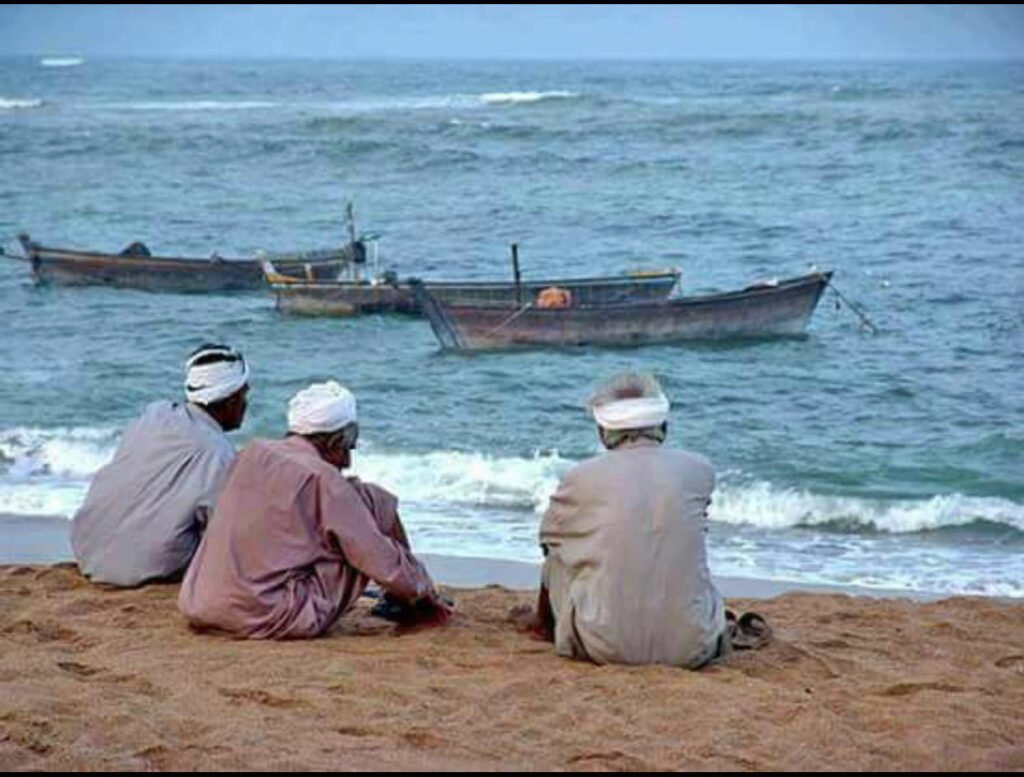
Photo: @Balochistan Human Rights Council
Balochistan’s Brief Independence and a Deep Historical Grievance
By Kadeem Baloch
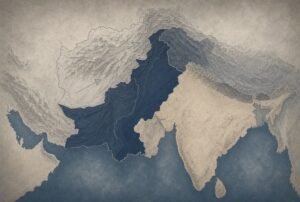
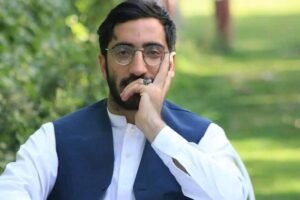
Baloch human rights activist Abdullah Abass told the Afghan Diaspora Network that Balochistan’s political crisis cannot be understood without acknowledging its short but significant moment of independence. On 11 August 1947, the Khanate of Kalat—representing most of present‑day Balochistan—declared independence, four days before Pakistan and India became sovereign states. For nearly seven months, Kalat functioned as a de facto independent country, making it one of the shortest‑lived independent entities in South Asian history.
This period ended in March 1948, when Pakistan, supported by British officers, incorporated Kalat. Abass described the takeover as “against the will of the Baloch people,” marking the beginning of decades of political marginalization. His account aligns with historical analysis by Zahid Latif Mirza, who notes in his 2013 article for National Defense University (NDU) that Kalat’s accession was contested and that the Baloch leadership believed their sovereign status had been compromised without genuine consent.
Mirza’s research highlights that Balochistan’s political grievances did not begin in 1948 but were rooted in earlier tensions between the Khanate and British colonial authorities. He argues that the Baloch saw themselves as a distinct political community with a long tradition of autonomy, and that the abrupt post‑colonial settlement disrupted this historical continuity.
From the 1950s onward, Balochistan experienced repeated uprisings. Mirza identifies major waves of resistance in 1958, 1962, 1973–77, and the 2000s—each driven by demands for autonomy, resource rights and political recognition. Abass emphasized that after General Pervez Musharraf took power in 1999, many Baloch concluded that democratic processes offered no meaningful path to rights.
“People realized we will never get our rights inside Pakistan,” he said. “That is why the demand for self‑determination grew.”
Resource Exploitation, Militarization and the Expansion of Resistance
A central grievance concerns natural gas extraction in Dera Bugti and Sui, where major reserves were discovered in the 1950s. These fields supply a significant portion of Pakistan’s energy needs. Yet local communities in Balochistan remain among the poorest in the country.
Abass noted that “the entire country benefits from our resources, but our people remain impoverished.” Mirza’s analysis supports this, stating that despite contributing substantially to Pakistan’s energy sector, Balochistan “receives disproportionately low development investment.”
This imbalance deepened resentment and fueled political mobilization. Tensions escalated in 2004–2005 when negotiations between the government and tribal leader Nawab Akbar Bugti collapsed. Bugti demanded greater rights and local control over resource revenues. The military rejected these demands, leading to attacks on gas installations and the emergence of armed resistance.
In 2006, Bugti was killed in a military operation. Abass described his burial—conducted without family present and under strict restrictions—as a turning point.
“It was an exclamation mark for Balochistan,” Abass said. After his death, armed resistance and political mobilization expanded significantly.
Human rights organizations have documented enforced disappearances, extrajudicial killings and collective punishment in Balochistan. Mirza acknowledges this pattern, noting that the state’s security‑centric approach has overshadowed political engagement and contributed to long‑term instability. Abass said military operations initially targeted armed groups but later expanded to peaceful activists and their families.
“Today, if you oppose military policies—no matter where you live—you risk disappearance or death,” he said.
Structural drivers of conflict remain deeply entrenched. Analysts point to:
- Political exclusion from federal decision‑making
- Economic inequality despite vast mineral and energy resources
- Heavy militarization of political life
- Demographic engineering through settlement policies
- Weak governance and limited investment in education and health
Mirza argues that these dynamics have created a cycle of resistance and repression that continues today. He writes that without addressing political grievances and resource inequities, “the conflict will persist across generations.”
Abass emphasized that the struggle is not only political but existential. “Our movement is about dignity, identity and the right to live without fear,” he said.
For many Baloch, the memory of their short‑lived independence remains a powerful symbol of what was lost—and what they continue to fight for.
The author chooses a pseudonym. Kadeem Baloch is a freelance journalist based in Pakistan.
Note: The contents of the article are the sole responsibility of the author. Afghan Diaspora Network will not be responsible for any incorrect statements in the articles.