Two Augusts: California Celebrates, Frankfurt Protests
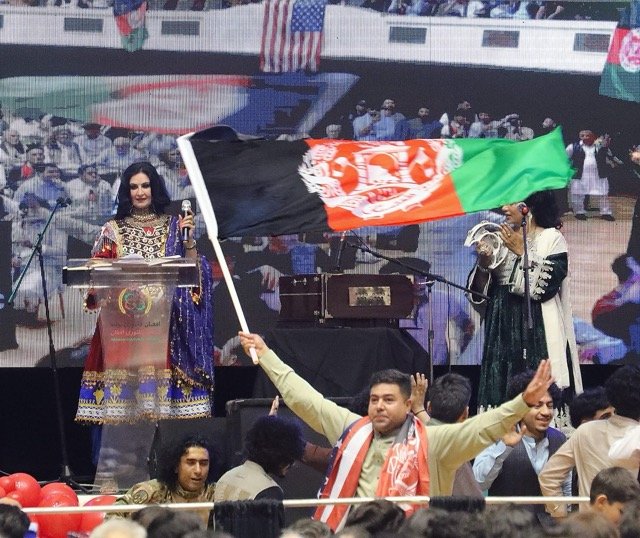
Popular Afghan singer, Naghma during musical performance in California on 8 August in California. Photo: Afghan Cultural Society California.
Afghan cultural organizations across the Western world are preparing Independence Day celebrations, aiming to preserve heritage and strengthen community identity.
The Afghan Cultural Society in Stockton, California, marked the 107th anniversary of Afghanistan’s independence with a large cultural celebration featuring traditional clothing, music, food, and community awards. Families from different Afghan ethnic backgrounds gathered to honor the legacy of King Amanullah Khan and the country’s historic struggle for sovereignty.
The event reflected a familiar pattern in Afghan diaspora communities: cultural pride expressed through heritage, history, and national symbols. Yet this year’s celebration also underscored a growing divide within the diaspora over what August represents.
For many Afghan diaspora, 19 August — the day Afghanistan regained independence from British influence in 1919 — remains a symbol of national dignity and the modernizing aspirations of Amanullah Khan. Speakers in Stockton praised his efforts to build a sovereign, progressive state and lamented how many of his ambitions remain unrealized. Community leaders emphasized the importance of passing Afghan history and cultural identity to younger generations growing up in the United States.
The event also honored five Afghan‑American community members for their contributions to education, cultural preservation, and social support. Organizers said such recognition encourages younger Afghans to remain engaged and strengthens community cohesion in exile.
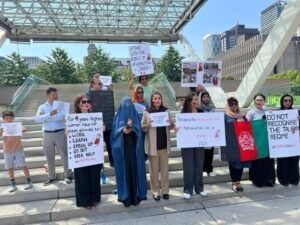
But the broader Afghan diaspora does not experience August as a single, unified moment. Just hours before the Stockton celebration, Afghan women in Frankfurt, Germany, held a protest marking five years since the Taliban — a violent extremist group responsible for severe human rights violations — returned to power on 15 August 2021.
Their demonstration, documented by Afghan Diaspora Network, brought together a small but determined group of women demanding justice for millions of Afghan girls banned from school and women erased from public life. They chanted education, work, freedom and warned that the world has “seen, heard, and chosen silence.”
The contrast between Frankfurt and Stockton captures a widening divide:
- Some diaspora communities celebrate 19 August as a day of national pride, focusing on culture, history, and independence.
- Others treat 15 August as a day of mourning, marking the collapse of the republic, the banning of girls’ education, and the mass displacement that followed.
This split is becoming more visible across Europe and North America. Women’s rights groups plan additional protests on 15 August, calling it a reminder of global failure and Afghan suffering. At the same time, Afghan cultural organizations across the Western world are preparing Independence Day celebrations, aiming to preserve heritage and strengthen community identity.
Speakers in Stockton acknowledged Afghanistan’s ongoing crises, calling for unity, education for girls, and a peaceful future. Yet the celebration also raised a deeper question: what does independence mean when the country is again under authoritarian control? For many Afghans abroad, the answer depends on which August they choose to remember.
The Stockton gathering showed the resilience of Afghan culture in exile. The Frankfurt protest showed the persistence of Afghan resistance. Together, they reveal a diaspora searching for common ground — between pride in a sovereign past and grief over a present defined by exclusion, uncertainty, and struggle.