Government Negligence and Unequal Distribution Are Aggravating Crisis in Balochistan
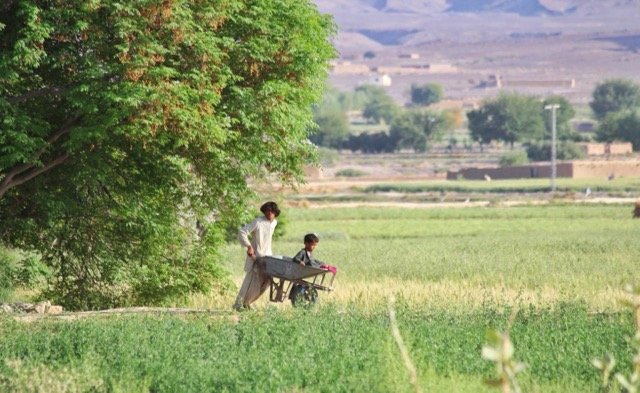
Photo:@Balochistan Human Rights Council
By Kadeem Baloch
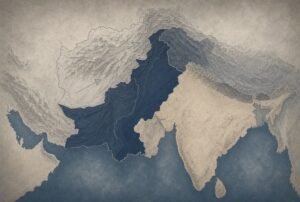
Balochistan is burning. The recent killing of police personnel and the resulting attack on the alleged militants have left the resource-rich Balochistan in a long-drawn limbo over the last seven decades or so. This month’s declaration of Baloch independence by Baloch separatist leader Mir Yar Baloch, with its own currency and anthem, though symbolic, poses a major challenge to Pakistan’s control over the territory.
To begin with, Balochistan is a story of unequal distribution, as the region is drained of its resources, including copper, gold, and natural gas, without reaping any benefits to the natives of the region.
The current development projects are China-dominated, with the strategic Gwadar port and the Saindak copper and gold mine operated by Beijing. The benefits from Baloch resources often accrue to the pockets of the Chinese or to people from the Punjab and Sindh regions. For instance, revenues from the Sui gas fields have barely led to any meaningful investment in the local communities[1]. As a result, the have-nots of Balochistan often take to militancy to fight for their rights and express their discontent (often violent) towards the foreigners in the region.
Though the Pakistan government lives in denial of any discontent in the region, a vast majority of people in Balochistan live in a situation of extreme deprivation in terms of resources, education, and human rights. Islamabad’s security-centric approach to the Baloch region has put the development and governance agenda in the backseat[2]. The region currently faces the highest poverty in Pakistan, with 47 percent of its population below the poverty line, vis-à-vis 29 percent average for the entire nation. Despite being the hub for gas extraction and housing some mega projects, the region lacks basic infrastructure and gas connections, along with employment opportunities, electricity, and clean drinking water[3]. The poor human development indicators reveal that many schools and hospitals lack qualified staff, essential facilities, and basic resources[4].
Experts blame the poor governance as a main culprit behind instability and deprivation[5]. Quick to resort to repression, the state has considered Balochistan unidimensional as a security issue, ignoring the underlying social, economic, and political causes of the crisis. The ongoing ‘Operation Shaban’ might hit the headlines for killing terrorists, but it fails to ensure any sustainable peace and stability. The experts argue that the military cannot lead to durable peace without addressing the root causes of multiple causes of Balochistan’s unrest, including federalism, identity, and the fair distribution of resource wealth[6].
Besides, the prolonged issues at the western front have jeopardized the tragedy for the Baloch region. Conflicts between Pakistan and Afghanistan’s Taliban government have led to an open war-like scenario, with deadly cross-border air strikes destabilizing border districts of Balochistan. Unless issues with the Afghan Taliban are resolved, Operation Shaban would be an act of state repression, a state-sponsored band-aid, without any real changes to the lives of the Baloch people[7].
The situation of instability and insecurity is exemplified by another incident on 22 July 2026, where a Karachi-bound bus was attacked in Mastung district of Balochistan, with gunmen positioned on nearby mountains opening indiscriminate fire on the vehicle, while a bridge was damaged simultaneously nearby[8]. These instances of instability are a norm rather than an exception in the region. Despite being resource-rich, the region is not able to invite foreign investments. Besides, the overwhelming domination of Chinese firms in the region is also slipping away due to violent targeting. Though hitherto marked by heavy Chinese presence, the state-backed Chinese companies have already shut down or are in the process of gradual withdrawal from the region due to conflicts, blockades, and highway shutdowns[9].
The government’s commitment to ‘fight until the last terrorist’[10] is a flawed policy, as it supports loops of violence. The economic injustice in the region, conflict with Afghanistan, and severe deprivation of the citizens are often compelling people to resort to militancy. The use of brute force has only made the matter worse in the region over the last three decades. Without fixing development, peace and stability are only a dream light-years away. In the meantime, Operation Shaban targets the terrorists while separatist insurgency engulfs the region.
The author chooses a pseudonym. Kadeem Baloch is a freelance journalist based in Pakistan.
Note: The contents of the article are the sole responsibility of the author. Afghan Diaspora Network will not be responsible for any incorrect statements in the articles.
[1] https://www.nation.com.pk/09-Jul-2026/balochistan-s-governance-crisis
[2] https://www.icpsnet.org/issuebrief/breaking-point-balochistan-failure-pakistans-governance-model-and-making-multi-front
[3] https://www.nation.com.pk/09-Jul-2026/balochistan-s-governance-crisis
[4] https://www.nation.com.pk/09-Jul-2026/balochistan-s-governance-crisis
[5] https://www.nation.com.pk/09-Jul-2026/balochistan-s-governance-crisis
[6] https://www.dawn.com/news/2017455
[7] https://thediplomat.com/2026/07/pakistans-operation-shaban-targets-both-the-ttp-and-bla-in-balochistan/
[8] https://timesofindia.indiatimes.com/world/pakistan/karachi-bound-bus-attacked-in-balochistan-3-killed-5-injured-as-curfew-imposed/articleshow/132571265.cms
[9] https://www.icpsnet.org/issuebrief/breaking-point-balochistan-failure-pakistans-governance-model-and-making-multi-front
[10] https://www.dawn.com/news/2017455