A Region Without Voices: Pakistan’s Press Restrictions Mirror Taliban Rule in Afghanistan
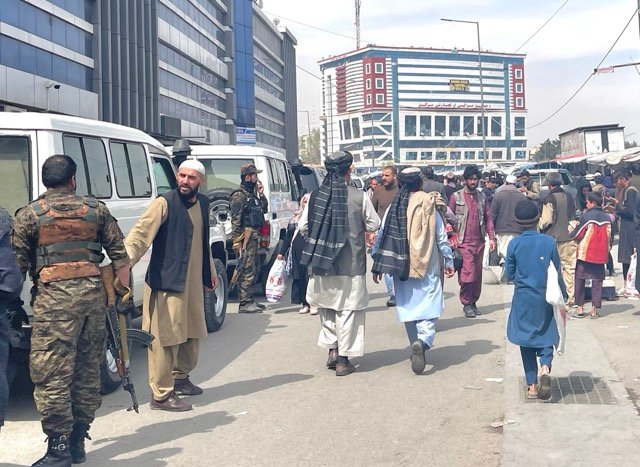
A gunman in central Kabul. Photo: @AADIL for ADN
“Democracies protect journalists, not persecute them. A free independent press strengthens the democratic process and thereby the politicians.”
By Kazim Jafari
Pakistan is entering one of the most restrictive periods for freedom of expression in its recent history. A sweeping combination of cybercrime prosecutions, pressure on newsrooms, suspensions of journalists, internet shutdowns, and new limitations on foreign media movement has created a climate of fear and shrinking civic space.
Amnesty International’s 4 August 2026 appeal, signed by 13 civil society organizations, warns that Pakistan’s escalating restrictions violate Article 19 of the International Covenant on Civil and Political Rights and risk criminalizing journalism, legal advocacy, and human rights reporting.
As the statement notes, “National security, public order, and ‘false information’ must not become open-ended justifications for criminalizing dissent, controlling newsrooms, or disconnecting entire populations.”
At the center of this crackdown is the Prevention of Electronic Crimes Act (PECA), increasingly used to target journalists and lawyers. Amnesty highlights the summons issued to journalist Asad Ali Toor under Section 26A for allegedly “false” information, part of a pattern of vague cybercrime provisions weaponized against critical voices.
The report documents similar notices issued to Dawn journalist Muhammad Akbar Notezai, Lahore Press Club President Arshad Ansari, and several other reporters and lawyers.
“The law must not be used to criminalize journalism, legal advocacy, political criticism, or human rights reporting,” the statement warns.
Pressure on broadcast media has intensified. Amnesty cites the removal of Munizae Jahangir’s political program after 11 years on Aaj TV, reportedly due to government pressure, following earlier dismissals of Matiullah Jan and Kashif Abbasi. These actions, combined with the Pakistan Electronic Media Regulatory Authority’s (PEMRA) suspensions and fines — including a 15‑day suspension and PKR 10 million fine against Geo News — reinforce a system where self‑censorship becomes a survival strategy.
Responding to the growing pressure on journalists, Jahangir wrote on her X account that “a government loses its credibility when it starts to throttle the press because it appears that it is trying to hide the truth. Democracies protect journalists, not persecute them. A free independent press strengthens the democratic process and thereby the politicians.”
Her remarks reflect a wider concern among journalists that Pakistan’s media environment is being reshaped through intimidation rather than regulation.
The crackdown extends beyond journalists to human rights defenders. Lawyers Imaan Mazari‑Hazir and Hadi Ali Chattha have been imprisoned since January 2026 under PECA for social media posts, despite a Supreme Court directive for expedited review. Their continued detention violates international standards protecting lawyers’ freedom of expression.
Restrictions on digital access further shrink civic space. In Pakistan‑administered Jammu and Kashmir, internet services were suspended for nearly two months, obstructing journalism and documentation of human rights violations. The blocking of Al Jazeera’s website on 2 August 2026, following its critical reporting, underscores the government’s willingness to limit access to independent information.
International media have also been targeted. Pakistan’s new Foreign Media Facilitation Guidelines require foreign journalists to obtain a No Objection Certificate to report outside Lahore, Karachi, and Islamabad.
The BBC publicly condemned the restrictions, calling them “a step backwards for Pakistan’s media freedom,” while The Guardian reported that foreign media are effectively banned from most of the country. The New York Times similarly noted a sharp deterioration in Pakistan’s press environment, with foreign correspondents facing unprecedented movement controls.
Across the Durand Line, Afghanistan presents a parallel picture. Under Taliban rule, media freedom has collapsed: independent outlets have been shuttered, journalists detained, and public criticism criminalized.
The Taliban’s tight control over information mirrors Pakistan’s growing securitization of expression. While the political systems differ, both states are converging toward environments where dissent is punished, scrutiny is obstructed, and public discourse is tightly managed.
Pakistan’s escalating restrictions — from cybercrime prosecutions to foreign media bans — represent a structural shift toward authoritarian information control.
Amnesty International’s appeal calls for the withdrawal of PECA notices, the reform of PEMRA, the release of detained lawyers, the restoration of internet access, and the repeal of restrictive guidelines. Without such reforms, Pakistan risks joining Afghanistan in a regional crisis where freedom of expression is not only under pressure but systematically dismantled.
Kazim Jafari is a political science student at the University of Heidelberg in Germany.
Note: The contents of the article are the sole responsibility of the author. Afghan Diaspora Network will not be responsible for any incorrect statements in the articles.