Naghma in Fremont: Aisha Wahab’s Win Belongs to Afghan Women
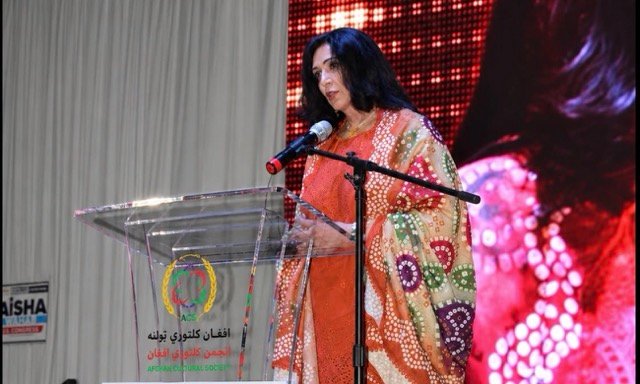
Afghan singer, Naghma. Photo@Afghan Cultural Society California
Diaspora communities should use the opportunities available in their countries of residence and support one another.
By Kazim Jafari
In a packed hall in Fremont, California, the Afghan Cultural Society of California gathered the diaspora to mark a rare political milestone: the rise of California State Senator Aisha Wahab. Traditional decorative motifs lined the room. Women, young girls, and community leaders filled the seats. Then legendary Afghan singer Naghma took the stage, her tone warm and celebratory—and pointed.
This was not only a concert. It was a public claim of belonging.
Naghma told the crowd that Wahab’s success was not hers alone. It belonged to Afghans everywhere, she said—especially Afghan women and the Afghan diaspora. She framed Wahab’s life as a lesson the community should keep: a refugee child’s hardship, followed by elected office, as proof of commitment and of what she called an “unbreakable champion.” Ability, not origin, had opened the door.
For families rebuilding lives abroad and for women still denied school and work at home, she presented that rise as a reason not to lose hope. Afghans, she said—especially women and girls— can win public office on merit. The hall answered with nods and applause. Pride mixed with something more fragile: the hope that one woman’s victory might still speak for many.
Then the celebration became a challenge. Diaspora communities, Naghma said, should use the opportunities available in their countries of residence and support one another. Individual success becomes collective only if the community organizes around it.
Her final request was directed at Wahab. Beyond serving the people of California, Naghma asked her to work with Afghan diaspora communities and to represent Afghan women and girls. The appeal is familiar in exile politics: pride in a pioneer, paired with the expectation that she carry a wider constituency.
In Fremont, music, memory, and politics occupied the same room. Whether that feeling becomes organization or remains applause will depend on what the diaspora does next.
Kazim Jafari is a political science student at the University of Heidelberg in Germany.
Note: The contents of the article are the sole responsibility of the author. Afghan Diaspora Network will not be responsible for any incorrect statements in the articles.