Afghan Women, Heroes Without Rights
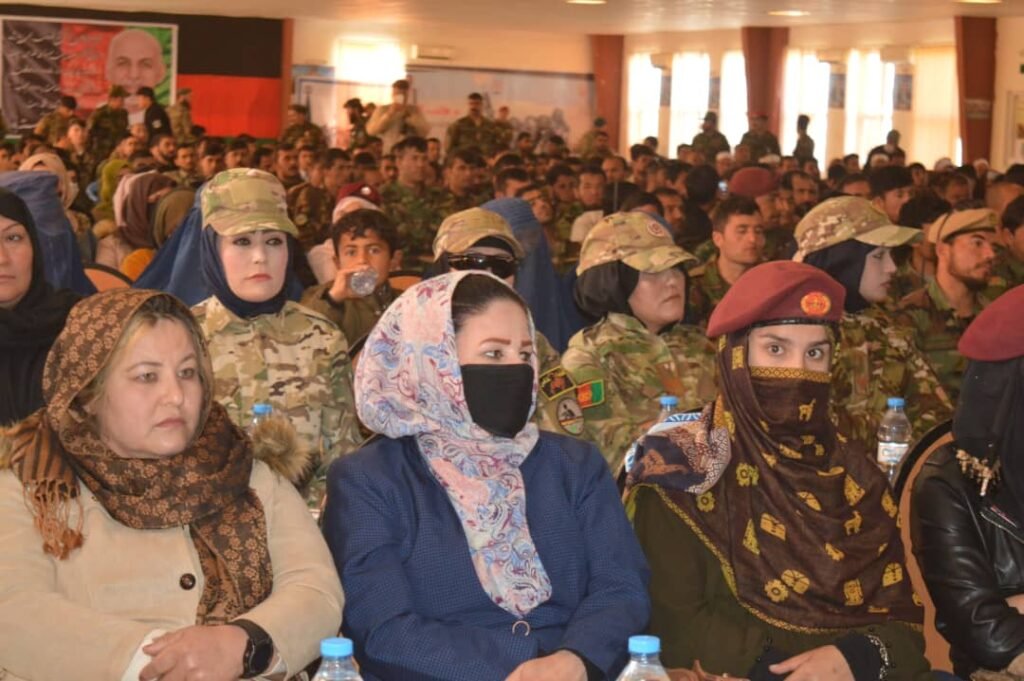
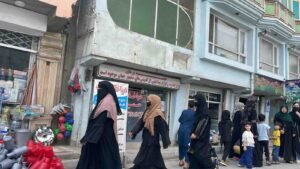
Afghan women during the Islamic Repulic of Afghanistan, which the Taliban ousted in August 2021. Photo: @Afghan for ADN
By Sayed Sadullah Sadat
Afghan women have long been the silent backbone of their nation, enduring decades of war, political upheaval, and oppression, yet their resilience never fades. Since the Taliban’s return to power in 2021, women and girls have been stripped of their most fundamental rights to education and employment, erasing two decades of hard-won progress. Despite the Taliban’s attempts to silence them, Afghan women continue to resist through secret home schools, community networks, and the unwavering support of diaspora communities around the world, proving that no regime can extinguish the human desire to learn, to grow, and to live with dignity.
بِسْمِ اللهِ الرَّحْمٰنِ الرَّحِيمِ
“ٱقْرَأْ بِٱسْمِ رَبِّكَ ٱلَّذِى خَلَقَ ﴿١﴾ خَلَقَ ٱلْإِنسَـٰنَ مِنْ عَلَقٍ ﴿٢﴾ ٱقْرَأْ وَرَبُّكَ ٱلْأَكْرَمُ ﴿٣﴾ ٱلَّذِى عَلَّمَ بِٱلْقَلَمِ ﴿٤﴾ عَلَّمَ ٱلْإِنسَـٰنَ مَا لَمْ يَعْلَمْ ﴿٥﴾”
By the name of Allah, the Most Gracious, the Most Merciful
“Read! In the Name of your Lord Who created, (1) Created man from a clinging substance. (2) Read! And your Lord is the Most Generous, (3) Who taught by the pen, (4) Taught man that which he knew not. (5)” (Surah Al-‘Alaq, 96:1-5) [1]
Afghanistan has a population of approximately 45.05 million[2], placing the country fifteenth on the Asian continent. Of this total, 22.76 million are male and 22.29 million are female. According to the World Health Organizationstatistics in 2023[3], the total population stood at 41,454,761 and is projected to reach 76,885,135 by 2050. These figures show that the gender ratio in Afghanistan is remarkably close and nearly even. In many Afghan families, women have become the primary providers due to decades of war and conflict that claimed the lives of male breadwinners.
Afghanistan has faced numerous conflicts throughout its history[4], particularly over the past few decades. In 2021, persistent insecurity led to the collapse of the existing political order, and power was handed to the Taliban, a group with a long history of ties to radical organizations including al-Qaeda[5]. This political shift devastated women’s rights. Under the previous government, women had opportunities to work across various sectors. After the Taliban takeover, women bore the heaviest burden, losing not only their right to work but also their right to education[6].
Most countries have yet to recognize the Taliban as a sovereign state. Nevertheless, the group has been leveraging the restriction of women’s rights as a bargaining tool in its pursuit of international legitimacy. Following the agreement signed between the United States and the Taliban in Doha, Qatar in 2020[7], the two parties agreed to form an inclusive government representing all ethnic groups in Afghanistan. However, the Taliban not only failed to establish such a government but moved in the opposite direction. They shut down universities and schools for girls[8], destroyed published academic papers and books authored by women at major governmental universities, and stripped women of the right to work in any sector[9]. In response, not only ordinary citizens but also a number of Taliban members voiced their objections, though to no avail. Evidence suggests that these directives originated from Mullah Hibatullah Akhundzada[10], the supreme leader, who may himself be receiving instructions from external actors. In effect, the Taliban have taken the Afghan people hostage in pursuit of their own agenda.
The acting Taliban Minister of Higher Education, Mullah Neda Mohammad Nadeem, has openly stated that if the Taliban had cared about development and civilization, they would have handed Osama bin Laden over to America and granted women their freedoms. He said there would have been no twenty-year war and the Taliban would still have been in power. He added that Allah does not permit them to accept the demands of infidels. His remarks make it clear that the Taliban have no interest in civilization or progress.
Several countries including Russia, China, Pakistan and Iran have already permitted Taliban representatives to operate from Afghan embassies on their soil. European Union countries are also increasingly engaging with the Taliban. Representatives now operate from the Afghan Embassy in Germany[11], and Belgium has invited Taliban officials to discuss the deportation of Afghan migrants[12]. These developments suggest that European states may move toward formal recognition of the Taliban regime in the future.
One of the most alarming issues is the ongoing ban on girls education, a cause that numerous NGOs and activists continue to fight against. The former acting Taliban Minister of Education stated at a press conference in Uruzgan Province on September 11, 2022, that cultural limitations were the reason girls schools remained closed. He claimed that in remote areas people simply do not want to send their daughters to school. The reality, however, is quite different[13]. During the Karzai era, girls schools were active in virtually every village and district. It was only after Taliban threats that some schools were forced to close. Meanwhile, Sher Mohammad Abbas Stanikzai, the Taliban Deputy Foreign Minister for Political Affairs, called for the immediate reopening of girls schools at a gathering in Kabul on September 27, 2022. He declared that education is obligatory for both men and women and that there is no religious objection to educating girls. Yet at the same gathering, the acting Minister of the Ministry for the Propagation of Virtue rejected his remarks and implied that girls schools had been closed by direct order of the supreme leader.
The History of Girls Education in Afghanistan
Before the reign of King Amanullah Khan, women’s education was extremely limited and took place solely in private homes. The curriculum consisted of learning the alphabet, reciting the Holy Quran, and studying the poetry of Hafez and Saadi. Literate women were respected in their communities and often taught other women.
The first modern school for girls opened in Kabul in 1920, with an initial enrollment of just 40 students. King Amanullah Khan not only created educational opportunities for girls within Afghanistan but also sent female students abroad to study. In 1929, Habibullah Kalakani closed girls’ schools during his nine-month rule, banned women from leaving their homes without a male chaperone, and ordered the return of girls studying abroad. Historians believe that Nadir Shah subsequently banned girls’ education to avoid opposition to his own rule.
During the forty-year reign of Mohammad Zahir Shah, women’s education expanded again. For the first time, women rose to ministerial and parliamentary positions, although these advances remained largely confined to major cities. In 1957, the number of female students in rural areas stood at just 153. By 1969, this figure had grown to 10,450 students enrolled in 173 schools across the country. Progress experienced fluctuations with the first republican system in 1973 and the Soviet-backed regimes beginning in 1978[14].
During the Mujahideen period, girls’ education was not entirely halted, though co-education was prohibited and security challenges prevented women from studying in peace. In 1996, with the rise of the first Taliban regime, sweeping restrictions were imposed on women’s education and employment.
After the events of September 11, 2001, the Taliban regime collapsed and opportunities for women expanded on an unprecedented scale until August 2021. According to 2009 statistics, 31,200 literacy centers were active across Afghanistan, serving more than 395,000 students taught by 8,860 female teachers. By 2015, these numbers had decreased by nearly half, with 17,400 centers remaining active. However, in formal education, progress was evident. In 2009, a total of 12,950 girls studied in public and private universities taught by 454 female instructors. By 2015, these figures had increased severalfold to 63,974 female students and 1,614 female instructors[15].
Examining both Taliban eras, girls’ education faced severe restrictions due to hardline policies, yet it was never entirely eradicated. In the current period, the Taliban initially permitted girls below the sixth grade to attend school, but beyond that age, they are denied the right to education. The Taliban, most of whom come from rural backgrounds, are fundamentally opposed to girls’ education. The Afghan people, however, refuse to submit to their demands. Meanwhile, the regime’s lack of legitimacy remains a fundamental problem, and the group exploits every available tool to compel the international community to grant it formal recognition.
Homeschooling as Resistance
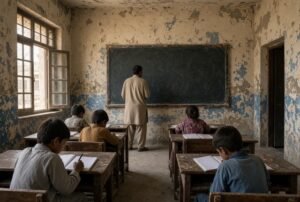
The practice of homeschooling has deep roots in Afghanistan[16]. During the first Taliban era in the 1990s, numerous secret home-based schools operated across the country, helping children learn to read and write in Dari and Pashto. Under the current regime, this tradition has re-emerged. Many teachers who lost their positions have established clandestine home schools in various provinces, and some receive support from Afghan diaspora communities around the world. This strategy provides Afghan girls with vital opportunities to continue their studies. Despite the regime’s total opposition, communities organize these schools in secret, representing a quiet but powerful act of resistance against the suppression of an entire generation’s right to learn.
About the author: Sayed Sadullah Sadat is a researcher specializing in education in conflict-affected settings, with a focus on Afghanistan, interdisciplinary collaboration, and educational access. He is a PhD (Aspirantura) candidate in Management at RANEPA and an MA student in Cultural Differences and Transnational Processes at the University of Vienna, actively supporting community-based educational initiatives for girls in Afghanistan.
Note: The contents of the article are the sole responsibility of the author. Afghan Diaspora Network will not be responsible for any incorrect statements in the articles.
[1] Tanzil (Qur’an Navigator). Accessed September 3, 2026. https://tanzil.net/#96:1.
[2] Statistics Times. “Demographics of Afghanistan.” Last modified April 7, 2026. https://statisticstimes.com/demographics/country/afghanistan-demographics.php.
[3] UNICEF. Afghanistan Humanitarian Situation Report No. 3, 31 March 2026. PDF file. file:///C:/Users/behza/Downloads/UNICEF%20Afghanistan%20Humanitarian%20Situation%20Report%20No.%203,%2031%20March%202026.pdf
[4] U.S. Department of State, Office of the Historian. “The Soviet Invasion of Afghanistan and the U.S. Response, 1978–1980.” Milestones in the History of U.S. Foreign Relations. Accessed September 3, 2026. https://history.state.gov/milestones/1977-1980/soviet-invasion-afghanistan.
[5] Human Rights Watch. Backgrounder on Afghanistan: History of the War. Accessed September 3, 2026. https://www.hrw.org/legacy/backgrounder/asia/afghan-bck1023.pdf.
[6] UNHCR. “Afghan Women Affected as Taliban Bans Work and Study, Fear Their Futures.” Accessed September 3, 2026. https://www.unhcr.org/news/afghan-women-affected-taliban-bans-work-and-study-fear-their-futures.
[7] Qazi, Shereena. “Afghanistan’s Taliban, US Sign Agreement Aimed at Ending War.” Al Jazeera, February 29, 2020. https://www.aljazeera.com/news/2020/2/29/afghanistans-taliban-us-sign-agreement-aimed-at-ending-war.
[8] 8AM.Media. “Taliban Ministry of Higher Education Suspends Four Private Universities in Afghanistan.” Hasht‑e Subh, November 1, 2025. https://8am.media/eng/taliban-ministry-of-higher-education-suspends-four-private-universities-in-afghanistan/.
[9] DW. “Germany Allows Taliban Envoys to Facilitate Deportations.” Deutsche Welle. Accessed September 3, 2026. https://www.dw.com/en/germany-allows-taliban-envoys-to-facilitate-deportations/a-73360224.
[10] 8AM.Media. “The Course of Women’s Education in Afghanistan.” Accessed September 3, 2026. https://8am.media/fa/the-course-of-womens-education-in-afghanistan/.
[11] DW. “Germany Allows Taliban Envoys to Facilitate Deportations.” Deutsche Welle. Accessed September 3, 2026. https://www.dw.com/en/germany-allows-taliban-envoys-to-facilitate-deportations/a-73360224.
[12] France 24. “EU to Invite Taliban Officials to Brussels for Migrant‑Return Talks.” France 24, May 11, 2026. https://www.france24.com/en/live-news/20260511-eu-to-invite-taliban-officials-to-brussels-for-migrant-return-talks.
[13] 8AM.Media. “The Course of Women’s Education in Afghanistan.” Accessed September 3, 2026. https://8am.media/fa/the-course-of-womens-education-in-afghanistan/.
[14] 8AM.Media. “The Course of Women’s Education in Afghanistan.” Accessed September 3, 2026. https://8am.media/fa/the-course-of-womens-education-in-afghanistan/.
[15] Encyclopaedia Britannica. “Afghanistan War.” Britannica Online Encyclopedia. Accessed September 3, 2026. https://www.britannica.com/event/Afghanistan-War#ref292844.
[16] Daricha School. “Educate Girls in Afghanistan.” Daricha School. April 27, 2025. https://darichaschool.com/educate-girls-in-afghanistan/.