Pashteen Slams Maryam Nawaz for Calling KP and Balochistan a Threat
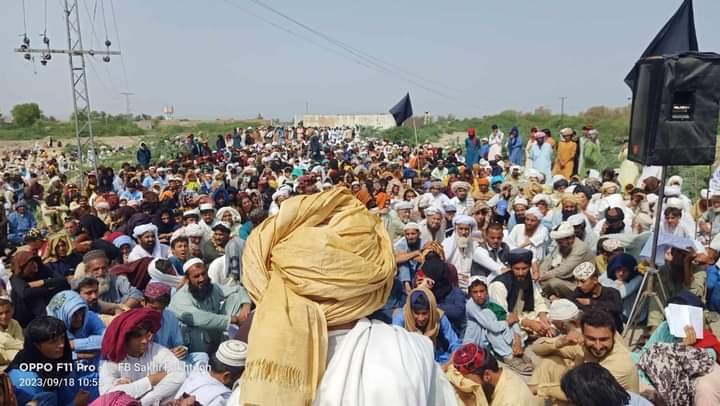
Photo: @PTM
By Kadeem Baloch
Punjab Chief Minister Maryam Nawaz’s recent claim that Punjab faces greater security threats from Khyber Pakhtunkhwa (KP), Sindh and Balochistan than from neighboring countries has sparked sharp criticism across the Pashtun political spectrum, with Pashtun Tahafuz Movement (PTM) leader Manzoor Pashteen leading the pushback.
Maryam, speaking at a technology and security event in Lahore, argued that terrorism enters Punjab through its provincial borders and that her government has strengthened surveillance and fortification to counter these threats. She highlighted investments in drones, thermal cameras, bullet‑proof surveillance systems, and joint checkpoints, insisting that Punjab’s security situation has improved since 2024.
Her remarks, however, were widely interpreted as portraying KP, Sindh and Balochistan as sources of terrorism—a framing that immediately drew condemnation.
Manzoor Pashteen responded forcefully on social media, accusing Maryam Nawaz of ignoring decades of violence, displacement, and state‑led operations in Pashtun and Baloch regions. He argued that the real threat facing these communities comes not from neighboring provinces but from state policies rooted in Punjab’s political and military establishment. Pashteen cited airstrikes, drone attacks, enforced disappearances, targeted killings, and politically motivated prosecutions as evidence of systemic oppression.
He wrote that Punjab, as the center of state power, has no moral authority to complain about security threats from KP when Pashtun‑majority areas have suffered heavily under counterterrorism campaigns. His remarks reflect a long‑standing PTM narrative that views Pakistan’s security policies as disproportionately harming peripheral regions while shielding Punjab from the consequences.
Asad Qaiser, secretary‑general of Tehreek Tahafuz Ayeen‑e‑Pakistan and a senior KP politician, also criticized Maryam’s comments. He argued that KP has historically borne the brunt of Pakistan’s war on terrorism, suffering suicide bombings, drone strikes, and economic collapse. According to Qaiser, successive governments have turned KP into a “battleground” while failing to acknowledge the sacrifices made by its residents.
Qaiser linked Maryam’s remarks to economic grievances, noting that KP’s economy depends heavily on trade with Afghanistan. Border closures, he said, have intensified unemployment and forced small traders out of business. “You closed the crossings and forced us into hunger,” he said, accusing the Punjab leadership of ignoring KP’s suffering.
Economic analyst Qutbuddin Yaqoubi supported this view, noting that Pakistan has lost Afghanistan as a traditional market for lower‑tier goods, hurting traders on both sides of the border and deepening KP’s economic strain.
Khyber Pakhtunkhwa Chief Minister Sohail Khan Afridi added to the criticism, accusing Maryam of portraying KP, Sindh, and Balochistan as threats while describing India as less dangerous. He argued that such rhetoric fuels mistrust among provinces and reinforces perceptions that Punjab’s political elite views other regions through a security lens rather than as equal partners in the federation.
Political analysts say the controversy highlights Pakistan’s recurring center‑periphery tensions, where security debates often become entangled with historical grievances and uneven distributions of violence. Idris Mohammadi Zazi, a political analyst, argued that insecurity in KP is not an external threat but the result of long‑standing state policies that have left Pashtuns vulnerable “in their homes, on the streets, and in mosques.”
Maryam Nawaz has defended her position by emphasizing Punjab’s technological upgrades and cross‑provincial coordination. But the political fallout underscores how quickly provincial sensitivities can flare—and how deeply security narratives remain intertwined with Pakistan’s internal power dynamics.
The author chooses a pseudonym. Kadeem Baloch is a freelance journalist based in Pakistan.
Note: The contents of the article are the sole responsibility of the author. Afghan Diaspora Network will not be responsible for any incorrect statements in the articles.