The Durand Line’s Missing History
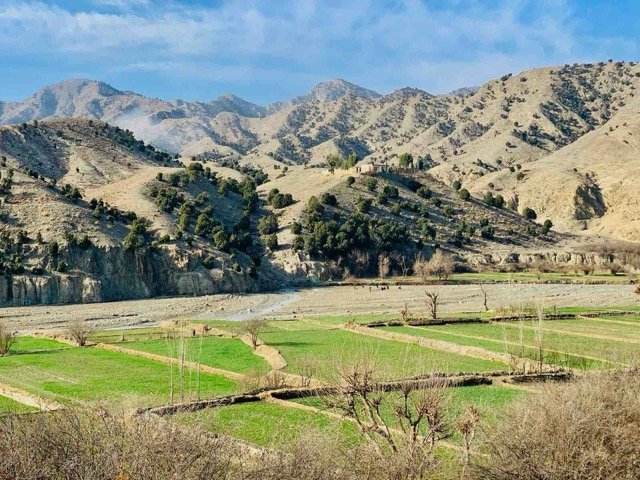
Khost Province, along the Durand Line. Photo: @AADIL for ADN
For Afghanistan and Pakistan, the Durand Line remains a central fault line in regional politics.
Nabi Sahak’s Anglo‑Afghan Power and Politics, 1893–1947: The Durand Line Unmasked makes one central claim: the story we think we know about the Durand Line is built on shaky ground. The book’s most provocative chapter—its deep dive into archival evidence—shows that the foundations of the 1893 agreement are riddled with silences, contradictions, and missing documents that challenge the Line’s accepted history.
At the heart of Sahak’s argument is a simple but explosive observation: the original Persian text of the Durand agreement has disappeared. For a ruler like Amir Abdur‑Rahman Khan—literate, meticulous, and insistent on reviewing all official documents in Persian—this absence is not a minor archival gap. It strikes at the core of whether the agreement was ever formally ratified.
The surviving English version raises even more questions. It bears neither the Amir’s royal seal nor his signature. This is highly unusual. The Amir used three seals and signed all major state documents, especially those involving foreign powers. Contemporary letters, including a ceremonial illuminated message to Lord Curzon, clearly show both seal and signature. The Durand document’s lack of these marks stands out like a red flag.
Sahak highlights another striking piece of evidence: the Muhabat Namah (Letter of Affection), a handwritten letter the Amir sent to Mortimer Durand just two days after the supposed signing. The letter is warm, polite, and expresses satisfaction with the discussions. But it contains no reference—none—to any frontier agreement, territorial concessions, or the division of Pashtun tribes. If a major border deal had just been concluded, this silence is difficult to reconcile.
The archival contradictions do not end there. Durand’s own letter of 11 November 1893 mentions only the Oxus frontier. Confidential correspondence from Lord Lansdowne in August 1893 also frames the mission’s primary goal as the finalization of Afghanistan’s northern boundary with Russia. There is no mention of drawing a new southeastern border with British India. These documents suggest that the Durand Mission may have been focused on consolidating the Anglo‑Russian settlement on the Oxus rather than creating what later became known as the Durand Line.
Even Afghan records of the negotiations have vanished. The Amir reportedly placed his secretary, Mir Munshi Sultan Mahomed Khan, behind a curtain to record every word exchanged with Durand. Those notes, and the pamphlet containing transcripts of the talks, are missing from Kabul, London, and Delhi. Their disappearance deepens the uncertainty surrounding what was actually agreed.
Sahak’s analysis leads to a bold conclusion: there is no conclusive proof that a formal Indo‑Afghan frontier agreement was signed on 12 November 1893. He outlines several plausible scenarios. The English text may have been drafted or altered after Durand’s return to India. Discussions about tribal territories may have remained informal. Minor adjustments may have been intended as revisions of earlier arrangements. Or a second written agreement may never have existed during the Kabul negotiations at all.
These possibilities matter because they challenge the conventional narrative that the Durand Line was a clear, binding, and mutually recognized border. Instead, Sahak presents a picture of ambiguity: missing originals, unsigned documents, contradictory correspondence, and diplomatic silence at moments when clarity should have been expected.
The implications extend far beyond historical curiosity. For Afghanistan and Pakistan, the Durand Line remains a central fault line in regional politics. If the agreement’s authenticity and intent are uncertain, then the legal and political foundations of the modern border deserve renewed scrutiny. Sahak’s work pushes the debate away from slogans and entrenched positions and back toward the archives—where the gaps themselves tell a story.
Anglo‑Afghan Power and Politics ultimately argues that the Durand Line cannot be understood without confronting these archival absences. The border’s history is not settled; it is contested, incomplete, and shaped by the very documents that are missing. In exposing these silences, Sahak invites a rethinking of one of South Asia’s most enduring geopolitical disputes.