Pakistan Must Halt Forced Returns of Afghan Refugees, MSF Warns
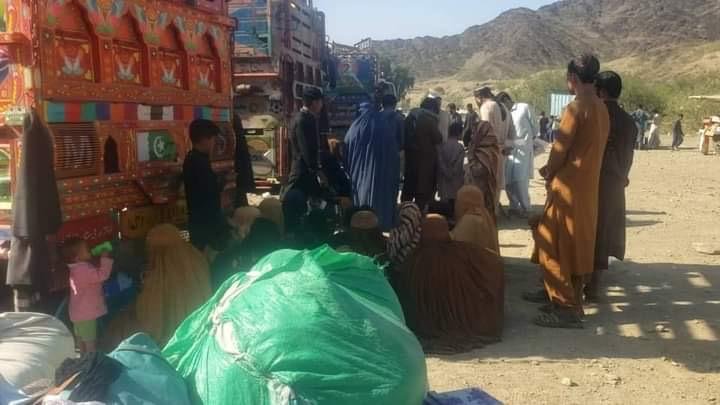
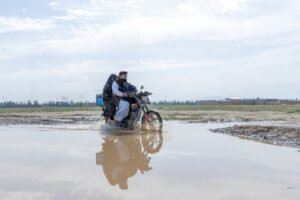
Afghan returning families on the Afghanistan side of the Durand Line. Photo: @Afghan for ADN.
Many Afghan families are now avoiding hospitals and clinics to escape police documentation checks, leading to preventable medical complications, including malnutrition and pregnancy-related emergencies.
By Kazim Jafari
Médecins Sans Frontières (MSF) has issued a stark warning to the Government of Pakistan, urging it to immediately stop the forced return of Afghan refugees under the Illegal Foreigners Repatriation Plan (IFRP). According to MSF, Afghan refugees across Pakistan are living under constant fear of arrest, detention, eviction, loss of livelihood, and deportation—conditions that have severely undermined their access to essential healthcare.
MSF reports that many Afghan families are now avoiding hospitals and clinics to escape police documentation checks, leading to preventable medical complications, including malnutrition and pregnancy-related emergencies. In early 2026, MSF mobile clinics in Quetta, Balochistan, found that 33.3% of children screened suffered from acute malnutrition, with nearly 90% of malnourished patients being Afghan refugees, mostly women and children.
The human impact of the policy is illustrated by the case of Najib, an Afghan refugee arrested during a police raid despite holding a valid Proof of Registration card. His wife, three months pregnant at the time, suffered severe bleeding due to stress and fear. Najib described rushing her to the hospital while terrified of being arrested again, only to learn she had already miscarried.
Pakistan began implementing the IFRP in November 2023, initially targeting undocumented Afghans but later expanding to include documented refugees holding Afghan Citizen Cards or Proof of Registration documents—many of whom have lived in Pakistan for decades. A July 2026 directive ordered the immediate arrest and accelerated deportation of all Afghan nationals without valid visas.
These domestic enforcement measures form part of a broader shift in Pakistan’s approach to Afghan populations. While MSF highlights the humanitarian consequences inside Pakistan—fear-driven avoidance of healthcare, rising malnutrition, and pregnancy complications—analysts note that the same security‑first posture is increasingly visible in Pakistan’s actions beyond its borders.
In recent years, Pakistan has carried out strikes inside Afghanistan, some of which have resulted in civilian casualties. The deadly attack on the Omid Rehabilitation Center, a facility serving vulnerable individuals, is one example that has drawn strong criticism from humanitarian organizations.
By linking internal crackdowns with external military operations, Pakistan’s policies create a dual pressure on Afghan civilians: those inside Pakistan face arrest, eviction, and loss of services, while those inside Afghanistan face the risk of violence across the Durand Line. This reinforces MSF’s warning that current returns are unlikely to be voluntary or safe, and that Afghan civilians are being placed in harm’s way on both sides of the Durand Line.
MSF stresses that Pakistan has hosted Afghan refugees for more than 45 years despite limited international support, but warns that current policies make it “unlikely that many returns are truly voluntary.”
The organization calls for formal humanitarian exemptions, proper screening mechanisms for individuals at risk, and an immediate halt to involuntary returns. MSF also urges other countries hosting Afghan refugees to stop forced deportations, emphasizing that many Afghans face imminent danger if returned to Afghanistan.
Kazim Jafari is a political science student at the University of Heidelberg in Germany.
Note: The contents of the article are the sole responsibility of the author. Afghan Diaspora Network will not be responsible for any incorrect statements in the articles.