Pakistan’s Water Diplomacy: Treaty Rules for India, Silence on Afghanistan’s Rivers
From the Indus Waters Treaty to Afghanistan’s rivers, Pakistan’s contradictory positions expose the political motivations behind its diplomatic campaign.
By Jalal Pacha
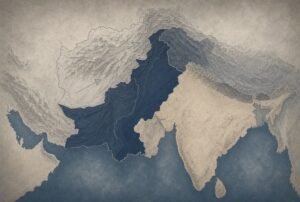
Vienna Symposium: Water Cooperation or Anti-India Campaign?
On 6 October 2026, Pakistan organized an International Water Symposium at the Diplomatic Academy of Vienna, ostensibly to discuss transboundary water cooperation. The event featured Pakistan’s Foreign Minister Ishaq Dar, its Ambassador to Austria, the Indus Water Commissioner, and representatives from several countries and international organizations.
However, what was presented as an academic discussion on international water law quickly became another platform for Pakistan to internationalize its dispute with India over the Indus Waters Treaty (IWT).
Pakistan accused India of violating international law, weaponizing water, and disregarding arbitration proceedings. Curiously, the symposium devoted little attention to the security circumstances that prompted India’s decision.
The Convenient Amnesia About Terrorism
Pakistan’s Foreign Minister condemned India’s decision to place the IWT in abeyance in April 2025 but largely overlooked the terrorist attack in Pahalgam on 22 April 2025, which killed 26 civilians.
India’s decision followed this attack and its longstanding concerns over Pakistan-sponsored cross-border terrorism. For decades, India continued implementing the Treaty despite wars, terrorist attacks, and serious bilateral tensions.
Pakistan now invokes the sanctity of international obligations while expecting India to disregard the security environment in which those obligations operate.
The question is simple: can Pakistan demand uninterrupted cooperation over water while failing to address India’s concerns over cross-border terrorism?
FATF: Pakistan’s Selective Respect for International Obligations
Pakistan’s sudden enthusiasm for international accountability becomes particularly interesting when viewed against its history with the Financial Action Task Force (FATF).
Pakistan remained on the FATF grey list from June 2018 until October 2022 because of strategic deficiencies in its anti-money-laundering and counter-terrorist-financing framework. It was required to strengthen action against terrorist financing, including cases involving UN-designated terrorist individuals and organizations.
Its removal from increased monitoring recognized progress but did not erase the underlying history.
Organizations such as Lashkar-e-Taiba and Jaish-e-Mohammed have long figured in international counter-terrorism sanctions.
Yet Pakistan’s representatives in Vienna appeared considerably more interested in discussing India’s alleged treaty violations than Pakistan’s own responsibilities in combating terrorism.
International law cannot become a menu from which countries select only the obligations that serve their diplomatic interests.
Afghanistan: When Pakistan Becomes the Lower Riparian
Perhaps the most revealing comparison lies to Pakistan’s west.
Afghanistan’s proposed and ongoing water infrastructure projects, particularly in the Kabul River basin, have generated concerns in Pakistan about potential reductions in downstream flows.
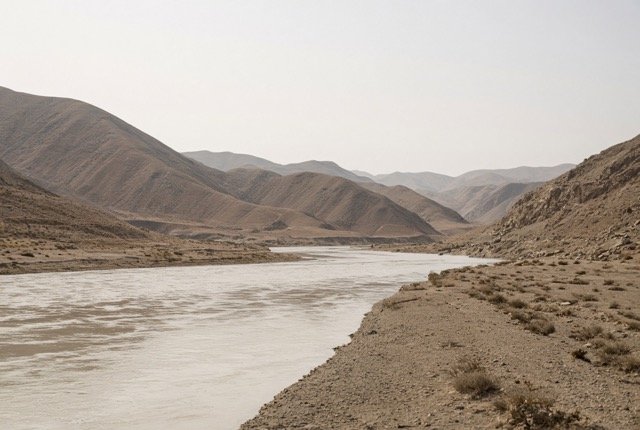
The Kabul River originates in Afghanistan, enters Pakistan, and ultimately joins the Indus system. Afghanistan, as the upstream country, has development needs involving irrigation, electricity generation, and water storage. Unlike the Indus system between India and Pakistan, the Kabul River is not governed by a comprehensive bilateral water-sharing treaty.
This creates an interesting contrast.
Pakistan demands strict adherence to an existing treaty when dealing with India, yet faces the challenge of negotiating a new water-sharing arrangement with Afghanistan, which has its own sovereign development priorities.
Pakistan has expressed concerns about Afghan upstream projects, while Afghanistan has emphasized its right to develop water resources for its population.
The comparison does not establish that Pakistan has violated international law. It does, however, demonstrate that upstream and downstream rights involve competing interests and that simplistic claims of absolute downstream entitlement are inadequate.
If Pakistan genuinely believes in equitable utilization, good-faith negotiations and regional water cooperation, it should apply those principles consistently to Afghanistan rather than treating the Indus dispute as a uniquely Indian obligation.
India’s Rights Under the Indus Waters Treaty
The 1960 IWT allocated the Eastern Rivers principally to India and the Western Rivers principally to Pakistan, while expressly permitting specified Indian uses of the Western Rivers, including hydroelectric generation.
Pakistan’s objections to Indian projects such as Kishenganga and Ratle must therefore be examined against the actual treaty provisions, not against the suggestion that India has no legitimate development rights over these waters.
India had also sought modification of the Treaty in 2023 and 2024, citing changed circumstances and differences over interpretation and implementation.
Pakistan’s reliance on the August 2026 Court of Arbitration award similarly overlooks India’s longstanding objections to that tribunal’s jurisdiction and the parallel dispute-resolution proceedings. The Court rejected India’s position on the Treaty remaining in force, while India disputed the Court’s authority.
The legal dispute is therefore more complex than Pakistan’s diplomatic presentation suggested.
The Real Agenda: International Pressure on India
The most revealing statement at the Vienna symposium came from Pakistan’s Ambassador, who suggested that other countries could use political, economic, and trade leverage to secure compliance with water-sharing obligations.
The contradiction was striking.
Pakistan accused India of using water as political leverage, while openly encouraging third countries to use economic and political leverage against India.
Apparently, coercion is objectionable only when Pakistan believes itself to be on the receiving end.
Equally significant was the response of other participants. Apart from remarks by Egypt’s Ambassador, most non-Pakistani speakers confined themselves to general discussions of water governance, sustainability, and international cooperation. No collective endorsement of Pakistan’s allegations emerged.
The presence of international organizations at an academic symposium should not be confused with institutional support for Pakistan’s position.
Conclusion: Water Diplomacy Cannot Conceal the Larger Reality
Pakistan’s Vienna symposium was less a breakthrough in international water cooperation than an attempt to package a bilateral political dispute as a global legal crisis.
The invocation of humanitarian concerns, arbitration awards, and international obligations cannot obscure Pakistan’s historical record on terrorist financing, India’s legitimate security concerns, or the complex realities of transboundary water management.
The Afghanistan comparison is particularly instructive. Pakistan recognizes the importance of downstream water security when its own interests are involved, but the challenge of managing the Kabul River also demonstrates why equitable utilization, upstream development rights, and negotiated arrangements must be considered together.
India’s position should be assessed on its legal merits, just as Pakistan’s should. But Pakistan cannot reasonably demand international sympathy through selective narratives while avoiding scrutiny of its own conduct.
Before Pakistan lectures India on the sanctity of international obligations, it would do well to remember that international responsibility extends beyond rivers—to preventing terrorism, protecting innocent lives, and practising the same principles it so enthusiastically preaches abroad.
Jalal Pacha (a pseudonym) is a member of the Pakistani diaspora community and an advocate for refugee rights.
Note: The contents of the article are the sole responsibility of the author. Afghan Diaspora Network will not be responsible for any incorrect statements in the articles.