Karzai’s Message Amid Renewed Pakistan-Afghanistan Tensions
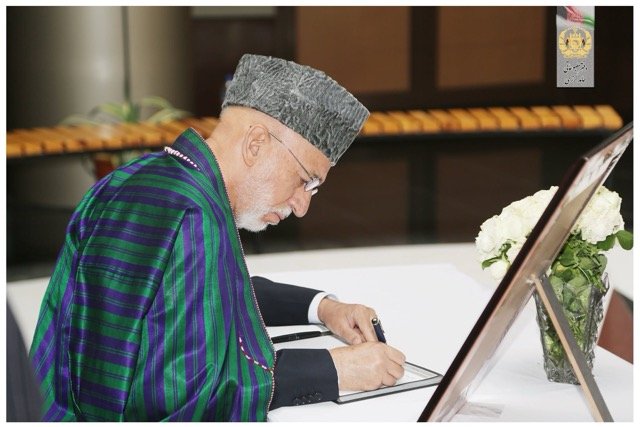
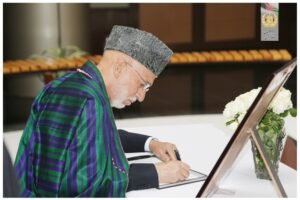
Afghanistan's former President, Hamid Karzai.
Relations between Kabul and Islamabad continue to be shaped by mutual accusations, security concerns, and an increasingly dangerous cycle of military escalation.
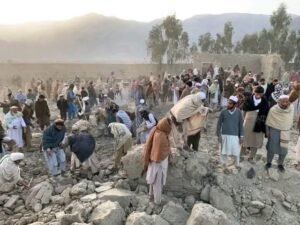
Former Afghan president Hamid Karzai has once again positioned himself as a voice calling for national unity and regional engagement following Pakistan’s latest airstrikes inside Afghanistan. His reaction came after Pakistani forces carried out strikes in Kandahar, Khost and Paktia provinces on September 24, while the Taliban government condemned the attacks as a violation of Afghan sovereignty.
In a statement posted on social media, Hamid Karzai condemned the bombings and argued that Pakistan continues to pursue a policy that has ultimately harmed itself. He stressed that Afghans, regardless of political, ethnic or social differences, stand united against external aggression. At the same time, he renewed his longstanding appeal for Islamabad to adopt a policy of good neighborhood and civil relations with Afghanistan.
Karzai’s response is significant because it differs in tone from the sharper rhetoric emerging from the Taliban leadership. Taliban spokesman Zabihullah Mujahid described the strikes as criminal aggression and warned that they would be met with an “appropriate response.”
The Taliban also accused Pakistan of using Afghanistan to divert attention from its internal problems. According to Taliban officials, four Afghan civilians were killed in the latest attacks.
Pakistan, however, offered a very different explanation. Islamabad said its air campaign targeted ten locations allegedly used for storing and launching drones that had been involved in cross-border attacks into Pakistan. Pakistani officials described the operation as “deliberate, precise, calibrated, and proportionate” and linked it to what they called an unlawful drone incursion into Pakistani territory.
Karzai’s intervention comes against the backdrop of a rapidly deteriorating relationship between Kabul and Islamabad.
Tensions between the Afghan Taliban and Pakistan have escalated significantly since early 2026, with both sides engaging in military action and Pakistan’s defense minister previously describing the situation as an “open war.”
At the center of the conflict is Pakistan’s accusation that the Taliban government provides sanctuary to Tehrik-e-Taliban Pakistan (TTP), an allegation repeatedly denied by Kabul. The dispute has fueled repeated strikes across the Durand Line, crossing closures, and diplomatic tensions, undermining previous mediation efforts by regional powers including Saudi Arabia, Turkey and Qatar.
This context helps explain why Karzai’s comments deserve attention. Unlike the Taliban leadership, he is not calling for retaliation. Instead, he is emphasizing Afghan unity while simultaneously urging dialogue with Pakistan. The approach reflects a pattern that defined much of Karzai’s presidency: strong opposition to violations of Afghan sovereignty coupled with an insistence that Afghanistan and Pakistan have no alternative but to coexist.
His statement may also resonate beyond Afghanistan. As regional actors attempt to prevent further escalation, calls for diplomacy carry particular weight. The latest strikes threaten ongoing mediation efforts involving Turkey, Saudi Arabia and other regional stakeholders seeking to stabilize relations between the two neighbors.
Whether Karzai’s appeal influences policy is uncertain. The immediate trajectory of Afghanistan-Pakistan relations appears driven by security concerns, mutual distrust, and escalating military exchanges. Yet his message highlights an enduring reality: despite recurring cycles of confrontation, geography binds the two countries together.
It remains unclear whether Hamid Karzai’s appeal will affect events. For now, relations between Kabul and Islamabad continue to be shaped by mutual accusations, security concerns, and an increasingly dangerous cycle of military escalation. Yet Karzai’s message stands out for its insistence that confrontation cannot be the only path forward.
While others speak of retaliation and deterrence, Karzai is calling attention to a reality that neither side can escape: Afghanistan and Pakistan will remain neighbors.
In a moment of rising tensions, his appeal for unity at home and dialogue across the Durand Line offers a reminder that lasting stability is more likely to come from political engagement than from another round of airstrikes.