Taliban Say They Hit Targets in Pakistan, Pushing a Fragile Standoff Toward Crisis
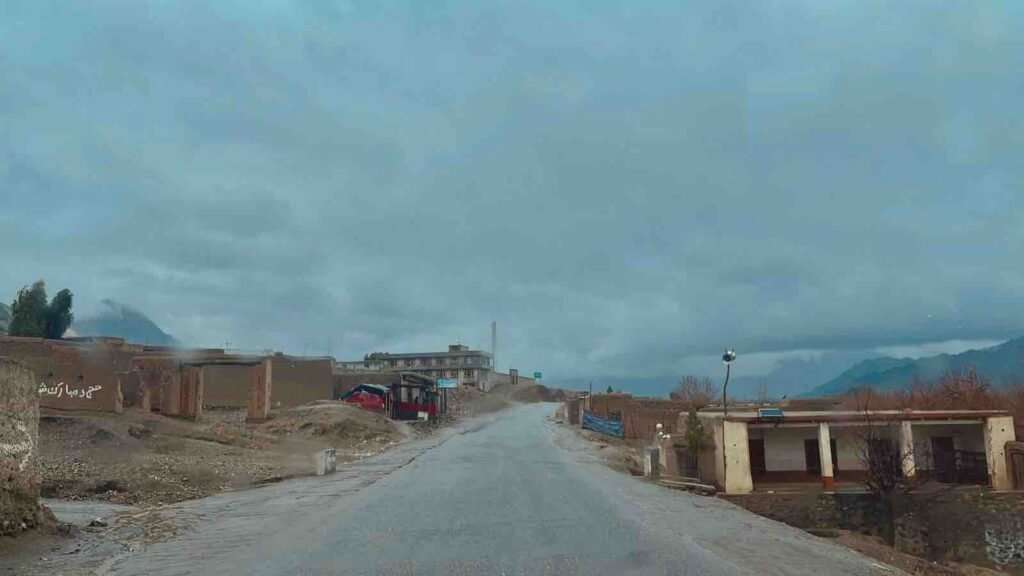
Khost province along the Durand Line on Afghanistan side. Photo: @AADIL for ADN
Kabul’s claimed strikes deepen mistrust as Islamabad maintains deliberate silence
By SS Ahmad
Tensions across the Durand Line between Afghanistan and Pakistan escalated sharply after the Taliban authorities in Kabul claimed they carried out overnight airstrikes inside Pakistani territory — a rare and provocative move that, if confirmed, would mark one of the most assertive military actions by the group since returning to power in 2021.
The Taliban, a group responsible for severe human rights violations, framed the operation as a defensive strike against what they described as militant networks plotting attacks inside Afghanistan.
According to a statement posted by the Taliban’s Defense Ministry on X, their air force targeted alleged ISIS‑K and other “militant” hideouts in Balochistan’s Qila Abdullah (Gulistan area) and Chagai district (Gardi Jungle/Shakar Ab area), as well as a site in Orakzai district of Khyber Pakhtunkhwa. The statement claimed these locations were used to plan attacks on Afghan soil with the support of “malicious intelligence circles.” The Taliban asserted that “important and wanted targets” were hit and warned that Afghanistan would not tolerate any threat to its security.
Al Jazeera, citing regional analysts, noted that the Taliban’s announcement — if accurate — represents a significant escalation in the already fragile relationship between the two neighbors. The outlet emphasized that the strikes come at a time when Pakistan has intensified pressure on the Taliban over the presence of Tehreek‑e‑Taliban Pakistan (TTP) militants, whom Islamabad accuses Kabul of sheltering. The Taliban deny the allegation.
Reuters, referencing Pakistani officials, reported that Islamabad had not immediately confirmed the strikes. The lack of official acknowledgment has left key details unclear, including the scale of the operation and whether casualties occurred. However, the incident follows months of rising friction, including Pakistan’s mass deportation of Afghan refugees and increased military activity along the border.
Reporting from local media cited residents in Balochistan who said they heard explosions overnight, though independent verification remains limited. No visual evidence has yet emerged to confirm the Taliban’s account, and Pakistan’s military has remained publicly silent.
The Taliban’s messaging appears aimed at projecting strength both domestically and regionally. Their statement emphasized that Afghanistan would “eliminate threats in the embryo,” signaling a desire to portray themselves as capable of defending national sovereignty — a theme they have repeatedly used to bolster internal legitimacy.
But analysts warn that such actions risk deepening instability. Pakistan and Afghanistan share a long, porous crossing Durand Line where militant groups have operated for decades. Both governments accuse each other of harboring hostile networks, and both deny responsibility. The result is a cycle of mutual suspicion that has repeatedly undermined regional security.
If the Taliban’s claims are confirmed, the strikes could mark a turning point in how Kabul responds to perceived threats inside Pakistani territory. But they could also provoke retaliation from Pakistan, a nuclear‑armed state with a far more powerful military.
For now, the situation remains murky. What is clear is that the frontier between the two countries—historically volatile—is entering a new phase of confrontation, with neither side showing signs of stepping back.
SS Ahmad is a freelance researcher and journalist based in Kabul Afghanistan.
Note: The contents of the article are the sole responsibility of the author. Afghan Diaspora Network will not be responsible for any incorrect statements in the articles.