Karzai Rebukes EU Praise for Pakistan, Critics Intensify
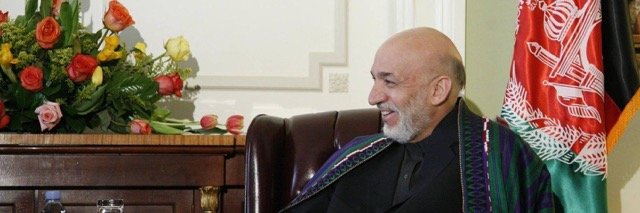
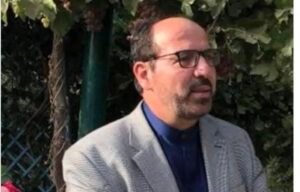
Hamid Karzai - the Former President of Afghanistan. Photo: @Hamid Karzai X.
By Kazim Jafari
The diplomatic visit of EU High Representative Kaja Kallas to Pakistan continues to generate strong reactions across the region, with former Afghan president Hamid Karzai now joining a growing chorus of critics who argue that the EU is overlooking Pakistan’s long‑standing role in regional instability.
Karzai’s critics have added political weight to what had already become a heated online debate involving Afghan officials, analysts, Baloch activists, and international commentators.
Kallas’s visit, which included meetings with Prime Minister Shehbaz Sharif, Deputy Prime Minister Ishaq Dar, and Army Chief General Asim Munir, was framed by the EU as an effort to strengthen political and economic ties. She praised Pakistan as a “major regional power,” highlighted its role in facilitating indirect U.S.–Iran talks, and underscored the importance of EU–Pakistan cooperation under the GSP+ trade framework.
But for many Afghans, Kallas’s messaging struck a nerve. They argue that Pakistan’s regional influence cannot be separated from its decades‑long support for militant groups and its deep involvement in Afghanistan’s conflict. Karzai’s statement, published on X, crystallized these concerns in diplomatic but unmistakably firm language.
Karzai wrote that Afghanistan has maintained “over a century of friendly and constructive relations” with European countries and EU institutions. He expressed gratitude for humanitarian assistance and long‑standing cooperation. But he then shifted sharply, stating that Pakistan’s current security crisis is “the result of its policies in supporting extremism and using it as a tool of foreign policy against Afghanistan for the past four decades.”
He urged Kallas to consider “objective realities” and to recognize that Afghanistan and its people “are victims of terrorism created by Pakistan.”
Karzai called on the EU to acknowledge the root causes of regional instability, including the human and infrastructural losses Afghanistan has suffered due to cross‑border militancy and recent Pakistani airstrikes.
Karzai’s intervention is significant. As a former head of state who maintained close relations with Western governments, his criticism carries diplomatic weight and reflects broader Afghan frustration with what many perceive as international normalization of Pakistan’s security establishment.
Other Afghan voices were far less diplomatic. Former deputy defense minister Tamim Asey accused Pakistan of being “a major exporter of terrorism” and claimed its intelligence services were responsible for the deaths of EU and NATO soldiers during the Afghanistan war. He described Pakistan as a “hybrid regime” battling multiple internal insurgencies and argued that General Munir should “focus on putting his own house in order.”
International commentators also joined the criticism. Economist Harris Samaras accused the EU of enabling authoritarian governments and described Pakistan as “an unelected and illegitimate military dictatorship.” He argued that Kallas’s praise contradicted the EU’s stated commitment to human rights and democratic values.
The backlash was not limited to Afghan perspectives. Baloch journalist Bilal Baloch questioned how Kallas could overlook the Pakistani military’s role in enforced disappearances and abuses in Balochistan. He referenced the case of Dr. Sammi Baloch, whose father has been missing for more than a decade, and asked whether Kallas “feels the pain” of the thousands of Baloch families still searching for loved ones allegedly held in military custody.
These reactions highlight a deeper structural tension: the gap between European diplomatic framing and the lived experiences of communities affected by Pakistan’s security policies.
For Afghan and Baloch activists, Pakistan’s role in regional diplomacy cannot be separated from its domestic human rights record or its long history of involvement in Afghanistan’s conflict.
Kallas’s visit, intended to reinforce EU–Pakistan cooperation, has instead exposed the fragility of Europe’s credibility among communities who feel their suffering is being sidelined for geopolitical convenience.
The EU’s emphasis on Pakistan’s mediation role in U.S.–Iran tensions was interpreted by critics as selective diplomacy that ignores Pakistan’s own internal crises and its impact on neighboring Afghanistan.
Karzai’s statement attempts to strike a middle ground: reaffirming Afghanistan’s desire for strong ties with Europe while urging the EU to adopt a more realistic assessment of Pakistan’s role in regional instability. His message reflects a broader sentiment among Afghans who fear that international actors are normalizing Pakistan’s policies at a time when Afghanistan continues to face violence, displacement, and political uncertainty.
As the debate continues, one thing is clear: Kallas’s visit has opened a wider conversation about the EU’s approach to South Asia, the limits of strategic diplomacy, and the voices that feel excluded from these calculations.
The reactions—from former presidents to grassroots activists—underscore how deeply contested Pakistan’s regional role remains, and how sensitive Afghan and Baloch communities are to any international recognition of Islamabad’s influence.
Kazim Jafari is a political science student at the University of Heidelberg in Germany.
Note: The contents of the article are the sole responsibility of the author. Afghan Diaspora Network will not be responsible for any incorrect statements in the articles.