Pakistan’s New Playbook: Pitting Afghan Groups Against One Another
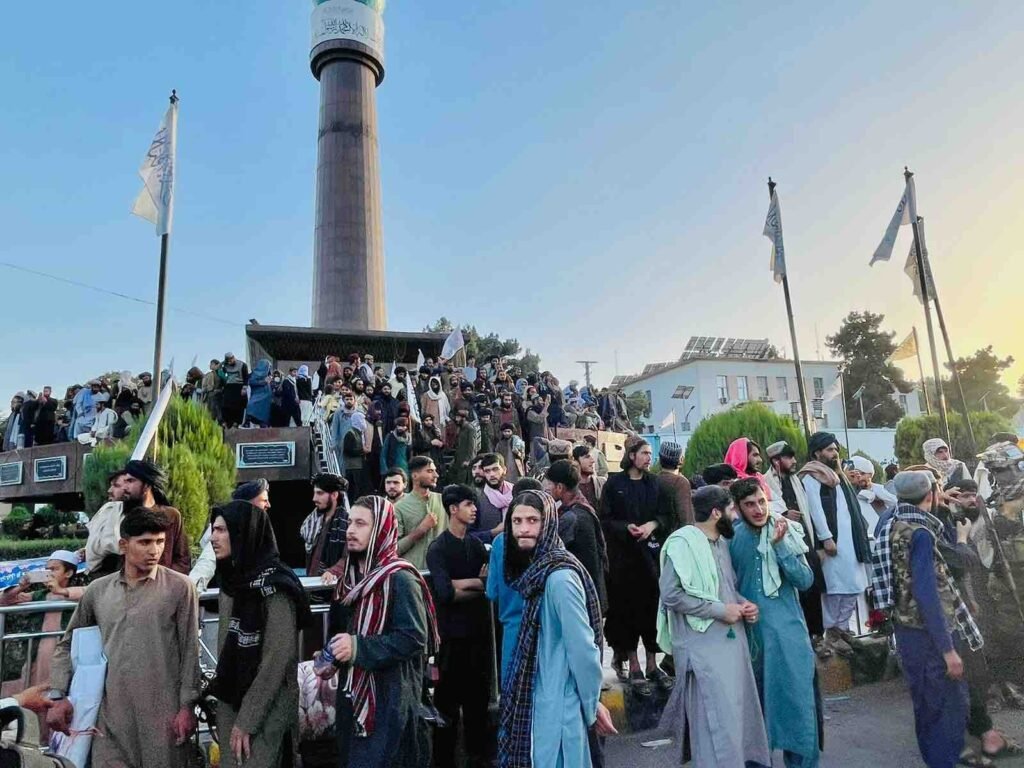
Kabul, Afghanistan. Photo: @AADIL for ADN
Pakistan military has once again decided to use proxy warfare through new actors.
By A. Shafaq
The Durand Line frontier has entered its most combustible phase since the Taliban’s return to Kabul in August 2021, and a new element has begun to emerge in the region. The claim is that Pakistan’s military establishment has been quietly co-opting displaced former Afghan militiamen, the men once known in the southeast as ‘Arbakai,’ and reorganizing them inside training hubs across Balochistan. The maneuver would mark a significant inversion of an older pattern, with Islamabad repurposing anti-Taliban Afghan manpower as a disruptive asset against the very group it once helped to install in Kabul. The claim matters less for its present evidentiary weight than for the logic it fits, because Pakistan has historically kept Afghanistan unstable to fulfill its “strategic depth” objectives.
Understanding the depth of the claim requires separating what the Arbakai actually are from what they are now alleged to have become. In their traditional form, the Arbakai are an indigenous Pashtun institution of community self-defense, rooted in the southeastern belt of Loya Paktia, encompassing Paktia, Paktika, Khost, and the adjoining districts of Ghazni. Unpaid and raised by consensus, they function as the armed enforcement arm of the tribal jirga, executing its rulings, maintaining local order and guarding tribal territory under the customary code of Pashtunwali. Membership has always been treated as a matter of honor rather than employment, and it is this distinction that separates the genuine Arbakai from the hired militias that Afghans of the region regard with open contempt.
The institution belongs overwhelmingly to the tribes of the Karlan confederation that dominate the southeast. The Zadran of Khost and Paktika, the Mangal, the Jaji and the Zazai of the Paktia highlands, alongside the Ahmadzai, the Tani, the Gurbuz and the Sabari, have all fielded such forces within living memory. These are broadly the same lineages that furnished the Haqqani network its social base, which is precisely why control over their armed young men has long been a coveted prize for every external actor operating along this stretch of the frontier. Whoever commands the loyalty of the Loya Paktia tribes commands the approaches to Khost, Gardez and the passes into Kurram and North Waziristan.
The trajectory that led from tribal defenders to alleged proxies of Pakistan runs through the last two decades of Afghanistan. After the collapse of the first Taliban regime in 2001, the Arbakai model was actively revived under the Western-backed government and its NATO partners, which saw in it a cheap and locally legitimate instrument of counter-insurgency. The Afghan Local Police program drew heavily on the template, formalizing village defence units that were tasked, above all, with holding ground against a resurgent Taliban. That association proved fatal to many after August 2021. The returning Taliban authorities identified former Arbakai, local police, and intelligence-linked personnel as men who had spent years fighting the movement. Large numbers were driven into exile, and it is this displaced and embittered population, stripped of protection and income, that Pakistan’s security agencies are now to have found ripe for recruitment.
According to reports, Pakistan began absorbing these fractured remnants into a wider covert architecture, operating out of sanctuaries in Balochistan, Khyber Pakhtunkhwa and Chitral. The purpose was twofold. The first objective was defensive, using seasoned Afghan fighters against the Tehreek-e-Taliban Pakistan; the second was offensive, assembling a pool of anti-Taliban assets that could be turned against the Emirate as leverage, deniable and disposable in the manner that has always characterized Rawalpindi’s frontier statecraft. The claim is that Pakistan is running former Afghan government fighters against both its domestic enemies and the Taliban in Kabul.
As a result, the Taliban are now reportedly targeting the infrastructure of Arbakai members in different parts of Pakistan. This year, several Afghan media and security sources reported that drone and air operations struck deep inside Pakistani territory, hitting what Kabul described as Arbakai command and staging centers in Balochistan locations such as Gulistan, Gardi Jungle and Saranan. As expected, Islamabad has denied those reports, framing the sites as ordinary settlements or, where losses were undeniable, as camps linked to Islamic State elements. The perspective from Kabul has been consistent and unambiguous. The strikes are presented as defensive measures against Pakistan-engineered militant infrastructure designed to destabilize Afghanistan. The Taliban have repeatedly warned exiled fighters that collaboration with Pakistan constitutes treason, pairing offers of amnesty for those who return to the country.
However, the more striking development is the reported backlash inside Pakistan itself. The deployment of unaccountable, state-protected armed men into sensitive Baloch districts has been linked to a sharp rise in local lawlessness, targeted violence, and intelligence-led intimidation. The fragile tolerance of the Baloch population is said to have collapsed after a dramatic sequence of events, with reports that armed locals recently carried out a coordinated assault on an enclave of these state-backed militiamen. The reported operation is said to have triggered a chain reaction of angry demonstrations across the region, with residents blocking transport corridors and issuing an uncompromising demand for the complete eviction of the former Afghan fighters from their communities. However, it appears Pakistan’s military is ready to absorb the security costs of an ill-conceived violent policy imposed on Baloch soil.
Read against the historical record, Pakistan’s strategy to support the Arbakai fighters is entirely coherent. Pakistan has repeatedly raised anti-Taliban tribal militiamen on its own side of the line, and recent reporting has already described Islamabad courting exiled anti-Taliban opposition networks as its relationship with the Emirate has soured. Repurposing displaced Arbakai against the Taliban would sit squarely within that tradition and would carry the known risk of regional destabilization. The blowback now reported in Balochistan would be the latest installment of a pattern that has cost Pakistan dearly before.
With no reliable policy in place to control the Taliban, the Pakistan military has once again decided to use proxy warfare through new actors. This dangerous tactic would only bring more bloodshed and misery to the Baloch and Pashtun populations.
A. Shafaq (pseudonym) is a researcher and lecturer at one of the private universities in Kabul.
Note: The contents of the article are the sole responsibility of the author. Afghan Diaspora Network will not be responsible for any incorrect statements in the articles.