Cameleer Anniversary Highlights Afghan Legacy and Community Challenges
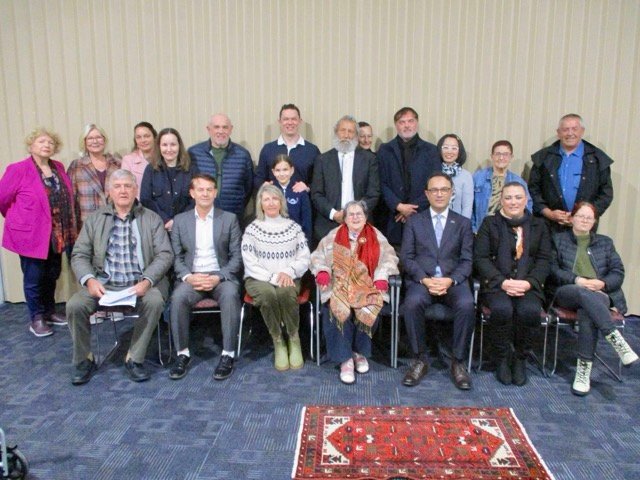
Ambassador Wahidullah Waissi and community representatives join descendants of the Afghan cameleers in Adelaide to commemorate 166 years of historic Afghan presence in Australia. Photo: @Afghanistan Embassy in Australia
The Embassy of the Islamic Republic of Afghanistan in Canberra has commemorated the 166th anniversary of the arrival of the first Afghan cameleers, holding a ceremony in Adelaide that brought together descendants, Afghan–Indigenous families, and researchers. The event highlighted a shared chapter of Afghan–Australian history at a moment when new research offers a deeper look at the realities facing Afghan communities today.
The ceremony opened with a wreath‑laying at the Afghan Cameleers Memorial in Whitmore Square. Participants paid tribute to the men who, more than a century and a half ago, helped build transport routes, supported exploration, and connected remote regions of Australia. Their work remains one of the earliest and most enduring links between the two nations.
Ambassador Wahidullah Waissi described the cameleers’ legacy as a foundation of early human and cultural ties. He said their contribution was built on trust, coexistence, and mutual respect — values that continue to shape the presence of Afghan‑Australians.
Preserving this history, Waissi added, is not only a tribute to the past but a way to educate younger generations about the constructive role Afghans have played in Australia.
The second part of the program brought together descendants of the cameleers and members of Afghan–Indigenous communities. Families shared photographs, heirlooms, and personal stories. These accounts offered a vivid picture of the early Afghan presence in Australia and the relationships they built with Indigenous communities.
While the Embassy’s commemoration emphasized unity and shared heritage, a 2024 study published in Ethnicities provides a more layered understanding of Afghan life in Australia today. Conducted in Western Australia, the study by Rezaei, Banham, and co-authors on how Afghan immigrants integrate into Australian society — and the internal challenges they face.
The research shows that Afghan migration has grown significantly, with more than 57,000 Afghanistan‑born residents recorded in the 2021 census. Many arrived as refugees after years in Iran or Pakistan. The study found strong psychological and economic integration among Afghan immigrants, with 87% expressing a desire to remain in Australia permanently.
However, the study also documents deep internal divisions within the community. According to the authors, “there are about a dozen Afghan communities within the Perth metropolitan area,” often separated along ethnic, religious, regional, or migration‑history lines. These divisions can weaken social cohesion and limit the community’s ability to build collective networks.
One interviewee in the study noted that historical prejudices from Afghanistan continue to shape relationships in Australia, saying such mentalities “don’t allow us to have a normal relationship here.”
The study also highlights gender‑specific challenges, with Afghan women facing barriers to participation in community spaces and limited access to social networks.
Despite these challenges, the research found that strong social connections within the Afghan community correlate positively with economic, social, linguistic, and navigational integration. In other words, when Afghans support one another, their overall integration outcomes improve.
This finding creates a meaningful bridge to the Embassy’s commemoration. The story of the cameleers—a shared heritage that predates modern political and ethnic divisions—offers a reminder of what collective identity can look like when rooted in contribution rather than fragmentation.
The Afghan embassy described the cameleers’ legacy as a symbol of the positive role migrants play in building societies, strengthening cultural ties, and promoting coexistence.
As Afghan‑Australians continue to navigate questions of identity, belonging, and community cohesion, the cameleers’ story stands as both inspiration and challenge: a testament to what Afghans have contributed to Australia, and a call to strengthen the social bonds that support successful integration today.