Dialogue or Political Theater? London’s “Towards Trust and Consensus” Conference
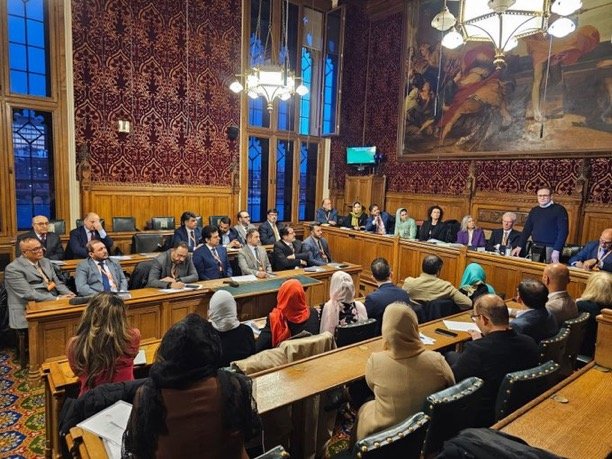
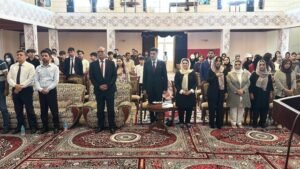
Participants during the two-day “Towards Trust and Consensus” conference in London, 24–25 March. Photo: Women for Afghanistan (X)
By Kazim Jafari
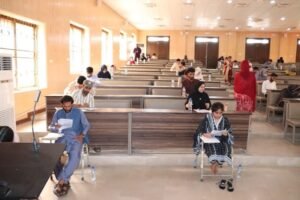
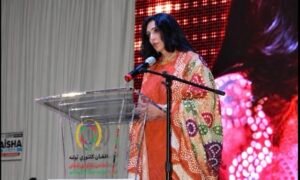
The recent London conference titled “Towards Trust and Consensus,” held on 24–25 March 2026, represents another attempt by Afghan diaspora actors to position themselves within ongoing debates about Afghanistan’s political future. Organized as a continuation of earlier discussions in Islamabad by Women for Afghanistan, the meeting brought together around 40 participants, including political figures, civil society representatives, and media actors. Its stated objectives – fostering unity, building trust, and identifying shared solutions – reflect a growing recognition that fragmentation among Afghan actors remains a major obstacle to any coherent political alternative to Taliban rule.
At a normative level, the conference articulated a set of widely shared principles. Participants emphasized democracy, the rule of law, gender equality, and inclusive governance as the foundations for a future political system. The Taliban were criticized for consolidating power, restricting freedoms, and presiding over worsening economic and humanitarian conditions. In this sense, the conference aligns with broader international discourses on Afghanistan and reinforces demands that have been consistently raised by Afghan diaspora, particularly regarding women’s rights and political participation.
A central theme of the discussions was the need to overcome internal divisions. By prioritizing “trust” and “consensus,” organizers aimed to create space for dialogue among diverse Afghan actors who have often operated in isolation or competition. The inclusion of different political and civic voices suggests an effort to build a broader coalition, while engagement with members of the UK Parliament indicates a strategic attempt to internationalize Afghan concerns and mobilize external support. Such outreach reflects a recognition that, in the current context, diaspora actors often rely on international platforms to amplify their demands.
However, the significance of the conference should also be assessed with caution. While these gatherings provide opportunities for dialogue and visibility, their practical impact on political developments inside Afghanistan remains limited. The absence of direct links to constituencies inside the country raises questions about representation and legitimacy.
Although participants advocate for a system grounded in popular will, they themselves operate largely outside the domestic political arena, which complicates their ability to translate ideas into tangible change.
Moreover, longstanding concerns about fragmentation and trust were not entirely resolved by the meeting itself. Critics have pointed to a lack of transparency regarding funding sources, organizational partnerships, and potential external influence. Questions have also been raised about the backgrounds and credibility of some participants and organizers, reflecting broader skepticism toward Afghan political elites in exile. Given Pakistan’s historically complex and often contested role in Afghanistan’s political affairs, its perceived involvement in such initiatives has raised concerns among some observers about underlying strategic interests.
These critiques, whether fully substantiated or not, highlight the persistent challenges facing diaspora-led initiatives: namely, how to build credibility in a context marked by historical grievances and political mistrust.
In addition, critics have noted the organizers’ and participants’ silence regarding the reported Pakistani strike on a rehabilitation center in Kabul, arguing that this omission raises concerns about political selectivity and possible external influence. Such perceptions are further shaped by a wider regional context, where shifting geopolitical dynamics – including ongoing tensions involving Iran – are increasingly affecting Afghanistan’s position. In this environment, some observers argue that segments of the Afghan diaspora risk becoming politically instrumentalized, particularly when financial or strategic incentives are involved.
Ultimately, the London conference illustrates both the potential and the limitations of diaspora engagement. On the one hand, it demonstrates a continued commitment among Afghan actors abroad to advocate for a more inclusive, rights-based political order. On the other hand, it underscores unresolved issues related to representation, coherence, and independence. For such initiatives to move beyond symbolic significance, greater transparency, broader inclusivity, and stronger connections to inside will be essential. Without these, efforts to build “trust and consensus” may remain aspirational rather than transformative.
Kazim Jafari is a political science student at the University of Heidelberg in Germany.
Note: The contents of the article are the sole responsibility of the author. Afghan Diaspora Network will not be responsible for any incorrect statements in the articles.