
For Afghans, Recognition Without Representation Is Just Another Kind of Limbo
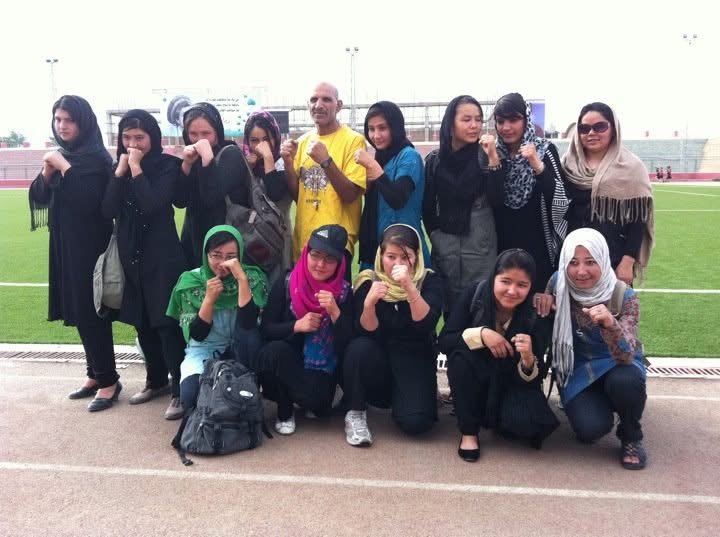
Afghanistan's former female boxers in Kabul. Photo: @Ali Ahmad
By Ali Ahmad
When FIFA recently announced that Afghan women in the diaspora could finally represent their country on the international stage, it felt, at least on the surface, like a moment of pure, uncomplicated pride.
For women who have been systematically erased from public life at home, this recognition offered a rare and vital space to be seen.
The former captain of the national team called the news “fantastic,” a chance for these athletes to carry the stories of Afghan women and girls to a global audience. It’s a message that hits home emotionally, but it also forces us to confront a much grittier set of questions.
The uncomfortable truth is that the world already knows exactly what is happening to Afghan women. We all watched the collapse in real-time. We watched rights vanish overnight. This is the same international community that essentially handed over a fractured democracy to the Taliban and simply walked away.
So, when activists say these players will “bring the voices of Afghans to the world,” you have to wonder: does the world really lack information, or has it just run out of the will to care?
The contradictions go even deeper. We now have an Afghan women’s football structure competing for a system that no longer exists on the ground. Meanwhile, the men’s cricket team still rallies under the flag of the former republic. Some embassies continue to operate as if the state they represent hasn’t dissolved.
Everyone claims to speak for “the people,” yet no one can quite explain who they are actually accountable to, or who gave them the mandate to represent millions of lives from a distance.
The decision to recognize the Afghan women’s diaspora team is often viewed as a vital act of symbolic resistance. By providing these athletes with an international platform, FIFA ensures that the identity and agency of Afghan women remain visible at a time when they are being systematically erased from public life within their own borders.
Proponents argue that this recognition serves as a “living archive” of progress and a beacon of hope for those still inside the country. It challenges the narrative of total exclusion and asserts that the rights of Afghan women are not tied to the current political regime, but are inherent and deserve international validation.
Conversely, this situation creates a profound legitimacy paradox. While the gesture is emotionally resonant, it establishes a “ghost institution” that lacks a physical footprint or administrative infrastructure inside Afghanistan. This leads to difficult questions about mandate and accountability, specifically, who these entities represent and who they are answerable to.
Some observers worry that symbolic wins like these allow the international community to “ease its conscience” through gestures of solidarity while avoiding the much harder work of addressing the humanitarian crisis or the lack of actual political leverage. In this view, recognition without representation keeps the diaspora in a state of limbo, where visibility is frequently mistaken for substantive change.
This is the hollow limbo the Afghan diaspora inhabits. Recognition feels like a win, but it really just highlights a massive vacuum of true representation. Afghanistan is not recognized as a state, yet fragments of its ghost institutions linger on the international stage, stretching the idea of legitimacy until it’s paper-thin.
Then come the harder questions. Suppose these voices are heard; what follows? Another intervention? More sanctions? We’ve seen how pressure campaigns often crush ordinary families while those in power remain largely untouched. If the demand is for more sanctions, are we weakening the regime or just deepening the misery for people already struggling to survive?
Sports add another layer of tension to this debate. Whether it’s football or cricket, the game should be built on merit, not a sympathy vote. Afghan women deserve genuine investment, elite coaching, and professional resources, not just pity. Sympathy is a poor substitute for a training budget.
In the end, the diaspora is left with a messy collision of emotions: pride in seeing Afghan women visible again, paired with the frustration that visibility isn’t the same thing as power. There is a nagging uncertainty about whether these symbolic gestures are steps toward something meaningful or just a way for the world to ease its collective guilt.
The real test is whether this scattered recognition can ever be converted into actual accountability or if these players will remain isolated symbols in a world that has, for the most part, already moved on.
Note: The contents of the article are the sole responsibility of the author. Afghan Diaspora Network will not be responsible for any incorrect statements in the articles.