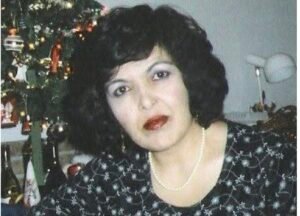
Muzhda Uzbek and the Criminalization of Dissent in the Taliban Emirate

The Word as an Offense: From Poetry to Political Surveillance
By Ivan Pozzoni
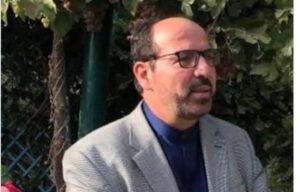
The arrest of Muzhda Uzbek, a poet and teacher belonging to Afghanistan’s Uzbek minority, raises a question that extends far beyond judicial reporting: what happens when a political power considers poetic production as potential evidence for prosecution? According to Rukhshana Media, in October 2026, Taliban intelligence forces allegedly arrested her in Takhar Province, charging her with composing protest poems and having alleged ties to Rahila Dostum, a former Afghan senator. Her husband, detained alongside her, was reportedly released, while she remained in custody. Available information relies on journalistic sources and indirect testimonies: we lack a public judicial dossier that would allow a complete reconstruction of the charges, as well as a verifiable transcript of the contested texts. The pragmatics of language helps clarify this transition. An utterance is not exhausted by its literal meaning; context, the speaker’s position, the recipient, and the effects the word can produce all intervene. A line of verse can recount private suffering, allude to a collective experience, denounce a political condition, or open an alternative imaginative space. Its value cannot be reduced to a programmatic proposition. Silence, ellipsis, and ambiguity also possess an expressive function; because they do not deliver a single meaning, they evade the demand for total control asserted by official discourse. A statement attributed to Rahila Dostum asserts: “شعر و اندیشه جرم نیست و صدای اهل فرهنگ را نمیتوان با زندان خاموش کرد” (“Poetry and thought are not crimes, and the voice of cultured people cannot be silenced by imprisonment”). Golchehra Yaftali asks: “چرا باید گفتن حقیقت، آموزش، قلم و کتاب جرم تلقی شود؟!” (“Why should telling the truth, education, the pen, and the book be considered crimes?!”). The question links writing with autonomy.
The Female Body, the Body of the Text: Censorship, Gender, and Vulnerability
The restrictions imposed on Afghan women make the figure of a poet-teacher deeply significant. Writing and education transmit knowledge and manage to open spaces of autonomy beyond the boundaries assigned to private life. Judith Butler has drawn attention to the material conditions that make public speech possible. In her work dedicated to vulnerability and resistance, she formulates: “The material conditions for speech and assembly are part of what we are speaking and assembling about”. This reflection allows us to avoid an abstract conception of freedom. Speaking requires physical safety, access to public spaces, tools of communication, and the possibility for ideas to circulate. If these conditions are compromised, formal freedom loses an essential part of its efficacy. The neuroscience of reading offers a further interpretive framework, provided it is not used to attribute automatic effects to poetry. Narrative prompts the reader to simulate situations, consider different perspectives, and connect with experiences not lived directly. Literature fosters forms of attentiveness toward the experiences of others, without in itself guaranteeing politically emancipated behavior. Its potential lies in its ability to disrupt cognitive automatism: an unexpected image forces a reconsideration of what seemed obvious; an excluded voice makes palpable the human cost of a rule presented as natural. For this reason, the reflection of the Afghan poet and translator Hajar Hussaini is pertinent: “How things are being said instead of what is being said”. This line stems from a critical reflection on poetry and translation, not from a direct commentary on Muzhda Uzbek’s arrest. Its utility is methodological: it reminds us that rhythm, imagery, omissions, and ambivalences contribute to the construction of meaning. A poem is not a political communique disguised as literature; form itself must enable a perception that administrative language does not contemplate.
The Circulation of the Voice: Memory, Resistance, and the Responsibility of Witnessing
The case of Muzhda Uzbek demands philological caution. Available news sources attest to her arrest and report the accusation regarding poems critical of the Taliban; they do not reproduce the contested compositions. It is impossible to responsibly quote original lines by the poet or reconstruct their content on the basis of the charges. This absence does not authorize us to fill the silence with invented texts: it makes the search for original manuscripts, publications, recordings, or posts that would allow us to restore her own voice all the more urgent. The call “Мужда Ўзбекни озод қилинг”, transliterated as Mujda O‘zbekni ozod qiling and translated as “Free Muzhda Uzbek”, was reported by BBC Uzbek in the headline of an appeal by intellectuals. The imperative does not merely describe a situation: it prompts action and identifies a political addressee. In pragmatic terms, it is a directive speech act. Its circulation constructs a temporary community of readers who recognize in her detention a fundamental issue of freedom, even when they do not share the same identity or political affiliation. The poet’s name becomes the locus of condensation for a broader question: who should be allowed to speak, teach, and create without fear of punishment? The slogan “قلم جرم نیست” (“The pen is not a crime”) condenses a legal and symbolic claim. The pen functions as a metonymy for writing, education, and cultural participation. The phrase does not summarize the entire affair; it renders its conflict visible: it opposes an ordinary instrument to the gravity of the sanction hitting those who use it. Its efficacy depends on the perceived disproportion between the creative gesture and the punitive response. The slogan “سکوت جایز نیست” (“Silence is not permissible”) completes this logic: public speech is presented as a responsibility toward those who have been deprived of their ability to intervene. One must distinguish solidarity from direct testimony. The statements of Rahila Dostum, Soraya Dalil, and Golchehra Yaftali, as well as appeals by movements and intellectuals, document the public reaction to the case; they do not replace Muzhda Uzbek’s poetry. Accuracy is not a technical detail: it is the condition that prevents the denunciation of censorship from involuntarily reproducing another form of erasing an individual voice. Byung-Chul Han, in In the Swarm: Digital Prospects (MIT Press, 2017), observes: “The digital swarm is a fragmented entity that can focus on individual persons only in order to make them an object of scandal”. Online visibility can successfully sustain a solidarity campaign without guaranteeing true understanding: rapid sharing detaches words from their context and confuses attributions. Ocean Vuong writes in On Earth We’re Briefly Gorgeous (2019): “The truest ruins are not written down”.Certain lives are destroyed or marginalized without leaving an adequate archive behind. The problem of memory is political. If a poet’s texts disappear, readers depend on the descriptions of others and less and less on the possibility of hearing her voice directly. Preserving original materials is a form of safeguarding individual complexity. The same rigor is required for “Your silence will not protect you”, associated with Audre Lorde, and for Michel Foucault’s formulation, “Where there is power, there is resistance”. The latter comes from The History of Sexuality, Volume 1: An Introduction(Pantheon Books, 1978; original La volonté de savoir, Gallimard, 1976) and reminds us that power does not eradicate every possibility of response: it organizes the field in which resistance emerges, transforms, and encounters obstacles. These theoretical references can illuminate the case without being confused with direct testimonies from contemporary Afghanistan. The ultimate issue is twofold. On the political plane, we must demand that Muzhda Uzbek not be persecuted for her literary activity and that her rights to freedom of expression, teaching, and personal safety be respected. On the cultural plane, we must recover her texts without inventing them, locate original publications, and precisely distinguish her own words from those of her supporters. Defending a poet does not require attributing exemplary phrases or imaginary verses to her; it requires preserving the possibility for the public to read her for what she actually wrote. Arundhati Roy’s formulation, “The pandemic is a portal”, originating in her essay published by the Financial Times in 2020, invites us to think of crisis as a passage toward a possible different order; it serves as a question, not a prophecy: the situation must make visible mechanisms of exclusion that are normally concealed. Censorship reduces the plurality of the word to an authorized interpretation. A critical response must do the opposite: distinguish the author, commentators, and sources, state documentary limits, and not turn gaps into certainties. Solidarity loses credibility when it relies on unverified quotes; philological precision reinforces critique. To defend Muzhda Uzbek means demanding her freedom while refusing to speak in her place. Until original texts are recovered, we must seek them out, preserve them, and state what we do not yet know with absolute rigor.
About the author: Ivan Pozzoni was born in Monza in 1976. He introduced Law and Literature in Italy and the publication of essays on Italian philosophers and on the ethics and juridical theory of the ancient world; he collaborated with several Italian and international magazines. He wrote 152 volumes, wrote 1000 essays. His verses/essays are translated into 30 languages.
Note: The contents of the article are the sole responsibility of the author. Afghan Diaspora Network will not be responsible for any incorrect statements in the articles.