Pakistan Airstrikes Kill Civilians in Afghanistan, UN Confirms Casualties
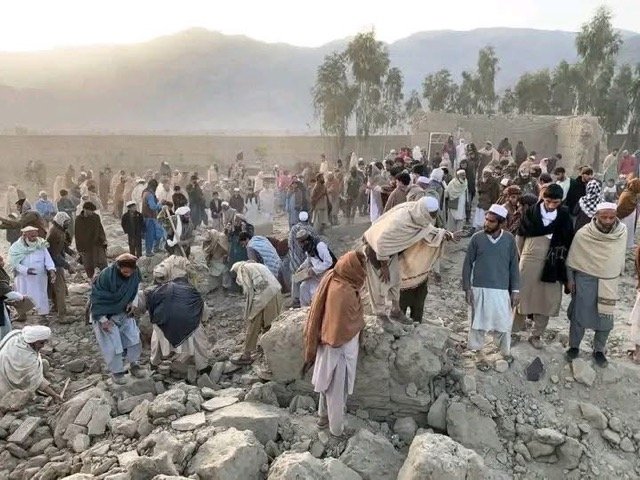
Airstrikes carried out by Pakistani forces in Afghanistan’s eastern Kunar province early on 21 September have killed at least three civilians, according to the United Nations Assistance Mission in Afghanistan (UNAMA). The incident has triggered strong reactions from Afghan political figures, who warn that repeated attacks across the Durand Line are deepening instability and exposing the limits of current governance. The Taliban also condemned the strikes.
UNAMA confirmed that a man, a woman, and a girl were killed, while four civilians were injured in what it described as “apparent airstrikes.” The mission noted that more than 1,100 civilian deaths and injuries have been documented in Afghanistan in 2026 due to armed violence across the Durand Line. UNAMA reiterated its call for respect for international humanitarian law and urged all parties to prevent further civilian harm.
Taliban spokespersons, Zabihullah Mujahid, accused Pakistan of “aggression” and “a repetition of crimes,” claiming that Pakistani forces shelled civilian areas in both eastern provinces of Kunar and Paktika. They reported three deaths and several injuries in Kunar, and damage to a house and shop in Paktika.
The Taliban alleged that Pakistan carried out the strikes to “divert attention from security failures within its own country,” and vowed that Afghans would deliver an “appropriate retaliation.”
Pakistani media outlets, including UA News and TimesLive, cited military sources claiming that the strikes targeted militant positions and killed 28 fighters inside Afghanistan. These claims could not be independently verified, and Afghan authorities insist that the targeted areas were civilian.
The airstrikes prompted sharp criticism from Afghan political figures. Shahmahmood Miakhel, former deputy defense minister, condemned Pakistan’s actions and argued that mere denunciations are insufficient. He said such attacks “are neither the first nor the last,” and called for decisive political steps, including expelling Pakistan’s ambassador and convening a Loya Jirga to chart a path toward a lawful, representative political system.
Miakhel warned that Afghanistan’s current isolation has created conditions enabling repeated cross‑border violations. “Only condemning these attacks has no benefit,” he said, adding that Pakistan’s interventions and airstrikes have been facilitated by “the Taliban’s policies and the state of isolation.”
Former president Hamid Karzai also condemned the strikes, calling them a violation of Afghanistan’s sovereignty. He expressed condolences to the families of the victims and urged Pakistan to reconsider its policies toward Afghanistan.
Karzai said Pakistan’s current security problems are “the result of its misguided policies regarding Afghanistan,” and called for a shift toward “good neighborliness, constructive relations, and civilized engagement.”
Zalmay Khalilzad, former U.S. envoy for Afghanistan, also reacted to the airstrikes, saying that Pakistan’s attack “once again” targeted Afghan civilians at a moment when Islamabad faces intensifying internal crises. He argued that Pakistan’s current approach to managing domestic instability and its relationship with Afghanistan “is not working,” warning that “more of the same is not the solution.” Khalilzad said Pakistan needs a fundamental shift in strategy, but expressed doubt that the current leadership will change course. He added that the continuation of present policies “means more bad news for Pakistan and Afghanistan.”
Tensions across the Durand Line between Pakistan and Afghanistan have escalated throughout 2026, driven by Islamabad’s accusations that armed groups operate from Afghan territory. The Taliban deny the allegations and accuse Pakistan of repeated violations of Afghan sovereignty. With no formal diplomatic mechanisms and rising mistrust, analysts warn that the risk of further escalation remains high.
UNAMA emphasized that civilian protection must remain a priority as communities along the Durand Line continue to face insecurity, economic hardship, and limited access to essential services.