The anti-Taliban Satire of Ezatullah Zawab
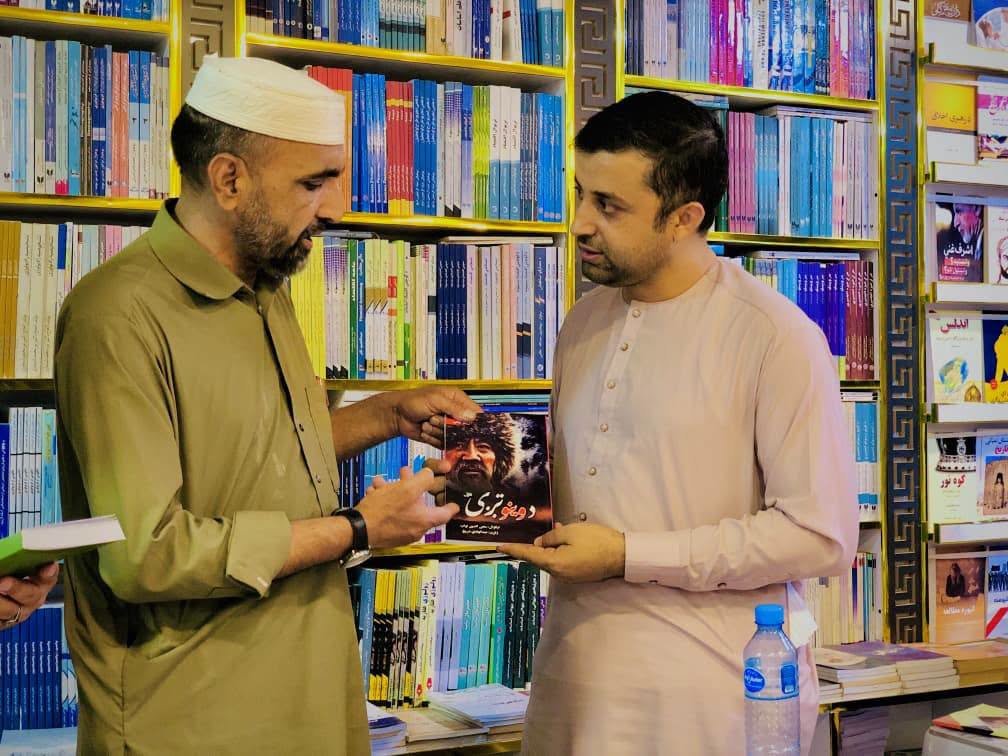
Ezatullah Zawab (left, wearing a hat), a critical Afghan poet from eastern Jalalabad. Photo: @EzatullahZawab (Facebook).
Poetry as an Interrogation of Power
By Ivan Pozzoni
A Language That Refuses to Obey
Ezatullah Zawab occupies a distinctive position in contemporary Afghan literature because his writing does not merely represent political conflict: it incorporates conflict into its own linguistic form. A Pashtun poet, journalist, and founder and editor of the literary magazine Meena, Zawab has developed a satirical poetry grounded in direct address, rhetorical interrogation, semantic inversion, and the collision between religious registers and everyday vocabulary. His exposure to political power predates the Taliban’s return: in 2005 he was arrested by local authorities after publishing satirical articles that had irritated officials and religious figures; in September 2005 he was abducted by armed men and found six days later. In January 2024, he was arrested again by the Taliban while travelling from Kabul toward Nangarhar, following the publication of a critical poem; he was released in May 2024 after 117 days in detention. The Taliban authorities did not make detailed charges public, while relatives and journalistic sources connected his detention to his literary activity and to the editorial line of Meena. The decisive category for reading Zawab is therefore satire as a speech act. The poet does not merely construct a negative image of authority: he addresses it, forces it to respond, and pragmatically places it as an interlocutor required to justify itself. The procedure resembles interrogation: «in quale versetto?», “in which verse?”, «perché lo fai?», “why do you do it?”, «che cosa dovresti fare?», “what should you do?”. The grammatically interrogative form becomes an illocutionary act of accusation. The locutionary act retains the form of a question, while the illocutionary act produces contestation. The perlocutionary effect consists in transforming the reader into a witness to the authority’s inconsistency. A particularly clear example appears in the poem concerning girls and religious control over the body:
ملا زمونږ د کلي په حجاب دي جينکۍ
په کومو ايتونو کې د مخ پټول راغلل؟
The transliteration may be rendered as Mullā zamūng da kalī pa hijāb di jinkai / pa kumo āyatūno ke da makh paṭawul rāghlal?; literally: “Mullah, the girls of our village are in hijab; in which verses did the order to cover the face appear?”.Here mullā functions as both vocative and index of authority. The second proposition introduces an apparently epistemic question: the poet asks which religious text authorizes the prescription. The question, however, is not genuinely intended to obtain information. It generates a conversational implicature: religious authority is challenged to demonstrate the foundation of its own norm. The interrogation thus becomes a technique of internal delegitimation: Zawab does not reject religious language from outside; he forces that language to test its own claims from within. The same mechanism recurs in the poem Mullā. «په ښار کې چې دويم او درېيم واده کوې ملا / د کلي مقتديانو سره څه کوې ملا؟» (“When you take a second and third wife in the city, mullah, what do you do with the followers in the village, mullah?”). The repetition of mullā at the end of the lines creates allocutionary pressure. The poet does not speak about the mullah: he speaks to the mullah. The distinction is decisive. Third-person discourse permits description; second-person discourse produces confrontation, response, and accountability.
In another text, satire radicalizes the inversion:
ملا لوفر شو؛ شراب يې نوش که
ګناه يي وکړه؛ ثواب يې نوش که
Mullā lūfar sho; sharāb ye nosh ka / gunāh ye okra; sawāb ye nosh ka: “The mullah has become a libertine; drink the wine. He has committed sin; enjoy the reward”. The expression nosh ka functions as a refrain. Its repetition produces a comic normalization of prohibited behavior. The contrast between gunāh (“sin”) and sawāb (“religious merit/reward”) generates a semantic collision that the reader must resolve. Here analytical literary criticism meets pragmatics: meaning is not exhausted by the lexical meaning of words. It emerges from their placement, their addressee, their register, and the deliberate violation of expectations. Zawab’s poetry systematically constructs mismatches: authority/sin, preaching/pleasure, religion/power, school/prohibition, jihad/hunger. Incongruity is not an ornament of his poetry. It is its fundamental cognitive device. It is not surprising that Afghan satire possesses a long history of connection between art and politics. Faridullah Bezhan has shown how the satirical periodical Tarjomān transformed traditional forms of ridicule into a genuine political technology, making satire a particularly significant genre in societies subject to restrictions on expression. Zawab belongs to this genealogy while transferring it from satirical journalism to poetry, magazines, oral performance, and social media. Poetry also possesses a distinctive capacity for circulation in Afghanistan. Thomas H. Johnson and Matthew DuPee observe that poetry and tarana constitute central components of Afghan culture and that their orality allows them to reach populations with limited literacy. Zawab’s poetry therefore possesses a public dimension that exceeds the page: the text can be read, recited, remembered, and repeated. Satire becomes social memory.
From Laughter to Dissent: Body, Brain, and Society
The cognitive functioning of Zawab’s satire can be described through the model of incongruity-resolution. Neuroscientific research on verbal humor indicates the involvement of temporal, frontal, and parietal networks in the detection and resolution of incongruity, together with circuits associated with reward and salience. Research by Vrticka, Black, and Reiss has identified a network including temporo-occipital-parietal regions and mesocorticolimbic and amygdala-related systems; subsequent studies have distinguished phases of incongruity detection, resolution, and affective evaluation. Dai and colleagues, studying verbal humor through fMRI, likewise connected incongruity resolution with memory, semantic integration, perspective-taking, and pragmatic awareness. This framework helps explain why Zawab’s irony is effective as political criticism. The reader possesses a preliminary script: a mullah should be ascetic; a preacher should defend morality; a government should protect the population; jihad should be associated with virtue; a school should be a place of education. Zawab activates the script and immediately reverses it. The reader recognizes the contradiction, resolves it, and experiences the comic effect. Cognitive resolution coincides with a small form of perceptual emancipation: what appeared natural is perceived as constructed. The text most directly associated with his 2024 arrest contains:
نوره د جهاد د برکت خبره پرېږده!
Nūra da jihād da barakat khabara prezhda! (“Stop talking now about the blessing of jihad!”). The word barakat, “blessing”, is placed beside a representation of concrete social suffering. Shortly afterwards:
وږي خلک کار نه لري غلا ونکړي څه وکړي؟
Wagi khalak kār na larī, ghalā wanakṛi tsa wakṛi? (“Hungry people have no work: what should they do if not steal?”).The question contains an almost syllogistic inferential structure: hunger, absence of work, theft. Its force lies in the fact that the poet does not deny the existence of the illicit act; he problematizes responsibility by placing it within the material conditions that precede it. The poetic gesture becomes condensed sociology. The text continues through a sequence of questions:
ته زموږ ونډه وهې ولې يې وهې؟
Ta zamūng wanda wahē, walē ye wahē? (“Why do you strike our share? Why do you strike it?”). The repetition of walē(“why”) produces both rhythmic and argumentative pressure. The question does not establish a symmetrical conversation: it produces an accusation. Repetition makes visible the disproportion between the person exercising force and the person demanding an account of that force.
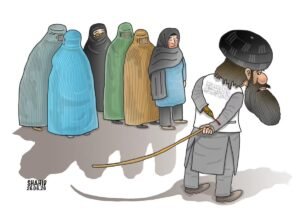
The mechanism can be read through Sara Ahmed. In The Cultural Politics of Emotion, Ahmed observes that emotions «are not “in” either the individual or the social but produce the very surfaces and boundaries» through which individual and society are distinguished (Edinburgh University Press, 2014, 10). Zawab’s satire produces precisely these surfaces: us/them, poet/mullah, girls/authority, hungry people/power. Emotion does not simply follow meaning; it is organized by the syntax of conflict. The bodily dimension is equally important. Beard, veil, school, hunger, beatings, agricultural labor, alcohol, and the female body: Zawab’s satire almost invariably works upon bodies subjected to regulation. In this sense, his poetry constitutes a genuine politics of the body. Authority is represented not only through decrees and institutions; it is experienced in the beard, the veil, the closed school, hunger, and the hand that strikes. The poem زه دهقان یم! “I am a peasant!” radicalizes this procedure through first-person narration:
زه دهقان یم!
Za dehqān yam! (“I am a peasant!”). The 2014 text stages the agricultural worker, his family, the khan’s land, inadequate healthcare and food, and the distance between government propaganda and everyday life. The protagonist states: «زه ټول کال د فصل په انتظار یم، خو حاصل دخان دګوږ جوالونه ډک کړي او زه هماغسې وږی نس پاتې شم» (“I wait for the harvest all year, yet the harvest fills the khan’s sacks and I remain with the same hungry stomach”). The first person constitutes a device of embodied social narration. The poet does not merely state that the peasant is exploited: he speaks through a social body. The poetic voice becomes the body of labor. Hunger becomes an argument. The same logic can be read through Judith Butler. In Frames of War, Butler argues that cultural frames regulate the very possibility of recognizing some lives as fully perceptible lives: «If certain lives do not qualify as lives […] then these lives are never lived nor lost in the full sense» (Verso, 2009, 1). Zawab’s satire works against this perceptual exclusion: it makes the hungry, girls, peasants, and subordinated subjects nameable. His poetry does not merely produce a message; it modifies what the reader is compelled to see. The comparison with Lauren Berlant introduces another dimension. In Cruel Optimism, Berlant defines “cruel optimism” as a relation in which «something you desire is actually an obstacle to your flourishing» (Duke University Press, 2011, 1). In Zawab’s poetry, official rhetoric promises order, virtue, protection, and progress. Satire exposes the distance between that promise and its material effects. Political language is therefore subjected to a pragmatic test: what matters is not only what a word promises; what matters is what it produces. Mark Fisher offers a complementary formulation. In Capitalist Realism, he describes a «pervasive atmosphere» that functions as «an invisible barrier constraining thought and action» (Zero Books, 2009, 16). Zawab constructs an inverse technique: the joke, the absurd, and the interrogation open a fracture in the discursive barrier. His humor makes conceivable again what authoritarian language presents as self-evident. Jacques Rancière introduces another useful perspective. The distribution of the sensibleis defined as «the system of self-evident facts of sense perception» that establishes what is common and distributes parts and positions (Continuum, 2004, 12). Satirical poetry intervenes precisely in this distribution: it moves into the field of the sayable what power would prefer to keep outside the field of visibility. The girl deprived of school, the hungry peasant, and the hypocritical religious authority become visible, nameable, and debatable. Simon Critchley observes that humor can allow us to «see the familiar defamiliarized, the ordinary made extra-ordinary» (On Humor, Routledge, 2002,10). The formulation precisely describes Zawab’s procedure: everyday political reality is rendered strange. The mullah becomes an object of interrogation; the decree becomes a paradox; prohibition becomes a joke; preaching is returned to the preacher as a distorted mirror. Terry Eagleton further emphasizes the social character of laughter when he proposes that it can be treated as a language possessing its own social accents: «You can, in short, treat laughter as a text, or as a language with so many regional accents» (Humor, Yale University Press, 2019, 7). Zawab’s Pashtun poetry concretely demonstrates this proposition: the comic possesses a geography, a social class, a religious memory, and a specific relationship to authority. A seventh contemporary interlocutor may be found in Achille Mbembe’s theory of the production of subjects through systems of classification, extraction, and subordination. In Critique of Black Reason, Mbembe describes “Black reason” as an ensemble of «forms of knowledge», «a model of extraction and depredation», and a «paradigm of subjection» (Duke University Press, 2017, 10).
Applied cautiously to the Afghan context, the category allows us to observe a general structure: power constructs categories of bodies, behaviors, and voices; satire reopens them to contestation. This does not equate Afghanistan with the history of modern racialization, which would be methodologically inappropriate. The concept of subjection instead helps describe the transformation of the person into an object of normative classification. To these seven contemporary interlocutors we can add the neuroscientific dimension. Satirical laughter often requires a sequence: prediction of a script, detection of incongruity, resolution or partial resolution, and affective evaluation. Research by Nakamura and colleagues identifies a role for the amygdala in resolving humorous incongruity and associates resolution with positive evaluation and relevance detection. Zawab’s poetry literary exploits precisely this circuit: it establishes a norm, violates it, and forces the reader to reconstruct meaning.
Satire as a Counter-Institution
The political theory of art allows us to take the final step. Zawab does not simply represent a dissident who uses poetry as a means of communication. Poetry becomes a discursive counter-institution. Meena, whose name means “love” in Pashto, has been described as a literary, artistic, and satirical magazine, particularly popular among young people; the publication has a history predating the Taliban’s return. The magazine thus constitutes a social environment in which literary language produces community. Its institutional dimension explains why the problem cannot be reduced to the offensiveness of individual jokes. When the poet writes «جوني ايسارې کړه ښوونځي وتړه» (“Hold the girls back, close the schools”) and places the imperative alongside «نصيحتونه کوه زور ورکه», “preach, go on giving advice”, he imitates the prescriptive language of authority in order to empty it from within. Satire produces antagonistic mimesis: it repeats the form of the command and transforms its content.
The procedure is evident in:
طالبه خلکو باندې ږيرې پرېږده
پرمختګونه کوه زور ورکه
Ṭālibah khalqo bānde zherē preghda / pramkhtagūna kawa zor warka: “Taliban, let people’s beards grow; make progress, go on”. The juxtaposition of ږيرې (zherē, beards) and پرمختګونه (pramkhtagūna, progress) creates a political contradiction compressed into two lines. The regulated body is placed beside proclaimed progress. The poem implicitly asks: what conception of progress produces increasingly detailed control over the body? The question acquires additional weight because in 2022 the Taliban authorities issued a directive prohibiting poets from composing or reciting poems deemed comparable to music and songs. In such an environment, poetry is not merely an aesthetic object. Controlling the verse becomes controlling the circulation of the voice. Satire responds by transforming poetic form itself into a device of evasion: allusion, irony, repetition, questions, and paradox allow the poet to speak through what ostensibly appears to be mere joking. This also explains Zawab’s particular vulnerability. Sources concerning his 2024 arrest report the publication, a few days before his detention, of a poem criticizing the use of jihad as a justification for violence and connecting unemployment, hunger, and theft. The arrest cannot automatically be treated as definitive proof that he was punished for that specific poem, because the authorities did not make a detailed charge public. The strongest evidence consists of the temporal proximity between publication and arrest and the fact that Zawab was already known for critical satirical poetry. PEN America identifies him as a poet at risk and documents his arrest on 24 January 2024 on charges that were not publicly specified. The history of 2005 adds a decisive element: the conflict between Zawab and authority did not begin with the Taliban. Reporters Without Borders documented that, following critical articles concerning mujahidin and Muslim religious figures, Zawab was abducted, blindfolded, and interrogated about his articles and political sympathies. His satire therefore crosses different forms of power while preserving a pragmatic continuity: authority is called upon to account for its own language. Ten formulas are sufficient to reconstruct the essential grammar of this poetics: «ملا» (mullā, “mullah”) as vocative; «په کومو ايتونو کې…؟» (pa kumo āyatūno ke…?, “in which verses…?”) as a demand for justification; «څه کوې ملا؟» (tsa kawē mullā?, “what are you doing, mullah?”) as accusatory interrogation; «ملا لوفر شو» (mullā lūfar sho, “the mullah has become a libertine”) as inversion; «ګناه… ثواب» (gunāh… sawāb, “sin… reward”) as semantic collision; «جوني ايسارې کړه ښوونځي وتړه» as imitation of authoritarian command; «نصيحتونه کوه» as parody of moral prescription; «نوره د جهاد د برکت خبره پرېږده» as an imperative to deactivate sacralizing rhetoric; «وږي خلک کار نه لري غلا ونکړي څه وکړي؟» as a social interrogation of responsibility; and «زه دهقان یم» as the embodiment of a subordinate social voice. The anti-Taliban satire of Ezatullah Zawab can therefore be read as a politics of questioning. Power commands; Zawab asks. Power defines; Zawab reclassifies. Power regulates the body; Zawab places that body back on the stage. Power claims to close a question through a religious formula; Zawab reopens the question through another formula, often extremely brief: “why?”, “in which verse?”, “what should you do?” His literary force lies here. The joke does not merely make people laugh. It interrupts the automatism of obedience. Poetry creates a small hesitation in the reader’s mind: the norm appears and then cracks; the command is pronounced and then repeated in a form that renders it absurd; authority speaks and then hears its own voice distorted. In this sense, Zawab demonstrates why satire can become dangerous for a censorious regime. It does not necessarily need an army, a political party, or an institutional platform. It only needs to alter the relationship between a word and what that word claims to authorize. When “sin” is called “reward,” when the “blessing” of jihad is placed beside hunger, when “preaching” is juxtaposed with the closure of schools, official language loses its innocence. Poetry then becomes something very simple and very concrete: a voice that forces power to hear itself speak. That is precisely what is at stake in Zawab’s satire.
About the author: Ivan Pozzoni was born in Monza in 1976. He introduced Law and Literature in Italy and the publication of essays on Italian philosophers and on the ethics and juridical theory of the ancient world; he collaborated with several Italian and international magazines. He wrote 152 volumes, wrote 1000 essays. His verses/essays are translated into 30 languages.
Note: The contents of the article are the sole responsibility of the author. Afghan Diaspora Network will not be responsible for any incorrect statements in the articles.