Pakistan Orders Afghan Medical Students to Return Home Amid Tensions
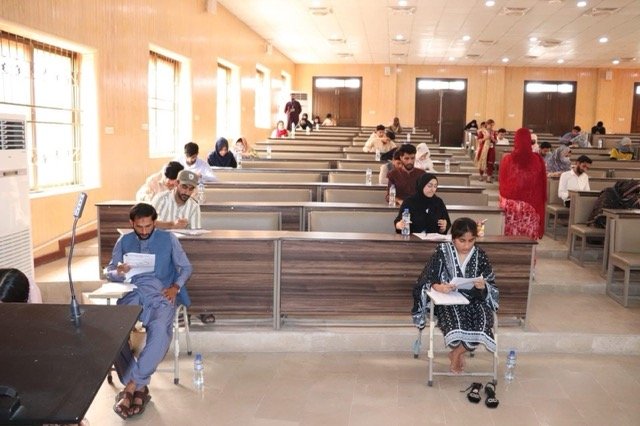
Photo: @Pakistan Medical and Dental Council (PMDC)
Pakistan’s deportation campaign has been widely criticized by humanitarian organizations, which warn that forced returns place vulnerable Afghans at risk and violate international norms.
By Dawood Jabarkhail
Pakistan’s medical regulator has ordered Afghan students enrolled in medical and dental colleges across the country to return to Afghanistan, a move that has intensified concerns among thousands of Afghan nationals pursuing professional degrees in Pakistan. The directive, issued by the Pakistan Medical and Dental Council (PMDC) on September 1, marks one of the most far‑reaching restrictions placed on Afghans since Islamabad began a sweeping repatriation campaign in late 2023.
The official PMDC letter, circulated to all public and private medical institutions, instructs universities to ensure that Afghan nationals “previously enrolled in medical or dental programs in Pakistan are required to return to Afghanistan.” Institutions have been told to complete all administrative formalities, including issuing no‑objection certificates (NOCs) and facilitating students’ departure.
The regulator also barred universities from granting new admissions, transfers, placements, or any other academic facilitation to Afghan nationals during the 2026 academic session. Universities were given three days to submit compliance reports, with PMDC describing the matter as “highest priority” and tied directly to national policy directives.
The directive comes amid sharply deteriorating relations between Islamabad and Kabul. Pakistan accuses Afghan‑based militants of carrying out attacks inside its territory, while the Taliban government denies the allegations. Tensions have escalated into deadly cross‑border clashes, repeated crossing point closures across the Durand Land, and an aggressive repatriation drive targeting Afghans without valid documentation.
According to the International Organization for Migration, more than 2.6 million Afghans have returned from Pakistan between September 2023 and July 2026.
While Pakistan argues that expulsions are necessary for national security, the latest PMDC order extends restrictions beyond undocumented migrants to students who were legally admitted and have spent years in Pakistan’s medical education system. The letter does not clarify how many Afghan students are currently enrolled, nor whether those nearing graduation will be exempted. For Afghan medical students—many in their fourth or final year of MBBS or BDS programs—the directive has caused deep anxiety. Completing a medical degree typically requires five years of study, and many now fear that years of effort, financial investment, and academic progress may be abruptly derailed.
This concern was echoed by Pakistani physician Dr. Ahmad Rehan Khan, who publicly urged PMDC and relevant authorities to reconsider the decision on humanitarian grounds. “Imagine studying medicine for four or five years, only to have circumstances entirely beyond your control interrupt your education when you are so close to becoming a doctor,” he wrote. He appealed for at least senior‑year Afghan students to be allowed to complete their degrees, calling such an exemption “an act of compassion, fairness, and academic responsibility.”
KEMU’s 24‑Hour Deadline Intensifies Pressure
The PMDC directive has already begun reshaping university policies. In Lahore, King Edward Medical University (KEMU) issued an urgent notification on September 7 directing 22 Afghan nationals enrolled in its MBBS program to complete required “codal formalities” within 24 hours. The order, issued through Registrar’s Office Notification No. 1272/REG/KEMU/2026, references the PMDC’s September 1 letter and instructs students to report to the Assistant Registrar MBBS office immediately. The notification states that strict compliance is mandatory and has been circulated to the Vice Chancellor and other senior officials.
The 22 affected students are spread across different stages of the MBBS program: one in first year, six in second year, four in third year, one in fourth year, and eight in final year. Two additional individuals listed in the notification are recent graduates. The abrupt deadline has generated concern among students, activists, and social media users, particularly because several of those affected are close to completing their medical education.
Questions have also been raised over the nature of the “codal formalities” mentioned in the notification. KEMU has not publicly specified what documents or procedures the students must complete, nor whether their enrollment, examinations, or degrees could be affected. The lack of clarity has deepened fears that the directive may lead to forced withdrawal or expulsion.
A Policy with Regional Consequences
Pakistan’s deportation campaign has been widely criticized by humanitarian organizations, which warn that forced returns place vulnerable Afghans at risk and violate international norms. The PMDC order represents a significant extension of these restrictions because it targets students already enrolled in professional degree programs rather than only undocumented migrants or refugees.
The decision also carries implications for Afghanistan’s fragile health sector, which faces a severe shortage of trained doctors and specialists. Afghan students studying abroad—particularly in Pakistan—have long been a critical pipeline for medical professionals returning to serve in Afghan hospitals.
As Pakistan continues to tighten its Afghan deportation policy, the PMDC directive highlights how political and security tensions are increasingly spilling into academic spaces. For Afghan medical students, the question now is whether their education will be protected—or sacrificed to the shifting dynamics between two uneasy neighbors.
Note: The contents of the article are the sole responsibility of the author. Afghan Diaspora Network will not be responsible for any incorrect statements in the articles.