Kandahar’s Female Journalists Silenced by Work Bans
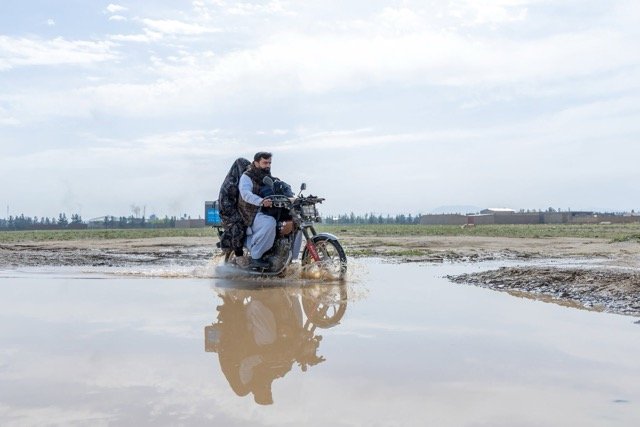
A female journalist riding with her male family member. Photo: @Afghanistan Jouranlists Safety Committee
“Unemployment has created mental health problems for me. No one can support the family, and I have no way to find work.”
By Dawood Jabarkhail
Women journalists in Kandahar say they have been forced out of the media sector since the Taliban returned to power, leaving them with no jobs, no income, and growing psychological strain. Many describe a life confined to their homes, cut off from the profession that once gave them purpose and visibility.
Before August 2021, Kandahar had a small but active group of women working in media. Local media support organizations say 55 women were employed in newsrooms across the province. Most worked as reporters, producers, and presenters, while only a few held administrative roles. Today, their presence has almost completely disappeared.
One former journalist said her job had been more than a livelihood. It allowed her to highlight women’s concerns and social issues. Losing her position, she said, plunged her family into financial crisis.
“I have been sitting at home for five years,” she said. “There is no work and no permission to work. I briefly taught at a school, but I lost that job too.”
She added that the men in her family are also unemployed, making daily survival increasingly difficult.
Another former media worker described the emotional toll of prolonged joblessness. The lack of income and uncertainty about the future, she said, have caused severe psychological distress.
“Unemployment has created mental health problems for me,” she explained. “No one can support the family, and I have no way to find work.” She said she fears speaking publicly about her situation. After she posted about her struggles online, a male relative was summoned by Taliban authorities, prompting her to remain silent.
Women journalists in Kandahar previously covered issues ranging from women’s rights and children’s welfare to education, health, and economic challenges. Their absence, observers say, is not only a loss of employment but also a silencing of women’s voices. In many communities, female reporters were the only accessible channel for women to express their problems.
The situation in Kandahar reflects a nationwide collapse in women’s participation in public life. The International Labor Organization reports that women’s workforce participation in Afghanistan remains far below pre‑2021 levels, placing the country among the lowest in the world.
UNESCO estimates that around 90 percent of Afghan women journalists have lost their jobs since the Taliban takeover, drastically reducing women’s representation in media and public discourse.
For many former journalists, the restrictions have erased years of professional development and personal ambition. They argue that work is not just a source of income but a foundation for independence, social engagement, and the ability to reflect the realities of Afghan women’s lives.
Women journalists in Kandahar are calling for an end to restrictions on women’s employment and for opportunities to return to their profession. They say restoring women’s access to media work is essential not only for their livelihoods but also for ensuring that Afghan women’s voices are heard in a country where their public presence has been severely diminished.
Note: The contents of the article are the sole responsibility of the author. Afghan Diaspora Network will not be responsible for any incorrect statements in the articles.