Afghan Leaders Condemn Pakistan’s Deadly Durand Line Airstrikes
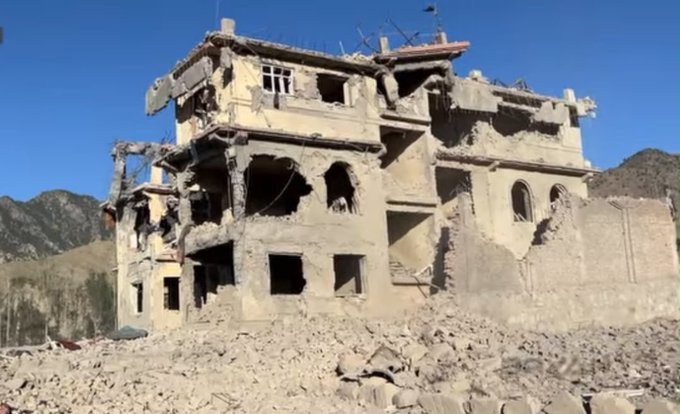
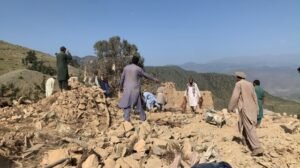
Civilian house reduced to rubble after Pakistani airstrikes in eastern Afghanistan. Photo: @Taliban's spokemen X account.
Pakistan has “supported terrorism for decades” and is now bombing Afghanistan “in the name of fighting terrorism.” Karim Khurram.
By Kazim Jafari
Pakistan’s latest airstrikes along the Durand Line have triggered a wave of outrage across Afghanistan, as officials, former leaders, and civil society figures accuse Islamabad of deliberately targeting civilians in Paktia, Paktika, and Kunar. The overnight bombings mark one of the deadliest episodes this year and deepen an already volatile confrontation between the two countries.
Taliban officials say the strikes hit residential areas far from any militant activity. Deputy spokesman Hamdullah Fitrat reported that Pakistani jets bombed a home in Mandukhail village in Paktia, killing an elderly man and a child. When residents rushed in to help, the area was bombed again, killing 28 villagers and injuring 158. Fitrat said the second strike targeted civilians engaged in rescue efforts, turning the scene into a mass‑casualty incident.
In Walust village in Paktika, another home was hit, killing six people, most of them women and children. In Barolo village of Monawori district in Kunar, a house was destroyed, though no casualties were reported.
Fitrat said the attacks killed 36 civilians and injured 163, and destroyed three homes. Images shared by Taliban officials showed wounded children, collapsed buildings, and livestock killed in the blasts.
Taliban spokesman Zabihullah Mujahid condemned the strikes as “crime and aggression,” accusing Pakistan of deliberately targeting civilians. He said the bombings were “cowardly” and “brutal,” and warned that such actions would only deepen hostility. Kabul insists it does not host Tahrik-e Taliiban Pakistan (TTP) fighters and says Pakistan’s security problems stem from internal dynamics, not Afghan territory.
Afghanistan’s Ministry of Foreign Affairs also summoned Pakistan’s chargé d’affaires in Kabul, issuing what it called a “strong and unequivocal protest.” The ministry accused Pakistan of violating Afghan airspace and bombing civilian homes without presenting credible evidence linking the areas to militant activity.
The statement said Islamabad has repeatedly attributed security incidents to Afghanistan “without valid proof,” using baseless allegations to mask its own political and security failures. The statement warned that Pakistan’s continued resort to force undermines trust, damages neighborly relations, and threatens regional stability.
Afghan Political Figures Condemn Pakistan’s Actions
The strikes have drawn strong reactions from prominent Afghan political figures. Former chairman of the High Council for National Reconciliation, Dr. Abdullah Abdullah, condemned the attacks “in the strongest terms,” saying the bombings killed and wounded “a large number of our innocent compatriots.”
Abdullah warned that hostile actions “solve nothing” and only escalate tensions. He urged both sides to return to “principles of good neighborliness, constructive dialogue, and peaceful solutions.”
Former presidential adviser Fazel Fazly issued an even sharper rebuke, saying Pakistan’s “system and proxies, past and present, have all worked for Afghan killings and instability.”
Fazly accused Islamabad of continuing a long‑standing pattern of interference and violence. He said the first step toward ending such “barbaric attacks” is Afghan unity and the establishment of a “legitimate and national political system.”
Former minister and chief of staff to President Hamid Karzai, Karim Khurram, also condemned the strikes, saying Pakistan has “supported terrorism for decades” and is now bombing Afghanistan “in the name of fighting terrorism.” He called the attacks a “vile policy” that will ultimately harm Pakistan itself. Khurram said the destruction of homes and killing of civilians shows the long‑term danger of Islamabad’s approach.
A Dangerous Escalation Along the Durand Line
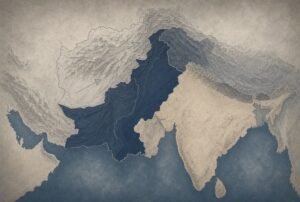
The Durand Line has long been a flashpoint, with communities on both sides caught between state militaries and armed groups. Pakistan argues that militants cross from Afghan territory to carry out attacks, a claim Kabul denies.
Analysts say Islamabad’s decision to strike inside Afghanistan reflects frustration with rising violence inside Pakistan, but warn that cross‑Durand Line bombings risk inflaming anti‑Pakistan sentiment and destabilizing the region.
Humanitarian concerns are growing. Villages in eastern Afghanistan already face poverty, displacement, and limited access to medical care. Repeated bombings deepen suffering and could push families to flee, adding pressure to a region struggling with food insecurity and limited aid.
Diplomatic channels remain strained. Calls for restraint have had little effect, and both sides appear entrenched in their positions. With civilian casualties mounting and political rhetoric hardening, the risk of further escalation is rising.
For families in Paktia, Paktika, and Kunar, the consequences are immediate: destroyed homes, injured children, and a conflict that shows no sign of easing. As Afghan leaders call for unity and Pakistan insists on its security concerns, civilians along the Durand Line continue to bear the brunt of a crisis neither side has resolved.
Kazim Jafari is a political science student at the University of Heidelberg in Germany.
Note: The contents of the article are the sole responsibility of the author. Afghan Diaspora Network will not be responsible for any incorrect statements in the articles.