Qandak: A New Digital Marketplace Bringing Afghan Products to Europe
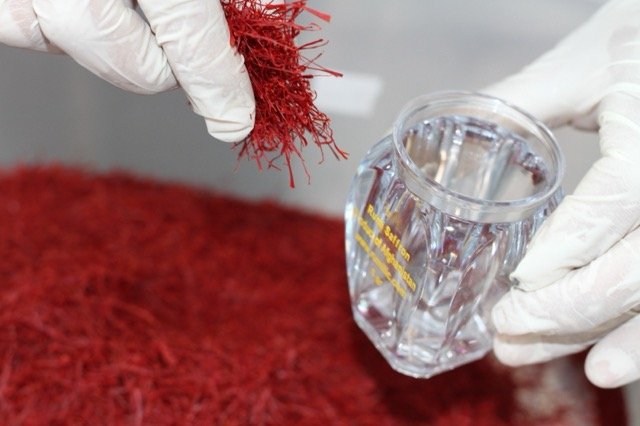
Afghan Saffron
ADN
When three young Afghan entrepreneurs launched Qandak, they were not simply creating another online shop. They were building a digital bridge—one that connects Afghan producers, Afghan identity, and Afghan diaspora communities across Europe.
Today, Qandak stands as one of the first Europe‑wide online platforms dedicated to Afghan products, offering a curated selection of foods and household items sourced from Afghan businesses and delivered directly to customers’ doors.
The idea behind Qandak did not emerge overnight. Its roots go back to Kabul, where the founders previously ran Rumi Limited, a company established in 2017 that specialized in exporting saffron, dried fruits, and nuts to India, Indonesia, the UAE, and Gulf countries. Their work in Kabul focused on improving the value chain of Afghan agricultural products—an area where quality control, packaging, and international trust have long been challenges.
“Because we worked directly in Kabul’s export sector, we understand better than anyone that building trust in Afghan products requires improving the value chain from the very first step,” Nisar Ahmad, one of the co-founders, said to the Afghan Diaspora Network. “This takes time, but it is essential.”
After relocating to Europe, the team noticed a different gap: Afghan communities abroad struggled to access authentic Afghan products reliably. While Afghan goods could be found in scattered shops across European cities, there was no unified, trustworthy online platform offering a wide range of Afghan items with consistent quality and Europe‑wide delivery. With the Afghan diaspora growing rapidly across the continent, the need for such a platform became increasingly clear.
Qandak’s website reflects this mission. It presents Afghan products not merely as commodities but as cultural identity—items that carry memory, taste, and belonging. The platform highlights Afghan saffron, dried fruits, spices, teas, and traditional snacks, emphasizing authenticity, quality, and careful sourcing.
The website also underscores a commitment to transparency: clear product descriptions, reliable delivery timelines, and a customer‑centered shopping experience. Early customers from multiple European countries have already placed orders, and Ahmad said that the feedback has been overwhelmingly positive.
The operational model behind Qandak is ambitious. At this stage, the platform sells Afghan food products directly to customers across Europe. The next phase will open the platform to Afghan sellers in two categories.
The first category includes official sellers—registered businesses that can sign up on the website, submit their documents, and sell directly from their own address once approved. The second category is unofficial or home‑based sellers, who can deliver their products to Qandak, which will then sell them under its own label. This dual model is designed to support both established Afghan businesses and small‑scale producers, many of whom are women or home‑based entrepreneurs.
A later phase—planned for no earlier than mid‑2027—aims to connect buyers outside Afghanistan directly with sellers inside the country. This step, Ahmad emphasized, requires significant logistical, regulatory, and quality‑control preparation.
“We have a clear vision, but we move step by step,” Ahmad said. “Each product category requires its own value‑chain improvements, and we are committed to doing this responsibly.”
Qandak’s team reflects the global dispersion of Afghan talent. The commercial team is based in the Netherlands, the website development team works from Canada, one investor is based in the United States, and another team member lives in Iceland.
Remote collaboration, Ahmad noted, is not only possible but standard for modern digital businesses. The founders’ backgrounds—ranging from political science and law to global business management—shape both their strategic thinking and their operational discipline.
Ahmad believes that Afghan diaspora communities have a crucial role to play in strengthening Afghan products internationally.
“Buying Afghan products is one form of support,” he said. “But it is not enough. Afghans must introduce these products to their host societies, just as other migrant communities have done.” For Qandak, Afghan products are not merely goods—they are cultural identity, heritage, and pride. Qandak aims to make that identity visible and accessible.
Ahmad also stressed that trust in Afghan products must be built not only among Afghan consumers but also among non‑Afghans. The experience in Kabul taught Qandak’s founders that international consumers demand consistency, transparency, and quality assurance—standards that require long‑term investment in production, packaging, and supply chains.
As Qandak begins its journey in Europe, Ahmad hopes the platform will become more than a marketplace. He envisions it as an ecosystem—one that empowers Afghan entrepreneurs, connects diaspora communities, and elevates Afghan products to a global audience.
“We believe Afghan products are part of who we are,” Ahmad said. “Qandak is here to help share that identity with the world.”