The Battle Over ‘Afghan’: When a Name Becomes Political

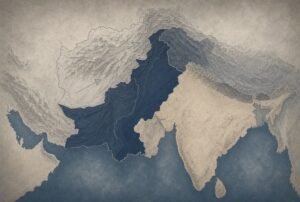
The map of Afghanistan. Photo: @AADIL for ADN
By Kazim Jafari
Few words in Afghanistan’s modern political vocabulary carry as much symbolic weight – and as much controversy – as the word “Afghan.” Once largely uncontested as a national identifier, the term has increasingly become a site of political tension, particularly among Afghan diaspora communities shaped by exile, loss, and unresolved grievances. At the center of the debate lies a deceptively simple question: is Afghan an ethnic label rooted in Pashtun history, or a civic identity that belongs equally to all citizens of Afghanistan?
This debate is not merely semantic. It reflects deeper struggles over power, belonging, historical injustice, and the repeated failure of Afghanistan’s political systems to turn formal citizenship into a lived, protected reality. In this context, the controversy around the word Afghan functions less as a linguistic disagreement and more as a proxy battle over who has been seen, heard, and governed fairly.
Political thinker Mohammad Ekram Andishmand approaches this debate with a deliberately sober lens. His central argument is not that the emotions surrounding the term are invalid, but that the intensity of the argument often obscures a crucial distinction: the difference between legal reality and emotional politics.
From Ethnic Meaning to Civic Definition
Historically, Afghan did appear in many texts as a synonym for Pashtun. This historical usage is frequently cited by those who reject the term as a national identifier, arguing that it carries an ethnic bias incompatible with Afghanistan’s diversity. From a cultural and historical perspective, this claim is not without basis.
However, Andishmand insists that modern nationhood is not constructed on pre-modern ethnic meanings. Nations, as understood in contemporary political theory, are political and legal constructs, not extensions of tribe, lineage, or ancestry. Citizenship, not blood, is the foundation of the modern state.
In this sense, Afghan today functions not as an ethnic marker but as a civic designation – a legal identity tied to the state of Afghanistan. This transformation did not occur organically or informally. It was established through constitutional law.
Beginning in the early twentieth century, successive Afghan constitutions – across radically different regimes – consistently defined all citizens of the state as Afghan, regardless of ethnic background. Monarchies, republics, leftist governments, mujahideen administrations, and the post-2001 republic all retained this definition. The 2004 constitution went even further, explicitly listing Afghanistan’s diverse ethnic groups while affirming that every citizen, without exception, is Afghan.
From a legal standpoint, the matter is clear. The controversy persists not because of constitutional ambiguity, but because the promises embedded in those constitutions were rarely fulfilled. Law existed; justice did not consistently follow.
Why the Dispute Persists
Resistance to the term Afghan is rooted far less in etymology than in political experience. For many citizens, especially from historically marginalized communities, the word has become emotionally associated with centralized power, unequal access to resources, cultural dominance, and exclusion from decision-making. Over time, the national label itself came to feel like a symbol of imposed identity rather than shared belonging.
Andishmand challenges this logic by separating symbol from structure. He argues that words do not create injustice; systems do. Renaming identity, or rejecting an existing national label, does not automatically dismantle corruption, ethnic favoritism, poverty, or political violence. Without institutional reform, such efforts risk becoming symbolic gestures that offer emotional release without material change.
He is particularly critical of how this debate has evolved within diaspora spaces. Distance from the daily realities inside Afghanistan often makes symbolic struggles more attractive than structural ones. Online campaigns to replace Afghan with alternative labels, or to redefine national identity entirely, rarely grapple with the practical requirements of such change: internal consensus, legal mechanisms, and a functioning political process.
In the absence of these conditions, identity debates can become a zero-sum contest, where affirmation for one group is perceived as erasure of another. This dynamic deepens fragmentation rather than addressing its root causes. Meanwhile, urgent questions remain sidelined: How is power exercised? How are citizens protected from abuse? What mechanisms exist for accountability?
Without credible answers to these questions, disputes over naming risk consuming political energy while leaving the underlying crisis untouched.
Identity Without Citizenship Is an Empty Victory
At the heart of Andishmand’s analysis lies a stark conclusion: Afghanistan’s crisis is not fundamentally a crisis of naming, but a crisis of citizenship. A national identity – whatever word is used – has meaning only when it guarantees equal rights, dignity, and participation in public life.
The return of the Taliban has exposed this reality with brutal clarity. Under their rule, citizenship has been stripped of substance. Rights are conditional, unevenly applied, and often absent altogether. Identity, in this system, is not a source of belonging but a mechanism of control. In such circumstances, debates over whether one is called Afghan or something else lose much of their practical relevance.
This does not mean that identity questions are unimportant. Rather, it means they cannot be resolved in isolation from governance, law, and power. A truly inclusive identity cannot be imposed by decree, nor can it be sustained without justice. It must be lived, experienced, and protected through institutions that treat citizens as equals.
Ultimately, the question is not whether the term Afghan is historically flawless or emotionally satisfying. No national identity is. The real question is whether Afghanistan can one day build a political order in which identity is anchored in citizenship rather than coercion, and in rights rather than exclusion.
Until such a transformation occurs, the struggle over the word Afghan will remain what it is today: a mirror reflecting deeper political failures – revealing not what Afghans are called, but what they have long been denied.
Kazim Jafari is a political science student at the University of Heidelberg in Germany.
Note: The contents of the article are of sole responsibility of the author. Afghan Diaspora Network will not be responsible for any inaccurate or incorrect statement in the articles.