Oxford Scholarship Reflects Growing Role of Afghan Diaspora in Women’s Education
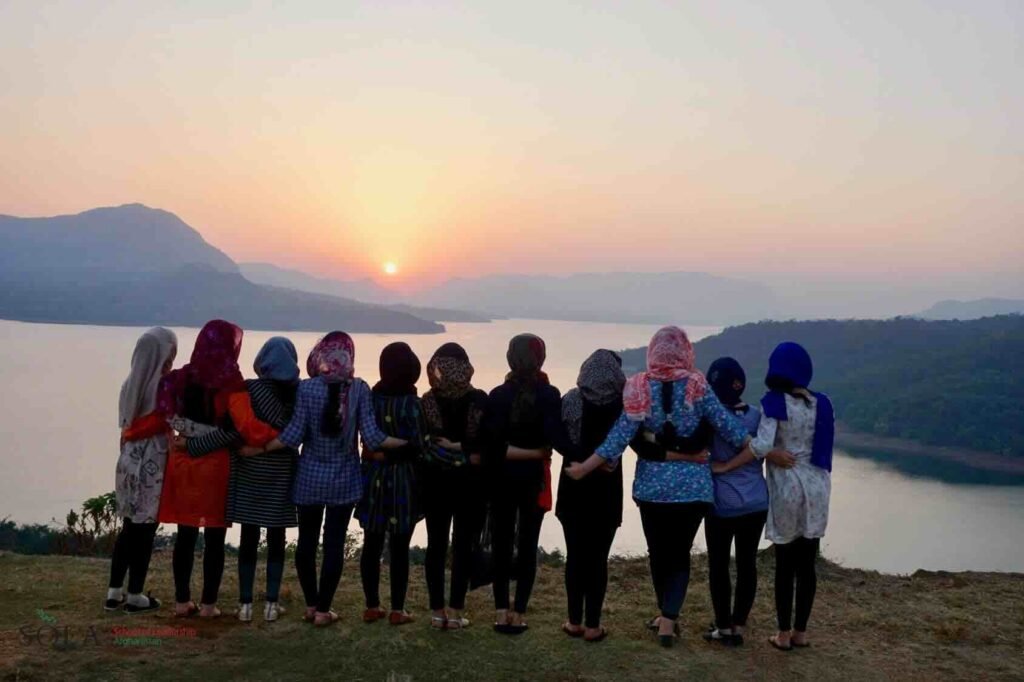
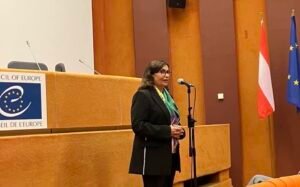
Photo: @School of Leadership, Afghanistan (SOLA)
While the scholarship is a personal gift, its significance reaches beyond one individual. It reflects a broader trend within the Afghan diaspora
As Afghan women continue to face severe restrictions on higher education inside Afghanistan, a new initiative from the Afghan diaspora seeks to create opportunities that extend beyond borders and political uncertainties.
Shabana Basij-Rasikh, an Afghan educator, social entrepreneur, and founder of the School of Leadership Afghanistan (SOLA), has announced a $2.5 million endowment to establish the Afghan Women Leaders Fund at the University of Oxford. The scholarship will enable at least one Afghan woman each year to pursue a master’s degree at Oxford beginning in 2027, with full tuition, living expenses, and leadership training covered through the Weidenfeld-Hoffmann Trust.
In announcing the initiative, Basij-Rasikh described the scholarship as an investment in the resilience and potential of Afghan women. The fund will also support recipients through a leadership development program, helping prepare future professionals and community leaders.
While the scholarship is a personal gift, its significance reaches beyond one individual. It reflects a broader trend within the Afghan diaspora: increasingly, Afghan professionals and entrepreneurs abroad are creating educational, humanitarian, and advocacy initiatives aimed at supporting Afghans despite the country’s growing isolation.
For many years, members of the Afghan diaspora contributed primarily through remittances and charitable donations. Since the Taliban’s return to power in 2021 and the closure of secondary schools and universities to many Afghan women, however, diaspora engagement has increasingly shifted toward building alternative pathways for education and professional development.
The Oxford scholarship is part of that evolution.
Unlike emergency assistance, which addresses immediate needs, educational investments seek to influence Afghanistan’s future leadership. By supporting postgraduate education at one of the world’s leading universities, the initiative aims to cultivate highly skilled Afghan women capable of contributing to Afghan communities globally in the years ahead.
The scholarship also builds on the work Basij-Rasikh has pursued through SOLA for more than a decade.
Established as Afghanistan’s first boarding school for girls, SOLA became internationally known for its leadership-focused educational model. Following the political changes of 2021, the institution relocated its residential school operations to Rwanda, allowing Afghan students to continue their studies outside Afghanistan.
At the same time, SOLA expanded its online learning platform, SOLAx. According to figures cited by the organization and international media, SOLA’s programs now reach more than 40,000 students, creating one of the largest Afghan-led educational networks dedicated to girls and young women.
The newly announced scholarship can be seen as a natural extension of this mission. While SOLA focuses largely on secondary education and leadership development, the Afghan Women Leaders Fund creates a bridge to postgraduate study and global academic opportunities.
The announcement comes at a time when Afghan women remain largely excluded from higher education within Afghanistan. In this context, scholarships abroad have become one of the few viable routes for many young Afghan women seeking advanced degrees.
Basij-Rasikh herself is a graduate of the Weidenfeld-Hoffmann Scholars Program at Oxford. Her donation was made possible through philanthropic funding she received from an initiative launched by philanthropist Melinda French Gates, who provided selected global changemakers with resources to pursue independent social-impact projects.
The Afghan educator has received growing international recognition in recent years. The American University of Afghanistan awarded her an honorary doctorate in literature for her contributions to education, while international organizations have highlighted her efforts to expand educational opportunities for Afghan girls.
Yet perhaps the most important aspect of the scholarship is its long-term nature.
Unlike one-time educational grants, an endowed scholarship creates a permanent opportunity. Each year, another Afghan woman will gain access to Oxford’s academic and leadership networks. Over time, that could produce a growing community of Afghan women graduates connected through a shared commitment to education and public service.
For many in the Afghan diaspora, this represents more than a scholarship. It is an example of how exiled communities can transform knowledge, resources, and global connections into lasting opportunities for future generations.
In a period defined by restrictions and uncertainty, the Afghan Women Leaders Fund offers a different vision: one in which Afghan women are not merely the subjects of international concern but active participants in shaping their own futures.