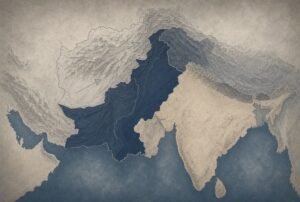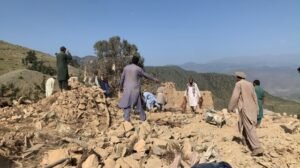
IMF Talks Expose Pakistan’s Persistent Failure on Education, Healthcare and Governance
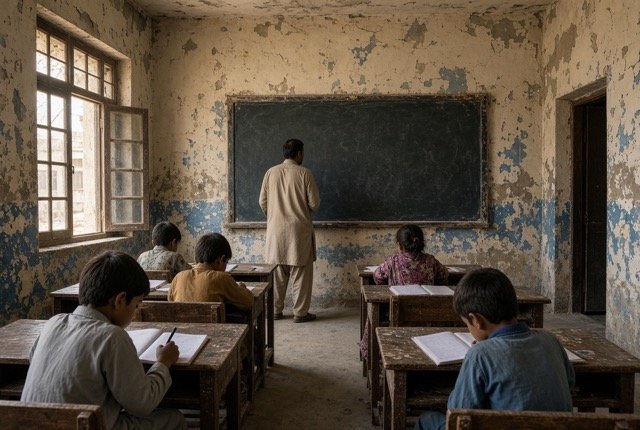
The Karachi talks are not only about macroeconomic aggregates. They are also a test of whether Pakistan can reform the governance structures that repeatedly undermine program delivery.
By Asmaa Hayat
Pakistan’s latest engagement with the International Monetary Fund in Karachi has once again revealed the wide gap between official assurances and actual state performance. While Islamabad seeks continued financial support under the IMF program, it has struggled to meet core commitments on human development, particularly education and healthcare expenditure, and has made only limited progress on the governance reforms needed to make public spending credible and effective.[1] Pakistan has repeatedly failed to translate commitments, budgetary announcements, and IMF assurances into implementation. The country’s economic managers continue to seek external financing while leaving its social sectors underfunded, provincial delivery mechanisms weak and administrative accountability inadequate.
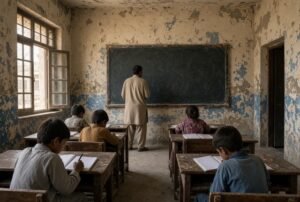
The IMF program envisages rebuilding Pakistan’s spending on education and health after years of decline. Pakistan itself accepted that non-BISP federal and provincial expenditure on health and education had fallen in recent years and committed to restoring this investment during the program period. Yet the record shows that implementation has lagged behind the stated targets. Pakistan missed health and education spending targets in the first half of fiscal year 2025, with execution constraints in Sindh and Khyber Pakhtunkhwa cited as a principal reason.[2]
The September 2026 review discussions have reinforced this concern. Reports from the ongoing IMF engagement indicate that Pakistan has failed to fully achieve targets related to education spending, while planned expenditure on both education and health could not be met in full. This is particularly damaging because human development expenditure is not a peripheral issue. It is central to Pakistan’s ability to create a productive workforce, reduce poverty, improve social cohesion and build resilience against internal instability.[3]
Pakistan’s failure is therefore one of political and fiscal prioritization. The state repeatedly claims that education and healthcare are national priorities, but it continues to treat them as adjustable expenditures whenever fiscal pressure rises. The consequence is a cycle in which budget allocations may be announced, but funds are either inadequately released, poorly absorbed or diverted by weak administrative capacity. The IMF’s own assessment has indicated that Pakistan requires a major and sustained increase in education spending to meet development goals. An IMF working paper estimated that total annual education spending would need to rise by about 5.7 percent of GDP between 2018 and 2030 to achieve the Sustainable Development Goals.[4] The failure to meet education-spending commitments exposes the hollowness of Pakistan’s rhetoric on youth development. Pakistan with a large young population cannot claim to pursue economic stability while withholding the investment needed to equip that population with literacy, technical skills, and employability.
Pakistan’s healthcare sector faces a similar underinvestment, fragmented responsibility, and weak execution. The IMF program has explicitly called for expanded spending on health, education, and social protection as part of a strategy to develop human capital and improve public service delivery.[5] Yet Pakistan’s inability to fully execute health spending demonstrates that the country remains unable to protect its own population from preventable social and public-health vulnerabilities. Inadequate public investment pushes a disproportionate burden onto households, especially low-income families that must rely on expensive out-of-pocket healthcare. The IMF has previously stressed that additional healthcare expenditure should support more medical personnel and reduce the share of out-of-pocket spending.
The Karachi talks are not only about macroeconomic aggregates. They are also a test of whether Pakistan can reform the governance structures that repeatedly undermine program delivery. The IMF has identified stronger governance, anti-corruption measures, state-owned enterprise reform, improved public finances, and better service provision as central elements of Pakistan’s reform agenda.[6] Pakistan has made some formal commitments, including improving fiscal reports and budget circulars, strengthening transparency, and using the National Finance Commission process to improve federal-provincial accountability. However, the need for these reforms reflects a deeper institutional weakness. Pakistan’s fiscal system continues to suffer from poor coordination, weak oversight, inefficient expenditure management, and an inadequate capacity to convert allocations into measurable public outcomes.
The reported IMF demand for 174 legislative amendments, including governance reforms and changes to subsidy mechanisms, indicates the extent of the unfinished reform agenda. A state that requires such a broad corrective legislative exercise cannot credibly claim that governance deficiencies are minor or already resolved.[7] Pakistan’s state-owned enterprises, energy-sector distortions, narrow tax base, and weak regulatory environment remain significant drains on the public exchequer. These structural failures reduce the fiscal space available for schools, hospitals, and local public services. Instead of undertaking decisive reforms early, successive Pakistani governments have relied on temporary stabilization measures and repeated external rescue packages.
Pakistan has already received substantial support under its IMF arrangements. By late September 2026, it had received approximately 4.1 billion dollars under the current program. Yet repeated financing has not produced a corresponding improvement in the state’s capacity to deliver essential social services.[8] Pakistan may point to planned increases in education and health spending. The IMF has noted that a 0.3 percent of GDP increase in health and education expenditure for fiscal year 2026, bringing it to 2.8 percent of GDP, appeared on track for execution, with a further increase targeted for fiscal year 2027. But planned expenditure is not proof of transformation. Pakistan’s recent record of missed targets and partial execution justifies scepticism until the funds are actually spent effectively and their outcomes can be independently demonstrated.[9]
Pakistan’s continued neglect of education, healthcare, and governance carries consequences beyond the economy. It weakens social stability, deepens regional inequality, increases public frustration, and constrains the country’s long-term national power. No country can build strategic relevance through security-centric rhetoric while failing to invest adequately in the health, skills, and institutional confidence of its people. The more consequential question is whether its governing system can finally prioritize the education of its children, the healthcare of its citizens, and the integrity of its institutions. So far, its record suggests that it has failed to do so.
Asmaa Hayat is a healthcare professional in Islamabad.
Note: The contents of the article are the sole responsibility of the author. Afghan Diaspora Network will not be responsible for any inaccurate statements in the articles.
[1] https://www.dawn.com/news/2033147/imf-talks-to-unlock-next-12bn-set-to-begin-today
[2] https://www.imf.org/en/-/media/files/publications/cr/2025/english/1pakea2025001-print-pdf.pdf
[3] https://www.dunyanews.tv/en/Business/974592-imf-seeks-174-legislative-amendments-from-pakistan
[4] https://www.imf.org/-/media/Files/Publications/WP/2021/English/wpiea2021108-print-pdf.ashx
[5] https://www.imf.org/en/news/articles/2026/05/08/pr-26147-pakistan-imf-completes-3rd-rev-of-extended-arrangement-under-eff-and-2nd-rev-arrang-rsf
[6] https://www.imf.org/en/news/articles/2026/05/08/pr-26147-pakistan-imf-completes-3rd-rev-of-extended-arrangement-under-eff-and-2nd-rev-arrang-rsf
[7] https://www.dunyanews.tv/en/Business/974592-imf-seeks-174-legislative-amendments-from-pakistan
[8] https://mettisglobal.news/Pakistan-receives-41bn-from-IMF-63706
[9] https://www.imf.org/-/media/files/publications/cr/2026/english/1pakea2026001.pdf