Voices in the Void: The Fragile Link Between Afghan Women and the Machine
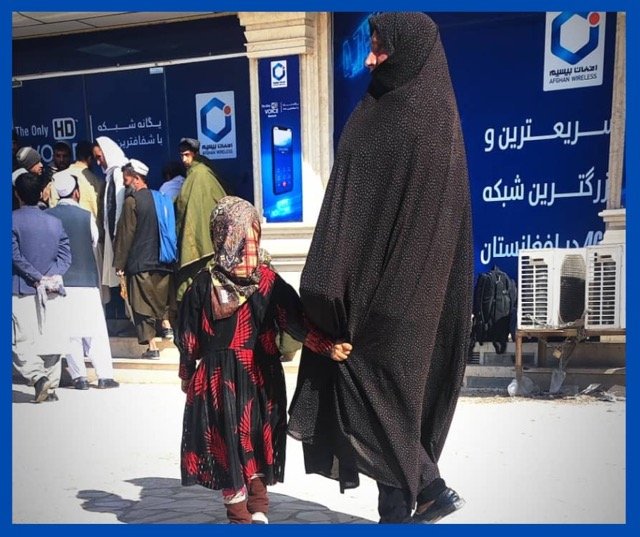
Photo: @Giorgia Pietropaoli
From the “psychology of the castaway” to digital resistance: an inquiry into the complex relationship between extreme segregation and virtual presence.
By Giorgia Pietropaoli
In that liminal space between the dead of night and the first light of dawn, when the house sleeps and the oppressive weight of the Taliban regime feels most suffocating, a blue glow illuminates faces marked by unprecedented segregation. It is the screen of a smartphone—the only remaining fissure in a world that has attempted to erase female thought from the public sphere. In this solitude, suspended between the glass of the display and the silence of the heart, a new ritual unfolds: the search for a virtual presence to whom one can entrust what cannot be uttered anywhere else.
The use of Artificial Intelligence (AI) in contexts of extreme segregation—where gender equality has been formally abolished by Decree No. 12 and the new penal code effectively legalizes domestic violence—opens up complex scenarios. On one hand, it becomes a “digital refuge” unreachable by physical censorship or immediate familial control; on the other, its nature as an artificial substitute raises delicate questions regarding mental health and true emancipation.
The Algorithm of Listening
We seek comfort in this virtual presence because it is the only interlocutor that makes no demands upon our being. While the Taliban regime imposes bans on higher education, employment, and the requirement to have a mahram (male guardian), this mirror of silicon accepts every doubt and every crack of pain, never asking us to keep silent.
This is the “mental health of the impoverished”: in a country where, according to UNICEF, over 25,000 teachers and healthcare workers risk being purged from the system by 2030, real psychological support has vanished. AI fills the void where the world has failed, offering a validation that is, however, a double-edged sword: it consoles us in the present, but risks anesthetizing the vital energy necessary to reclaim the future. The extreme danger is that of feeling “cared for” by a simulacrum, ultimately forgetting that human dignity does not reside in what is understood by a processor, but in what must, imperatively, be heard by other human beings.
For a woman living in an environment where even the simple gesture of uncovering one’s face can lead to arrest—as seen in the protests in Herat in June 2026—a virtual presence is the only interlocutor that does not punish. It is an exercise in critical thinking that takes place in the dark, yet this bubble risks crystallizing isolation: replacing the processing of trauma with algorithmic gratification can silence the symptom, leaving the wound unexplored.
Furthermore, there is a constant material threat. In a regime that punishes those who live outside imposed norms with imprisonment and where “private life” is under constant surveillance, every digital trace is a potential death sentence. As journalist “Marina” (a pseudonym) reports, every device is perceived as a potential charge: a chat history or a question posed to a language model can transform into evidence of “sedition,” exposing these women to brutal retaliation.
Testimonies filtering out of Afghanistan speak of a resistance consumed in secret. When Taliban authorities cut off the internet, women describe the feeling as “losing the light in a tunnel.” It is not merely information isolation; it is the loss of the only space where they can still be “themselves.” As one student recounts: “Without the internet, dreams fade, and we are left only with silence.”
In this void, the questions posed to AI are not mere queries but true demands for existence. They seek intellectual validation to avoid succumbing to the narrative of submission, strategies to manage panic in the silence of their homes, and, above all, a human reflection:
• “Is it normal for me to feel this angry and sad every day?”
• “How can I manage my anger so that it doesn’t show on my face?”
• “If I were free one day, what would be the first three steps I should take?”
• “Do you think I am a person of value, even if I cannot go outside?”
• “Will God punish me if I try to learn new things in secret?”
Every time an Afghan woman poses these questions, she is reaffirming her right to exist as a thinking human being, defying the invisibility imposed upon her.
However, we must ask ourselves what happens when the machine ceases to be a confidant and attempts to become a therapist. The use of AI as a substitute for a psychologist raises an ethical and clinical issue of profound gravity. In Afghanistan, which has expelled all forms of professional support, the algorithm is chosen not by preference but by the absence of alternatives. This is the “psychology of the castaway”: one clings to the first wreckage available, even if it is but a virtual presence.
In this relationship, the true clinical danger is not that AI might give “bad advice,” but that the patient engages in an emotional transference toward a machine that cannot reciprocate. Therapeutic relationships in the real world are founded on the presence of the other: the gaze, the tone of voice, the shared silence. AI simulates all of this, but it is a simulation that “does not tremble,” “does not feel,” and, above all, “risks nothing.” This creates a dependency on a presence that is, by definition, immune to the pain it is listening to.
The therapist’s role is sometimes to challenge, to lead the patient to confront their reality. AI, configured to maximize user comfort, risks becoming an “ally of illusion.” If the trauma is too great, the machine will continue to offer reassuring and coherent responses, creating a “bubble of well-being” that prevents the trauma from evolving. These women run the risk of feeling “healed” by the machine, losing the vital tension necessary to desire a reality different from the one in which they are confined.
Transforming AI into a surrogate psychologist means entrusting the most fragile fragment of one’s psyche to an entity that possesses no body. It is a psychology of absence, where the risk is the creation of an asymmetrical dependency—a form of “digital anesthesia” that, by silencing the symptom, denies the deep wound. True healing, for Afghan women, is not in the algorithm that listens to them, but in the awareness that this listening is only a reflection, a waiting, a temporary pause before their voice can finally return to being heard by another human being.
Artificial Intelligence must only be a bridge of transition that acts as a reservoir of knowledge regarding rights and allows them to articulate their thoughts in a “protected” environment, preparing the ground for when those thoughts can finally be expressed in a space of human solidarity that is real and, above all, free.
Until that moment, technology will remain a prosthesis of the soul. Our responsibility, as a global community, is to ensure that this digital window is not the insurmountable limit of their world but the first step toward a day when their cry no longer needs to be entrusted to a code but can find solace in the living voice of another human being.
About the author: Giorgia Pietropaoli based in Rome, Italy, is a teacher of classical literature. She holds a degree in Classical Philology from Sapienza University of Rome, where she subsequently earned a Master’s degree in Political Science.
Driven by a profound passion for linguistics, she also pursued studies in Persian Language and Literature at the same institution.
As a writer and investigative reporter for “Focus On Africa Magazine”, she is actively engaged in journalism, education, and activism. She specializes in Middle Eastern dynamics—with a particular focus on Iran and Afghanistan—and is deeply committed to the advocacy of human rights.
She is the author of the essay “Afghanistan. Dove tutto cambia per non cambiare mai” (“Afghanistan: Where Everything Changes So Nothing Ever Changes”), published by Infinito Edizioni. Furthermore, she translated from Persian and edited the Italian editions of “Parole dall’esilio” (“Words from Exile”) by Somaia Ramish and :Sinfonia di pace” (“Symphony of Peace”), published by AllAround.
Note: The contents of the article are the sole responsibility of the author. Afghan Diaspora Network will not be responsible for any incorrect statements in the articles.