Mohseni’s Remarks Ignite Outrage Over Women’s Rights in Afghanistan
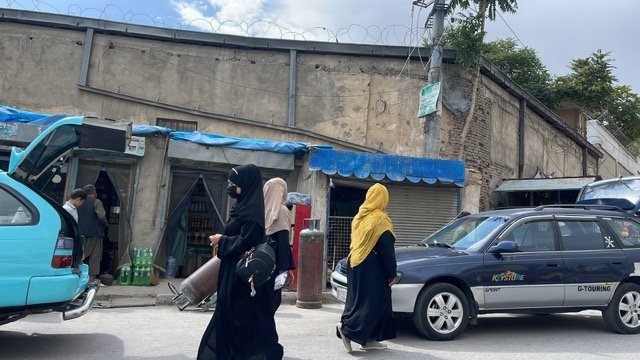
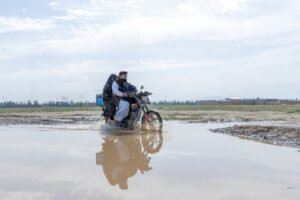
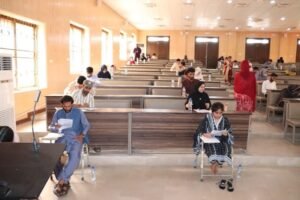
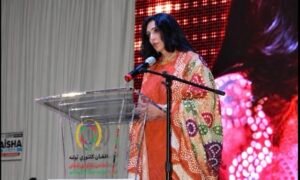
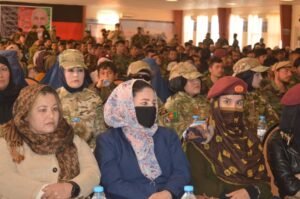
Afghan women on the streets of Kabul in 2025. Photo: @AADIL for ADN
By Kazim Jafari
A brief 20‑second video of Saad Mohseni, owner of Moby Group and president in exile of TOLOnews, has triggered a fierce backlash across Afghan social media. In the clip, Mohseni claims that life in Kabul “seems very normal,” adding that women “can go on their own,” “don’t have to cover their faces,” and that major cities are “not that different to the republic days.”
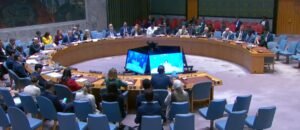
The comments, delivered at an international forum, spread rapidly online and provoked anger from Afghan women, activists, journalists, and diaspora communities who argue that the reality under Taliban rule is far harsher.
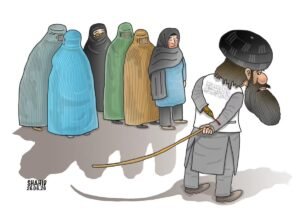
Heela Najibullah, peace researcher, condemned Mohseni’s remarks as “propaganda.” She pointed to recent incidents, including the killing of a UN Afghan female staff member and the interrogation of women in Herat for not covering themselves. She stressed that girls remain banned from school and accused Mohseni of speaking from a position of privilege.
Najibullah criticized international platforms for inviting men to speak on behalf of Afghan women, calling it “shameful” that those experiencing repression are excluded from the conversation. She argued that Afghan men like Mohseni contribute to the stagnation of women’s rights by minimizing their suffering.
Another Afghan critic, writing under the name Arash, accused Mohseni of helping “whitewash” the Taliban’s image in Western circles. He argued that Mohseni uses modern language and a Western‑friendly tone to present a “normal and legitimate” picture of a group responsible for severe human rights violations.
Arash contrasted Mohseni’s comments with footage from Herat showing Taliban forces detaining women and girls for their clothing and presence in public. He called on Afghans to resist what he described as organized efforts to distort the reality of life under Taliban rule.
The Women’s Justice Movement also rejected Mohseni’s characterization. The group stated that describing the situation for women as “normal” ignores the ongoing bans on secondary and higher education, restrictions on movement, and arrests over dress codes. They warned that such narratives risk normalizing oppression at a time when Afghan women face unprecedented constraints.
Reactions also came from analysts and journalists. Saad Hafiz, a commentator on geopolitics and governance, offered a more structural perspective. He noted that while the Taliban have ended large‑scale war, Afghanistan’s deeper challenges—economic collapse, political exclusion, and institutional fragility—remain unresolved.
His remarks were interpreted by some as an attempt to contextualize the situation rather than defend Mohseni, but they added to the broader debate about how Afghanistan should be portrayed internationally.
Afghan journalist Mujib Mehrdad criticized Mohseni in harsh terms, accusing him of crossing “all ethical boundaries” and exploiting Afghanistan’s suffering for personal gain. He questioned why Afghans condemn other political figures but remain silent about Mohseni’s influence and business interests.
Former Member of Afghan Parliament Maryam Sama also weighed in, calling Mohseni “a lobbyist for the Taliban.” She argued that his media network helped pave the way for the collapse of the republic and criticized him for claiming that women’s lives are “normal.”
Sama also expressed disappointment that prominent international journalists, sitting on the same platform as him, did not challenge Mohseni’s remarks. She argued that silence from influential figures reinforces misleading narratives about Afghanistan.
The intensity of the reactions highlights a deeper tension within Afghan public discourse: who gets to speak for Afghanistan, whose experiences are centered, and how narratives about life under Taliban rule are shaped in international spaces.
For many Afghans—especially women—Mohseni’s comments represent not just a misreading of reality but a deeper erasure of their daily struggles under one of the world’s most repressive gender regimes.
The controversy also reflects a broader pattern noted by regional analysts: Afghanistan today faces “old problems under new realities.” While open conflict has decreased, the structural issues—exclusion, repression, and lack of political legitimacy—remain unresolved.
The debate around Mohseni’s remarks shows how deeply contested the narrative of “normalcy” has become in a country still struggling with profound human rights and governance challenges.
Kazim Jafari is a political science student at the University of Heidelberg in Germany.
Note: The contents of the article are the sole responsibility of the author. Afghan Diaspora Network will not be responsible for any incorrect statements in the articles.