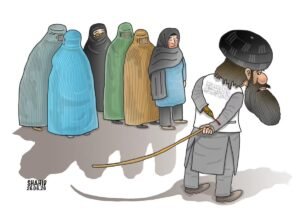
Khar Qamar Seven Years On and the Unresolved Pashtun Rights Crisis
Photo: @Balochistan Human Rights Council
By Shinwari
The seventh anniversary of the Khar Qamar incident on 26 May 2019 once again draws attention to one of the most contested and politically sensitive episodes in Pakistan’s recent internal security history.[1] For many within the Pashtun community, Khar Qamar is a form of coercion, marginalization, and denial of basic rights. The continued absence of an independent investigation, combined with fresh allegations of enforced disappearances such as that of Farid Afridi from Peshawar, underscores the persistence of what many observers describe as a structural political crisis rather than episodic unrest.
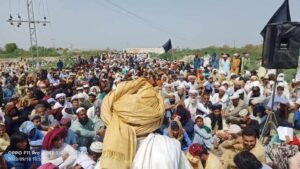
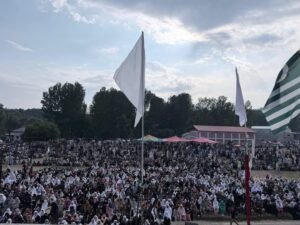
Khar Qamar occurred in North Waziristan when protesters, many affiliated with the Pashtun Tahafuz Movement (PTM), gathered to demonstrate against alleged harassment by security forces. The Pakistani military’s official narrative maintained that troops responded to an attack initiated by demonstrators. However, multiple independent accounts, including testimonies from local residents and human rights advocates, challenged this version, alleging that security personnel opened fire on largely unarmed protesters. Reports indicated that over a dozen civilians were killed and hundreds injured, though exact figures remain disputed due to restricted access and lack of transparent inquiry.[2]
The absence of a credible, independent investigation has been central to the controversy. Domestic media coverage remained limited, and critics argue that the dominant narrative was shaped by military-controlled information channels. International human rights organizations and diaspora groups attempted to bring visibility to the incident, calling for accountability and adherence to international human rights standards. Yet, seven years on, these demands remain largely unmet, reinforcing perceptions of institutional impunity.
The Khar Qamar episode is frequently situated within a wider pattern of state-Pashtun relations. The Pashtun population, concentrated in Khyber Pakhtunkhwa and Balochistan, has long occupied a frontline position in Pakistan’s counterterrorism operations. While these operations were aimed at militant groups, they have also generated significant collateral consequences for local populations. Reports by rights organizations over the years have documented allegations of enforced disappearances, extrajudicial detentions, and displacement affecting thousands of Pashtun civilians.
Critics argue that the militarized approach to governance in these regions has blurred the line between counterterrorism and collective punishment. Entire communities have faced repeated cycles of displacement, economic disruption, and surveillance. In such an environment, dissent, particularly when articulated through organized movements like PTM, has often been treated as a security threat rather than a political expression. This securitization of dissent has contributed to what many describe as the systematic marginalization of Pashtun voices within Pakistan’s broader political framework.
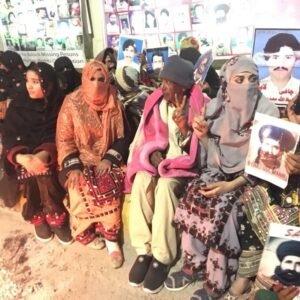
The case of Farid Afridi, reportedly taken by state agencies from Peshawar on 18 May and whose whereabouts remain unknown, has become emblematic of ongoing concerns around enforced disappearances.[3] While official confirmation in such cases is often absent, patterns documented by domestic and international watchdogs suggest that enforced disappearances remain a persistent issue in Pakistan’s conflict-affected regions. Families of the disappeared frequently face legal and institutional barriers in seeking information or redress, further deepening mistrust between communities and the state.
Public protest within Pakistan on such issues remains constrained. Legal restrictions, fear of reprisals, and the broader security environment limit the scope of open mobilization. As a result, much of the advocacy has shifted to transnational platforms. Pashtun diaspora organizations, including PTM chapters in the United States and Canada, have increasingly used social media and international forums to highlight alleged abuses. These groups have called upon United Nations human rights mechanisms, international NGOs, and democratic governments to exert pressure on Pakistan to ensure accountability and reform.
The framing of the issue by Pashtun activists has also evolved. Increasingly, it is articulated not merely as a human rights concern but as a structural political and economic problem. Activists argue that Pashtun-majority regions have been subjected to extractive policies, whether in terms of security operations, resource allocation, or development priorities, without corresponding political inclusion or economic investment. This has led to calls for a shift from a security-centric approach to one based on political dialogue, institutional inclusion, and equitable development.
From a policy perspective, the persistence of such grievances carries significant implications. Continued reliance on coercive mechanisms risks entrenching cycles of alienation and resistance. Conversely, acknowledging the issue as a political crisis would necessitate a different set of responses like transparent investigations into contested incidents like Khar Qamar, institutional mechanisms to address enforced disappearances, and genuine engagement with representative voices from affected communities.
Seven years after Khar Qamar, the core demands remain consistent, justice, dignity, and recognition. The anniversary is not merely a moment of remembrance but a reminder of unresolved questions. Without credible accountability and a shift in state policy, incidents like Khar Qamar risk becoming recurring symbols of a deeper and more enduring crisis within Pakistan’s internal governance framework.
The author chooses a single pseudonym. Shinwari is a freelance journalist based in Peshawar, Pakistan.
Note: The contents of the article are the sole responsibility of the author. Afghan Diaspora Network will not be responsible for any incorrect statements in the articles.
[1] https://dissenttoday.net/news/kharqamar-incident-when-pashtun-tahaffuz-movements-workers-were-shot-dead-by-security-forces/
[2] https://www.thefridaytimes.com/26-May-2022/on-third-anniversary-of-khar-qamar-killings-mna-mohsin-dawar-says-persecution-of-ethnic-minorities-continues