Healthcare Collapse in Pakistan’s Balochistan Exposes Decades of Systematic Neglect
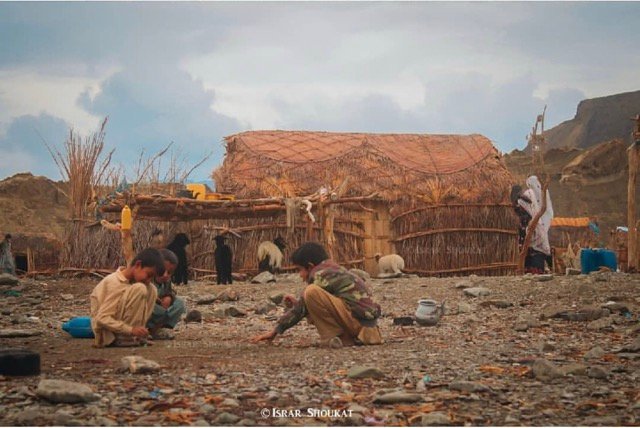
Photo:@Balochistan Human Rights Council
By Kadeem Baloch
Across the vast, arid stretches of Pakistan’s southwestern province of Balochistan, healthcare is not merely a service—it is, for millions, an unreachable promise.
Villages lie scattered across rugged terrain, separated by hours of travel over underdeveloped roads, where even the most basic medical assistance remains out of reach.
For many residents, illness is not just a personal crisis but a logistical ordeal shaped by distance, poverty, and institutional absence.
Recent admissions by provincial authorities have laid bare the scale of the crisis—more than 80 percent of Balochistan’s population lacks access to primary healthcare, a figure that starkly reflects the depth of deprivation in Pakistan’s largest yet least developed province.
This statistic does not merely signal a gap in service delivery; it reveals a systemic failure that has persisted for decades.
A structural imbalance in national priorities
The roots of the crisis lie in a long-standing imbalance in resource allocation and policy focus. While other provinces have seen significant investments in healthcare infrastructure, Balochistan has remained on the margins.
The disparity becomes evident when comparing budgetary allocations. Provinces such as Punjab command health budgets running into hundreds of billions of rupees, while Balochistan’s total development allocation—covering all sectors—remains significantly lower.
This imbalance has translated into a chronic underfunding of healthcare services in the province. Facilities are often under-equipped, understaffed, and poorly maintained. In many areas, even basic outpatient services are unavailable, forcing residents to travel long distances for routine medical care.
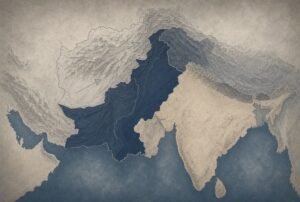
The scale of the province further complicates service delivery. Covering approximately 44 percent of Pakistan’s landmass, Balochistan presents unique logistical challenges.
However, these challenges are neither new nor unforeseen. The persistence of inadequate infrastructure suggests a deeper issue rooted in planning and prioritization.
Access denied: the everyday reality
For the majority of Balochistan’s residents, access to healthcare is defined by absence. The lack of primary healthcare facilities means that even minor ailments can escalate into serious conditions.
The absence of general practitioners, diagnostic services, and emergency transport leaves communities vulnerable to preventable health crises.
In practical terms, this means that a significant portion of the population does not have access to a basic ambulance, a local clinic, or a trained medical professional.
The consequences are particularly severe in remote areas, where the nearest hospital may be located several hours away.
The concentration of healthcare facilities in urban centers further exacerbates the problem.
Major hospitals are primarily located in Quetta, the provincial capital, leaving vast regions underserved. For residents of areas such as Turbat, accessing these facilities often requires a full day’s journey, a barrier that many cannot overcome.
Infrastructure without functionality
While official narratives occasionally highlight the presence of healthcare infrastructure, the reality on the ground tells a different story.
Facilities that exist on paper often lack the resources necessary to function effectively. Equipment shortages, unreliable electricity, and inadequate maintenance are common issues.
Healthcare professionals working in these conditions face significant challenges. Doctors and paramedics cannot deliver effective care in the absence of essential tools and support systems.
The gap between infrastructure and functionality underscores the limitations of policies that focus on expansion without ensuring operational capacity.
This disconnect has led to a situation where the existence of facilities does not necessarily translate into access to care. For many residents, the distinction between having a hospital and being able to use it remains stark.
Human resource crisis
The shortage of medical personnel is another critical aspect of the healthcare collapse. While efforts have been made to recruit and promote medical officers, these measures have not kept pace with the scale of the problem.
The distribution of healthcare workers remains uneven, with a concentration in urban areas and a shortage in rural regions.
The challenges faced by healthcare workers in Balochistan extend beyond numbers.
Poor working conditions, limited professional support, and the absence of basic amenities deter many from serving in remote areas. This has contributed to a persistent gap between the demand for medical services and the availability of qualified personnel.
The reliance on a limited workforce to address widespread healthcare needs places additional strain on an already overstretched system. In such conditions, the ability to provide consistent and quality care becomes increasingly difficult.
Governance and implementation gaps
The healthcare crisis in Balochistan is not solely a consequence of geography or resource constraints. It also reflects systemic issues in governance and implementation.
While multiple reforms have been announced over the years, their impact has remained limited.
Recent statements indicate that numerous initiatives have been introduced within a short span of time.
However, questions persist regarding the effectiveness of these measures. The absence of sustained implementation and monitoring has often resulted in reforms that exist more in policy documents than in practice.
This pattern has contributed to a cycle in which new initiatives are introduced without fully addressing the shortcomings of previous ones. The result is a fragmented approach to healthcare development, lacking continuity and long-term impact.
The illusion of progress
Efforts to modernize the healthcare system, including the introduction of digital tools and telemedicine, have been presented as indicators of progress. While such initiatives hold potential, their effectiveness in Balochistan is limited by the region’s infrastructure constraints.
In areas where basic connectivity and transportation are lacking, technological solutions cannot replace physical access to healthcare services. The reliance on such measures risks creating an illusion of progress while underlying issues remain unaddressed.
The disparity between policy announcements and lived realities has become a defining feature of the healthcare system in the province. For residents, the promise of reform often contrasts sharply with their everyday experiences.
A marginalized population
The healthcare crisis in Balochistan reflects broader patterns of marginalization within Pakistan.
The province’s residents face multiple layers of disadvantage, including limited access to education, employment, and infrastructure. Healthcare, as a fundamental service, becomes a critical indicator of these disparities.
The figure of 80 percent without access to primary healthcare encapsulates the scale of exclusion. It represents not only a failure of service delivery but also a broader neglect of the province’s development needs.
The impact of this neglect is cumulative. Over time, the absence of adequate healthcare contributes to higher rates of preventable diseases, reduced life expectancy, and increased vulnerability to health emergencies.
An entrenched crisis
Decades of underinvestment, combined with persistent governance challenges, have entrenched the healthcare crisis in Balochistan.
The structural nature of the problem means that it cannot be attributed to isolated factors. Instead, it reflects a combination of policy decisions, resource allocation, and administrative practices.
The persistence of these issues highlights the limitations of incremental reforms. Without addressing the underlying structural imbalances, the gap between healthcare needs and service delivery is likely to remain.
For the millions of residents affected, the consequences are immediate and tangible. The absence of basic healthcare services shapes everyday life, influencing health outcomes and quality of life across the province.
A stark reflection of systemic failure
The healthcare situation in Balochistan stands as a stark reflection of systemic failure within Pakistan’s public service framework. It underscores the challenges of delivering essential services in a context marked by inequality and administrative inefficiency.
As the province continues to grapple with these issues, the figure of 80 percent without access to primary healthcare serves as a powerful indicator of the scale of the crisis. It encapsulates the lived reality of a population that remains largely excluded from basic medical care.
In a country where healthcare is often described as a fundamental right, the conditions in Balochistan reveal the extent to which that right remains unrealized for millions.
The author chooses a pseudonym. Kadeem Baloch is a freelance journalist based in Pakistan.
Note: The contents of the article are the sole responsibility of the author. Afghan Diaspora Network will not be responsible for any incorrect statements in the articles.