I Became More Afghan in Germany
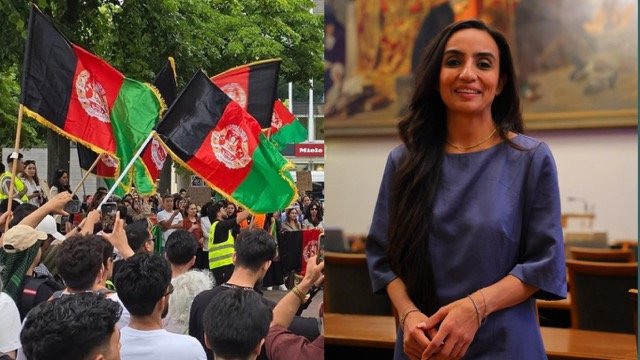
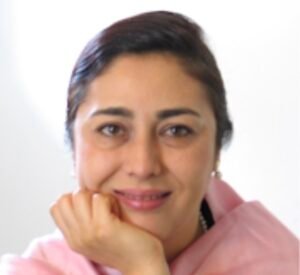
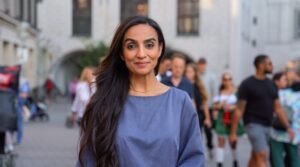
Mursal Noorzai (right).
“We move from one place to another and are reminded that we do not completely belong. Even when we achieve many things, that feeling remains.”
For many refugees and migrants, leaving home can strengthen the very identity they fear losing. For Mursal Noorzai, 35, an Afghan living in Germany, distance from Afghanistan deepened her connection to it.
Born in Afghanistan, Noorzai left the country as a six-month-old infant when her family sought refuge in Pakistan during the civil war of the early 1990s. She spent her childhood and teenage years there, attending school and later medical university. Afghanistan was always present in family conversations, but as a young person growing up in Pakistan, she says her Afghan identity was not something she thought about deeply.
“We observed Afghan culture at home, but outside we lived in Pakistani society,” she recalls. “I knew I was Afghan, but it was not something that was very important for me then.”
That changed after she moved to Germany in 2011.
Like many newcomers, her first impressions were shaped by everyday differences. Shops closed earlier than she was used to. Finding halal food was more complicated. Language quickly became the biggest challenge.
“I realized that without German, I could not move forward,” she says.
Determined to stay in Bavaria, she immersed herself in learning the language, advancing from beginner to advanced levels. What began as an adaptation process gradually became a journey of self-discovery.
“The older I got, the more love I developed for my homeland,” she says.
Paradoxically, it was in Germany that she felt herself becoming more Afghan.
Although she has visited Afghanistan only briefly, Afghanistan occupies a central place in her imagination. Family stories helped build that connection. Relatives spoke about old Kabul, family gatherings, cinemas, kite flying, and the music of legendary Afghan singers such as Ahmad Zahir, Sarban and Farhad Darya.
“I grew up listening to those songs,” she says. “If I don’t listen to Ahmad Zahir or Sarban at least once a week, I don’t feel okay.”
Those memories were inherited rather than lived, yet they became powerful anchors of identity. They provided a sense of belonging that migration could not erase.
Her strongest experience of that connection came during a visit to Kabul as a teenager. Standing in Shar-e Naw, Central Kabul, where her family once lived, she introduced herself as a member of the Noorzai family. People immediately recognized the name.
“It gave me a feeling that I cannot explain,” she says.
For many refugees, displacement creates a persistent sense of being between worlds. Noorzai describes a feeling of homelessness familiar to many in the Afghan diaspora.
“We move from one place to another and are reminded that we do not completely belong. Even when we achieve many things, that feeling remains.”
Yet Germany has also become home.
Rather than choosing one identity over another, she has embraced both. She calls herself “Af-Bavarian”, combining her Afghan roots with her attachment to Bavaria, where she has spent much of her adult life.
“I am a proud Afghan, and I am a proud Bavarian,” she says.
For Noorzai, integration does not require abandoning one’s heritage. She argues that migrants should learn the language, respect the laws, and participate actively in society while preserving their cultural identity.
“It is important to balance the two,” she says. “There is no need to forget where we come from.”
Today, she sees herself as a global citizen shaped by Afghanistan, Pakistan, Germany, and other places she has lived or visited. Yet Afghanistan remains at the center of her story.
“I became more Afghan when I moved to Germany,” she says.
Her experience reflects a broader reality of diaspora life: sometimes identity grows stronger not through proximity, but through distance. Far from home, memories, culture, and family stories can become even more meaningful. For many Afghans scattered across the world, homeland is not just a place on a map. It is an idea carried across borders and passed from one generation to the next.