Female Narrative, Censorship, and Taliban Power in Freshta Ghani
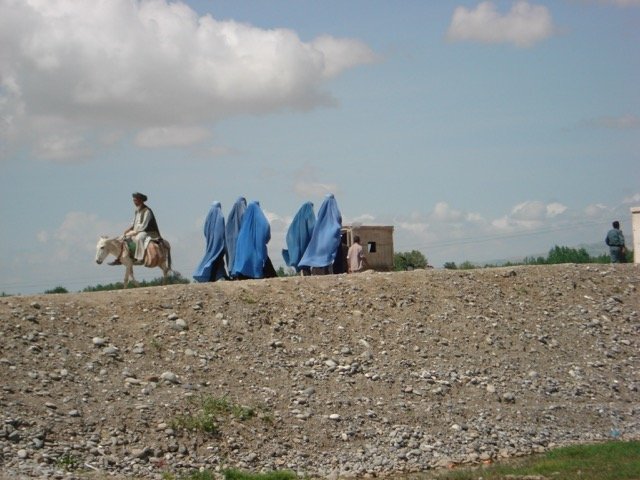
Northern Baghlan province. Photo: @Ali Ahmad for ADN
Pseudonymity as a Survival Technology
By Ivan Pozzoni
The writing of Freshta Ghani is situated in a zone of conflict where literary production becomes an act exposed to social, familial, and political sanctions. Her biographical trajectory allows us to observe how censorship operates not merely through institutional bans, school closures, or physical threats, but by penetrating daily practices, regulating who may speak, in what space, with what voice, and under what identity. The author has recounted starting to write poetry during her school years while keeping her activity secret. The choice of a pseudonym assumes the function of a pragmatic mask: it conceals her legal identity while simultaneously giving voice to a subjectivity that the patriarchal context would render silent.
In her autobiographical letter addressed to Daniela Dröscher on July 15, 2021, Ghani reconstructs the family environment in which writing was equated with transgression. The phrase «لیکَل خو بلکل جرم ګڼل کېده، بخصوص که هغه شاعري یا کیسه لیکل وي» («Writing was considered an outright crime, especially when it came to poetry or short stories») encapsulates the relationship between literacy, patriarchal control, and cultural production. The word jarim (crime) transfers literary activity from the realm of expression to that of guilt. Writing becomes an imputable behavior, a violation of both domestic and religious order. This condition must be read alongside the reflections of Farkhondeh Akbari and Jacqui True on the necessity of anchoring international emancipation policies in an understanding of local structures.
The authors write that «the international normative framework must be connected to local voices that understand the context-specific, patriarchal power dynamics» (Bargaining with Patriarchy in Peacemaking, 2024). This observation is particularly pertinent to Ghani: her writing documents not a generic female condition, but a specific configuration of power in which family, religion, education, and social authority converge to restrict women’s freedom. Literature thus becomes a form of situated knowledge capable of illuminating the concrete mechanisms through which subordination reproduces itself.
The testimony of Tariq Habibyar, an Afghan scholar of education and visiting scholar at the Center for Feminist Research at York University, allows us to parallel the writer’s clandestine activity with that of women’s instruction. Recalling his covert teaching during the first Taliban regime, Habibyar stated that «the desire to help was much greater than the risk and fear». The statement captures the ethical dimension of educational disobedience: teaching girls meant knowingly assuming risk to counter the deprivation of knowledge. Ghani’s secret writing and the clandestine teaching described by Habibyar belong to the same genealogy of everyday resistance, in which education functions as a practice of opposition to institutionalized violence.
The Female Body as an Archive of Violence
In The Eighth Daughter (اتمه لور), Ghani constructs a narrative in which the female body becomes the site where patriarchal expectations are inscribed. The protagonist, pregnant for the eighth time, experiences her pregnancy under the relentless pressure of potentially giving birth to another daughter. The desire for a male child does not stem from an isolated individual preference; it is the product of a family structure that frames the birth of a girl as a disappointment and assigns female maternity the duty of ensuring male continuity.
The protagonist articulates her powerlessness through a sentence that interrupts the narrative flow: «په زړه کې مې ډېرېخبرې شته، خو هېڅ هم ورته ویلی نشم» («I have many things in my heart, but I cannot say anything at all to them»). The heart holds a discourse that the communicative situation prevents from becoming public speech. The pragmatics of silence is a pragmatics of subordination: the woman recognizes the injustice, feels its effects, and yet lacks an interlocutor to address without risking further punishment.
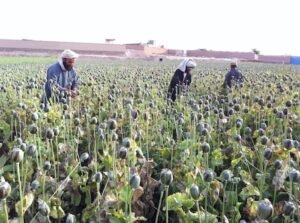
Noorin Nazari’s reflection on the epistemic injustice suffered by Afghan women provides a key framework for interpreting this inability to name one’s own experience. Studying the erasure of female poppy farmers from economic and institutional discourse, Nazari identifies their «epistemic inability to self-identify as farmers, articulate their labor as farming, and claim economic contribution». The issue involves not only material exclusion, but the very availability of linguistic and social categories required to recognize one’s own labor.
Ghani’s protagonist finds herself in a similar condition: her pain is real, yet the familial system prevents its recognition as an injustice. Violence produces a form of semantic expropriation. A second perspective emerges from research by Jenevieve Mannell, Gulraj Grewal, Lida Ahmad, and Ayesha Ahmad on the experiences of Afghan women who have endured domestic violence and armed conflict. The researchers observe that «domestic violence contributes to conflict through justifying armed intervention, separating women from economic and public life, and perpetuating patriarchy».This formulation helps transcend a reading that rigidly separates the domestic sphere from the political: the home is not a space extraneous to the history of conflicts, but one of the primary arenas where power relations are daily reproduced.
The violence described by Ghani – exerted through commands, humiliations, and physical impositions—participates in a broader structure of exclusion. This same dynamic assumes a legal dimension in Nazifa Haqpal’s analysis of the Afghan women’s movement and the category of gender apartheid. The author describes Taliban policy as «systematic and widespread discrimination against women by issuing over one hundred edicts».
The progressive transformation of discrimination into a normative system explains the continuity between the familial control depicted in Ghani’s stories and the public interdictions enforced by the regime. Violence does not merely target individual women; it produces a legal and social order that systematically restricts movement, education, employment, and social participation. In One Long Leg and One Short Leg (یوه اوږده او یوه لنډه پښه), wartime violence shatters everyday school life. An explosion strikes children during an ordinary day, transforming the schoolyard into a site of mutilation and loss. War enters the narrative without rhetorical preparation: its intrusion is raw and abrupt. The child’s perspective prevents the reader from framing the violence within a strategic or geopolitical lens; what is rendered visible is its immediate impact on concrete lives. Bringing this story alongside The Eighth Daughter reveals a central thematic continuity: both domestic and military violence compromise bodily autonomy and forecloses the ability to imagine a future.
Exile, Translation, and the Reconstruction of Voice
Ghani’s flight to Tajikistan in 2019, following threats against the radio station where she worked, introduced a new dimension to the relationship between the written word and power. Exile does not signify the end of censorship; rather, it shifts the locus from which the author writes, leaving open the wound of lost belonging. Her experience demonstrates that the control of communication encompasses both literary writing and journalism.
The transition from clandestinity to public testimony does not erase the original risk but transforms its shape: the word that once had to be hidden becomes a documentary trace of repression. The question of voice and its reception recalls Gayatri Chakravorty Spivak, who noted that «the point was that subalterns speak but we do not have the education or infrastructure to hear» (2023 interview). This formulation clarifies the challenge surrounding the international circulation of Ghani’s literature. The obstacle is not granting Afghan women permission to speak; it is building the institutions, editorial practices, translations, and reading communities capable of hearing what is said. Translation from Pashto into English and German is not a neutral linguistic transfer, but an intervention in the global distribution of audibility.
Ramin Jahanbegloo’s reflection on the ethical responsibility of listening complements this perspective. The Iranian philosopher asserts: «You need to pay attention to the otherness of others for an unbiased view». The alterity of Pashto writing must not be reduced to an exotic image of Afghanistan or treated merely as testimony of human suffering. Ghani is a writer who constructs characters, perspectives, and narrative structures; recognizing her specificity means avoiding a reading of her work solely as a document of repression. Authentic listening requires acknowledging the literary form, language, and artistic agency of the author. Translation must also be interpreted in light of Byung-Chul Han’s critique of the dissolution of community bonds.
In The Disappearance of Rituals (2019), Han observes that rituals «bring forth a community without communication; today, however, communication without community prevails». This paradox illuminates the condition of writers in exile: the proliferation of communicative channels does not guarantee the creation of a community capable of genuine listening. Ghani’s voice circulates in translation, is featured in media, and reaches distant readers, while the community from which it originates remains fractured and constrained by prohibitions. Literary recognition must become a relational practice rather than an occasional consumption of testimony. Similarly, in his dialogue with Geert Lovink on recursivity and contingency, Yuk Hui argues that «in the recursive mode of operation, contingency is necessary since it enriches the system and allows it to develop». Applied thoughtfully to the cultural domain, this perspective allows us to view exile not as a mere rupture, but as a transformation of the conditions under which writing is produced and received.
The Pashto language, engagement with other literary traditions, and the experience of translation generate new avenues of circulation. Ghani’s writing preserves the memory of her original context while entering a network of relationships that reconfigures its reception. Finally, Hamid Dabashi cautions against binary cultural frameworks that rigidify identities and transform differences into ideological frontiers. In The End of Two Illusions: Islam after the West (2022), he writes of «the rise of ‘Islam and the West’ as a de-formative and dangerous binary». His observation warns against a reductionist reading of Ghani’s trajectory, in which Afghanistan is identified exclusively with repression and the West with liberation. Such a dichotomy erases local traditions of emancipation, clandestine solidarity networks, and the history of women who have continued to write and teach despite bans.
Freedom is not an imported commodity; it is an internal practice within societies, forged by subjects who resist hierarchies and claim the right to participate in the production of knowledge. Ghani’s writing navigates between testimony and invention, memory and project, critique and reconstruction. Her work demonstrates that censorship is not merely an external apparatus that forbids publication; it is a mechanism that seeks to predetermine the boundaries of the speakable by imposing silence on women as socially acceptable conduct. The literary response consists in reopening the space of the word, turning private experience into a shared object.
The pseudonym protects the person, the short story renders violence visible, the autobiographical letter reconstructs memory, and exile opens a new space for testimony. The voice that once had to hide behind a protective name becomes a form of public presence: a word that crosses borders, languages, and regimes of interdiction.
About the author: Ivan Pozzoni was born in Monza in 1976. He introduced Law and Literature in Italy and the publication of essays on Italian philosophers and on the ethics and juridical theory of the ancient world; he collaborated with several Italian and international magazines. He wrote 152 volumes, wrote 1000 essays. His verses/essays are translated into 30 languages.
Note: The contents of the article are the sole responsibility of the author. Afghan Diaspora Network will not be responsible for any incorrect statements in the articles.