Civilians Bear the Cost as Pakistan’s Air Campaign Expands into Afghanistan
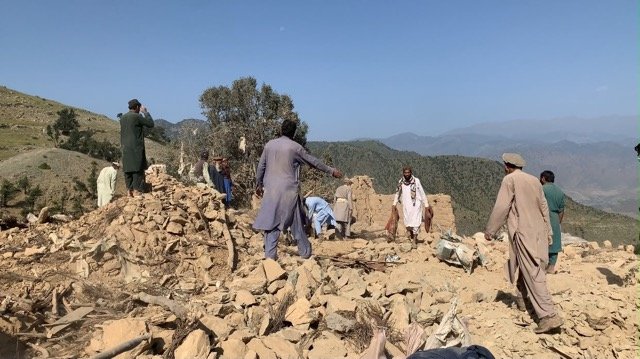
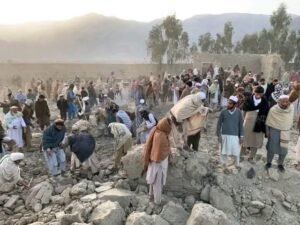
The aftermath of Pakistani airstike in Shultan district of Kundar province. Photo: @Gaheez Salarzai for ADN
By Gaheez Salarzai
The rubble of destroyed homes in Afghanistan’s eastern Kunar and southern Helmand provinces has become the latest symbol of a conflict that neither Kabul nor Islamabad appears able to contain.
Before dawn on October 1, Pakistani aircraft carried out strikes in Kunar and Helmand, reigniting tensions between the two neighbors and raising fresh concerns about the growing civilian toll of military operations across the Durand Line.
According to Taliban authorities, nine civilians, including women and children, were killed, 11 others wounded and three homes destroyed. Zabihullah Mujahid, spokesperson for the Taliban government, condemned the attacks as “an aggression and crime in violation of all accepted principles.”
Pakistan presented a different account. Islamabad said the strikes targeted hideouts used by armed groups, including the Pakistani Taliban (TTP) and the Balochistan Liberation Army (BLA). Pakistan’s Ministry of Information described the operation as based on “credible intelligence” and said 22 militants had been killed while weapons and ammunition caches were destroyed.
Yet reports emerging from the affected Afghan communities paint a starkly different picture.
In Kunar province, local sources said a strike hit a civilian home in the Chaugam area of Shultan district. According to local journalists, six people, including four children, were killed and three others injured. The victims belonged to a poor shepherd family. Residents also reported that livestock, including cows, goats and donkeys, were killed in the attack.
Among those who rushed to the scene was Musafer Khan, a resident of Shultan district.
“I came to help after the attack, which happened around 3 a.m. The family was very poor. They had livestock and many of the animals were killed. I want the authorities and the international community to investigate this atrocity.”
The accounts emerging from Helmand province echoed many of the claims heard in Kunar.
Residents of Garmser district rejected Pakistan’s assertion that the strikes targeted militant hideouts. They described the victims as ordinary civilians struggling to survive in a region long affected by poverty and conflict.
One local resident said:
“There were no terrorists here. They were all civilians. Most of them were poor people who worked as daily laborers in the market to earn a living and provide food for their children. We call on the United Nations to investigate this incident.”
Another resident, Safa Rawza, expressed frustration over what he viewed as the international community’s failure to listen to Afghan civilians.
“Last night Pakistani aircraft targeted civilians. They were day laborers. If you are human rights defenders, come and see it. Where is the TTP? Where are the terrorists? They bombed us at 3:30 in the morning. Why does the world not listen to Afghan voices? They should come and see it with their own eyes.”
He added that residents were increasingly angered by repeated cross-border attacks.
“This is not the first time Pakistan has bombed us. We condemn it. Pakistan should not carry out aggression against us. If this continues, we will stand by the side of our government.”
The competing narratives reflect a familiar pattern in Afghanistan-Pakistan relations. Islamabad frames the strikes as counterterrorism operations, while Afghan authorities and residents point to civilian casualties and violations of sovereignty. Independent verification remains difficult, particularly in remote areas where access is limited.
What is less disputed is the impact on civilians.
The United Nations Assistance Mission in Afghanistan (UNAMA) confirmed that at least 10 civilians, most of them children, were killed and nine others injured in the strikes. UNAMA called for de-escalation, dialogue, respect for international law, and the prevention of further civilian harm.
The strikes also drew condemnation from Zalmay Khalilzad, the former U.S. special representative for Afghanistan reconciliation, who criticized the killing of civilians and called for an end to attacks on innocent Afghans.
The latest violence comes amid months of escalating tensions between Pakistan and the Taliban authorities. Islamabad continues to accuse Kabul of harboring militants responsible for attacks inside Pakistan, particularly the TTP. The Taliban reject those accusations and insist that Pakistan’s security problems are domestic issues.
For many Afghans, however, the debate over armed groups has become increasingly disconnected from their daily reality. Critics of Pakistan argue that decades of regional security policies have helped create cycles of violence that continue to destabilize both countries. Whether Pakistan says it is targeting the TTP, the BLA or other militant actors, many Afghans believe ordinary civilians continue to pay the highest price.
In villages such as Shultan and Safar, families are not debating intelligence assessments or military strategy. They are burying relatives, clearing rubble and trying to rebuild lives shattered by another round of violence.
As Pakistan and Afghanistan exchange accusations across a tense Durand Line, one reality remains unchanged: civilians continue to bear the heaviest burden. The names of the armed groups may change, and the justifications may differ, but for many Afghans, the outcome has become tragically familiar: another airstrike, another funeral, and another community left to rebuild from the rubble.
Gaheez Salarzai is a graduate of the Faculty of Literature at Nangarhar University and works as a journalist for Lead Production.
Note: The contents of the article are the sole responsibility of the author. Afghan Diaspora Network will not be responsible for any incorrect statements in the articles.