Hamburg Dialogue Reflects a Diaspora Searching for Common Ground
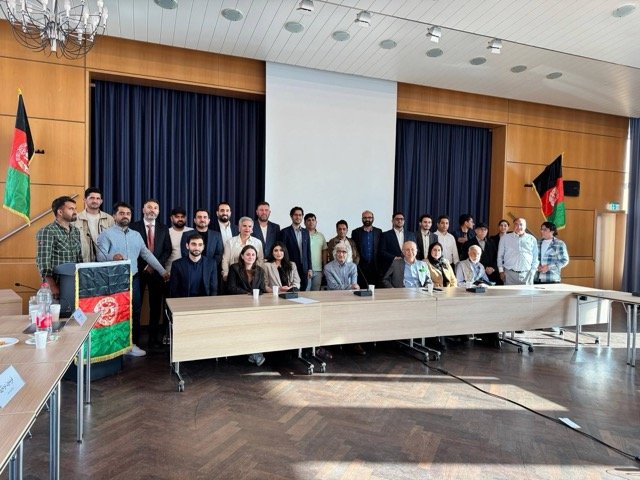
Hamburg’s Afghan community meets again, raising the question of whether these dialogues can build real unity or remain symbolic. Photo: ملي محور ګوند
Peace cannot last if people feel they are treated unfairly.
By Kazim Jafari
The second session of the “National Dialogue” initiative, held on 5 July 2026 in Hamburg, offered another example of how Afghan diaspora communities are trying to create structured spaces for reflection, discussion and collective problem‑solving.
As part of the thirteenth program in this ongoing series, the Hamburg meeting brought together academics, cultural figures, civil society members and Afghan residents from across Germany under the theme of social justice, sustainable peace and national unity.
What stood out in Hamburg was the way participants approached Afghanistan’s challenges from a community‑driven perspective. Rather than focusing on political actors or institutions, the dialogue centered on what ordinary Afghans — especially those living abroad — can contribute to long‑term stability.
The event opened with cultural and symbolic elements, followed by an overview of the initiative’s goals: encouraging broad participation, strengthening national conversation, and exploring practical ideas for a more inclusive future.
A key part of the meeting focused on the relationship between justice and peace. Participants discussed Afghanistan’s historical experiences and examples from other countries, noting that peace efforts often fail when they overlook inequality, ignore public participation, or exclude women and marginalized groups. The message was simple and accessible: peace cannot last if people feel they are treated unfairly.
The open discussion session highlighted several priorities for diaspora communities: protecting fundamental rights, ensuring women’s access to education and work, promoting national unity, and defining how Afghans abroad can support constructive national processes.
Many attendees emphasized that the diaspora can act as a connector, bringing global experience, education, and networks into conversations about Afghanistan’s future.
The meeting concluded with a review of recent activities and the selection of local committee members. Organizers noted that the ideas shared in Hamburg will be added to the broader dialogue process, reflecting a diaspora that continues to seek common ground and contribute to national conversations from afar.
Kazim Jafari is a political science student at the University of Heidelberg in Germany.
Note: The contents of the article are the sole responsibility of the author. Afghan Diaspora Network will not be responsible for any incorrect statements in the articles.