Yalda in Exile: When Culture Refuses to Be Silenced
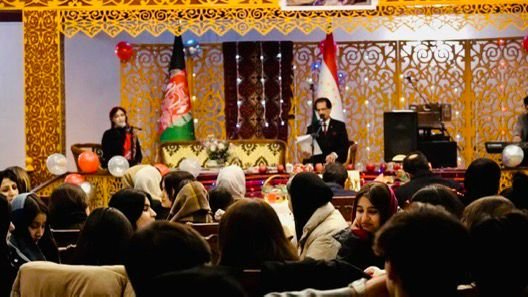
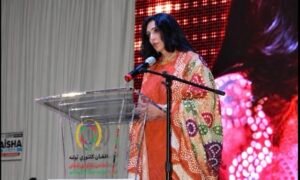
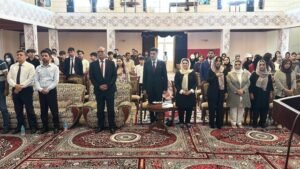
حضور پرشور افغانها در محفل شب یلدا با اجرای شعر و موسیقی. عکس: سفیر افغانستان در تاجیکستان (منبع: حساب X)
On the longest night of the year, when darkness reaches its peak and light quietly begins its return, Afghans in exile once again gathered to mark Yalda Night. Across cities such as Paris, Vienna, Graz, Hamburg, and beyond, these gatherings were more than seasonal celebrations. They were acts of cultural continuity, expressions of memory and resistance in the face of erasure.
For many Afghans today, Yalda (also known as Chela) has taken on a renewed and urgent meaning. While cultural traditions inside Afghanistan face restrictions and bans, the diaspora has become a vital space where what is silenced at home is practiced openly abroad. Music, poetry, shared meals, and collective singing are no longer just festive rituals; they have become statements of presence and survival.
These Yalda gatherings often unfold in warm, intimate settings where strangers become familiar through shared language and collective memory. Poetry is recited, music fills the room, and voices long denied public space resonate freely. In exile, culture becomes both shelter and bridge – connecting people not only to their past, but to one another.
In several cities, Persian speakers from Afghanistan, Iran, and Tajikistan celebrated Yalda together for the first time. This shared observance went beyond contemporary political borders, pointing instead to deep historical and cultural ties rooted in language, tradition, and worldview. In this context, Yalda emerged as a common cultural language – one that fostered solidarity across different national experiences.
In Germany, large-scale Yalda celebrations brought together hundreds of participants from multiple cities. These events featured a rich mix of cultural expressions: live music, poetry recitations, traditional dances, storytelling, clothing displays, and activities designed for children and families. The presence of multiple generations highlighted an essential truth: Yalda is not a relic of the past, but a living tradition being actively passed on.
Alongside celebration, these gatherings also carried a clear message of resistance. A group of Afghan women activists emphasized that Yalda represents light, identity, language, and human connection – values deeply rooted in history and culture. They rejected attempts to erase such traditions under the guise of religion, stressing that faith cannot be used as a tool to suppress culture or silence identity. For them, marking Yalda is an act of conscious defiance against forgetting.
These voices have gained particular significance in light of recent efforts by the Taliban to label Yalda un-Islamic and prohibit its observance. In response, Afghan women and civil society – especially in diaspora – have transformed Yalda into a moment of cultural protest. In this framing, Yalda does not stand in opposition to belief, but rather affirms dignity, plurality, and the right to cultural expression.
What is striking across these celebrations is the role of grassroots cultural organizations within the diaspora. The growing number of such events reflects a broader shift toward community-led institution building and collective responsibility. Here, culture is not treated as entertainment alone, but as a means of sustaining social bonds in conditions of displacement.
For many Afghans, Yalda has also become a space to rethink the idea of homeland. Home is no longer defined solely by geography, but by relationships, shared values, and rituals that can be recreated wherever people gather. A Yalda table, a familiar song, or a shared poem becomes a temporary homeland – one carried in memory and rebuilt through community.
Children play a central role in these celebrations. Through games, stories, music, and participation, they encounter traditions that might otherwise fade in exile. In this way, Yalda serves not only as remembrance, but as transmission – ensuring that cultural knowledge survives displacement.
Yalda in exile is ultimately a night of staying. Staying with language. Staying with culture. Staying with one another. In a world shaped by loss, migration, and rupture, this ancient tradition reminds Afghan communities that even in darkness, light can be nurtured – slowly, collectively, and with intention.
For the Afghan diaspora, celebrating Yalda is not nostalgia. It is an insistence: that culture cannot be banned, memory cannot be erased, and identity cannot be silenced.