Afghan Refugees in Pakistan: A 45‑Year Bond Now Breaking
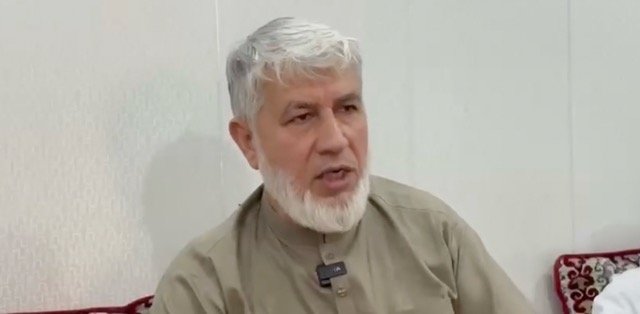
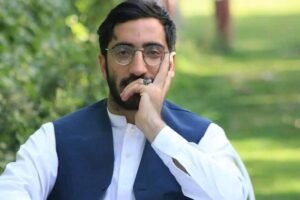
Baryalai Miakhel, the head of Afghan Refugees United Council in Peshawar.
ADN
Baryalai Miakhel sits cross‑legged on a thin carpet, surrounded by members of the Afghan Refugees United Council in a modest room on the outskirts of Peshawar. The men listen closely as he speaks, his voice steady but carrying the weight of years of frustration. For twelve years, this council has defended the rights of Afghan refugees in Khyber Pakhtunkhwa. Today, the atmosphere feels heavier than ever.
Miakhel tells the Afghan Diaspora Network that the crisis facing Afghan refugees is no longer only about documents or deportations. It is about dignity. “Refugees are humans, not animals,” he says, repeating the line as if trying to restore a truth that has been eroded by policy shifts and political rhetoric.
For decades, Afghans lived legally in Pakistan. They built businesses, paid rent, raised families, and shared language, culture, and faith with their hosts. Now, Miakhel says, the same people are suddenly treated as “illegal migrants,” pushed into detention centers and spoken about as if they are a burden rather than part of Pakistan’s social fabric.
He argues that this abrupt shift has shattered a 45‑year relationship. Refugees who once felt gratitude now feel humiliation. And humiliation, he warns, naturally turns into resentment.
A Relationship Distorted by Politics and Power
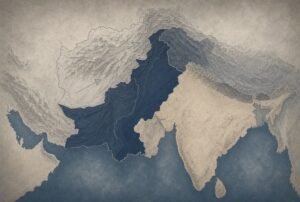
Many Afghan analysts argue that the current crisis cannot be separated from Pakistan’s long and complicated role in Afghanistan’s political landscape. For decades, they say, Pakistan supported various militant groups as part of its regional strategy and sought to shape Afghan politics through proxy actors. These analysts claim that Islamabad preferred an Afghanistan that remained politically dependent on it — a dynamic often described as keeping Afghanistan within Pakistan’s “strategic depth.”
According to these perspectives, the Taliban’s return to power in 2021 disrupted this long‑standing calculus. Some Afghan commentators argue that the Taliban, once seen by Pakistan as a reliable partner, have instead asserted their own autonomy and refused to align with Islamabad’s expectations. This has led to growing tensions, cross‑Durand Line clashes, and a sense in Pakistan that its influence has diminished. Refugee advocates like Miakhel say Afghan civilians are now paying the price for this geopolitical breakdown.
Miakhel describes a community caught between two states. Pakistan has closed gates, launched raids, and framed Afghans as outsiders. The Taliban, on the other side of the Durand Line, has offered little support to returnees who arrive with nothing but memories of a life they were forced to abandon.
He says most returnees come from Nangarhar, Laghman, and Kunar provinces, already strained by population pressure. The Taliban, he argues, should allocate land in larger southern provinces where families could rebuild and contribute to the economy.
“They will work hard,” he says. “They will generate income. But no one pays attention.”
Miakhel is equally critical of the UN Refugee Agency—UNHCR. Refugees carry identification cards, but these documents, he says, “mean nothing.” They do not protect people from extortion, harassment, or deportation. If all refugees are forced to return, he asks, what purpose does the UNHCR serve in Pakistan?
Despite his frustration, Miakhel draws a clear line between the Pakistani people and the Pakistani state. Ordinary Pakistanis, he says, showed hospitality for decades. But state policies — raids, detentions, and public messaging — are erasing those memories. “You make us hate you,” he says, not as a threat but as a diagnosis of what happens when dignity is stripped away.
For Miakhel, the tragedy is not only the forced return of hundreds of thousands of Afghans. It is the collapse of trust between two societies that once saw each other as kin. The council he leads was created to bridge misunderstandings between Afghans and Pakistanis. Now, he fears that bridge is being burned from both ends.