Afghan Diaspora Warns Europe: Don’t Re‑Empower Failed Actors
A recent open letter from leading Afghan civil society and political organizations in the diaspora to the President of the Belgian Senate delivers one of the clearest warnings yet about the risks of misreading Afghanistan’s political landscape. While expressing appreciation for Europe’s continued attention to women’s rights and democratic values, the signatories argue that certain international initiatives risk empowering the very actors who contributed to Afghanistan’s collapse.
Their central concern revolves around the Brussels meeting titled “The Role of Women within Afghanistan’s Democratic Opposition,” held on 17 March 2026 and organized by the European Foundation for Democracy. According to the letter, several invitees represented political and military factions that played destructive roles over the past decades — groups associated with corruption, ethnic polarization, human rights violations, and the weakening of state institutions.
The diaspora signatories argue that these actors bear direct responsibility for the fall of the republic and the suffering that followed. Re‑engaging them, they warn, would deepen public mistrust and revive the same dynamics that derailed Afghanistan after 2001.
The letter highlights the failure of the Bonn Process as a cautionary example. By empowering war‑era factions, the post‑2001 political order became vulnerable to corruption, factionalism, and institutional decay. Billions in international aid were mismanaged, ethnic tensions intensified, and European soldiers lost their lives in a system that lacked accountability. The authors argue that repeating this model — by legitimizing discredited powerbrokers — would once again undermine democratic aspirations and long‑term stability.
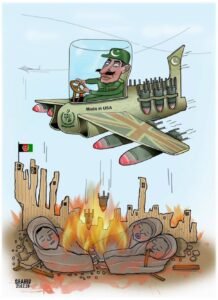
A major portion of the letter focuses on Pakistan’s role, which the signatories describe as central to Afghanistan’s prolonged instability. They assert that Pakistan’s intelligence services have, for decades, supported armed groups as part of a regional security strategy, enabling the rise of militant networks that ultimately contributed to the collapse of the Afghan state.
The letter cites the rocket attacks across the Durand Line into Afghanistan, support for armed factions, and the use of Afghan territory as a battleground for proxy interests as ongoing threats to Afghan civilians. According to the authors, any international strategy that ignores Pakistan’s influence risks misunderstanding the root causes of Afghanistan’s crisis.
The signatories call on the European Union to adopt an independent, realistic, and people‑centered strategy — one that prioritizes security, prevents civil war, protects territorial integrity, and confronts terrorist networks. They urge European institutions to avoid legitimizing warlords and instead support credible Afghan voices committed to democratic principles, civil rights, and a peaceful future.
Their message is unambiguous: Afghanistan’s future cannot be built by recycling the architects of past failures, nor by overlooking the regional forces that fuel instability.